Technology · AI
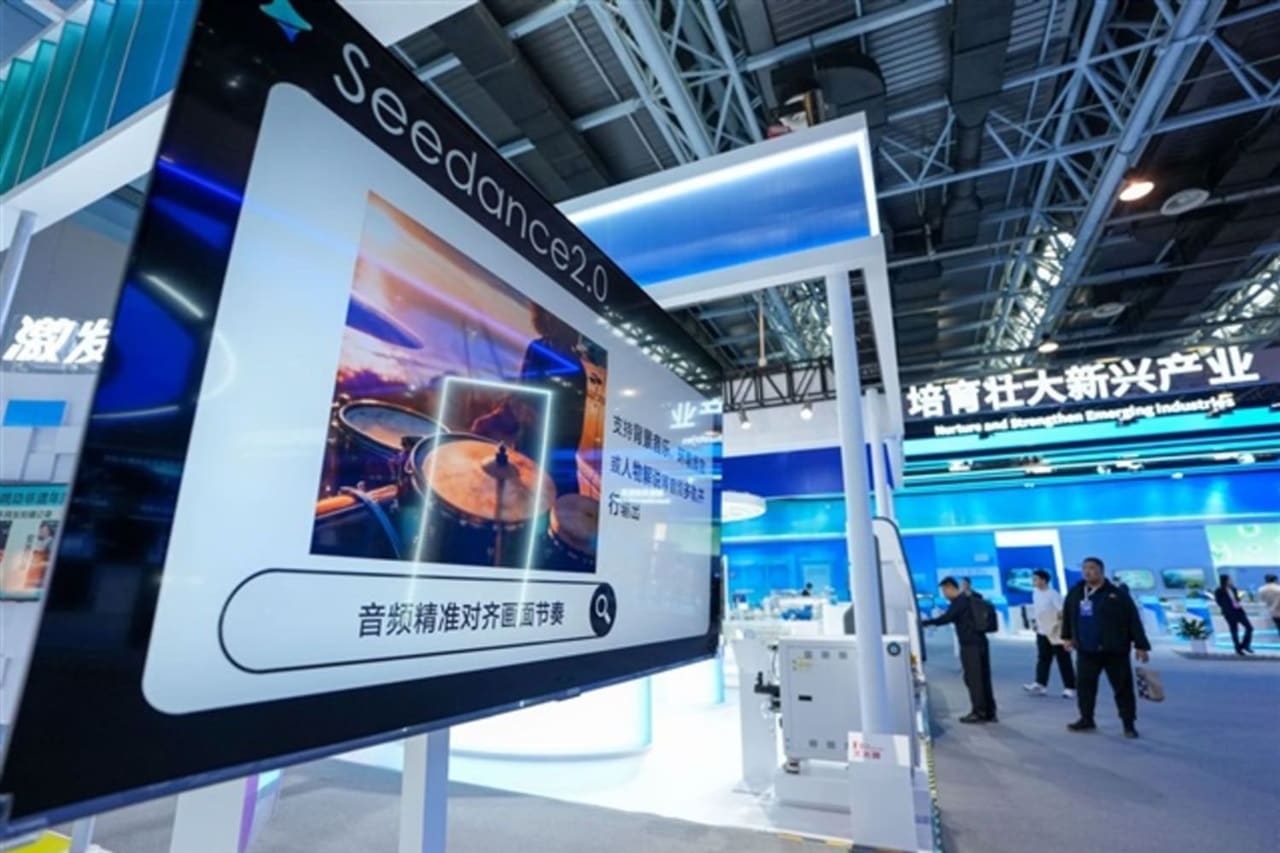
Chinese AI Video Models Position Country for World Model Leadership
Advances in generative video technology could give China a structural advantage in building systems that simulate physical reality for robotics and autonomous applications.
KEY TAKEAWAYS
- ·Chinese labs have built substantial compute infrastructure and data pipelines for video AI that can be adapted for world model development, giving them a head start in simulation systems for robotics and autonomous applications.
- ·World models require the same temporal prediction and physics understanding as video generation but must meet far stricter safety and reliability standards for controlling physical systems.
- ·China's domestic industrial automation market provides a fast-cycle testing ground for deploying world model prototypes in manufacturing and logistics ahead of international competitors.
From Entertainment to Industrial Infrastructure
China's rapid progress in generative video AI has caught the attention of technical communities worldwide. Models capable of producing high-fidelity video from text prompts have emerged from Chinese labs at a pace that surprised even Silicon Valley observers. What began as a race to create compelling visual content is now revealing a second-order implication: the same technical foundation that powers video generation may be exactly what is needed to build world models.
World models are simulation systems that predict how environments respond to actions. Unlike video generators designed purely for entertainment, these systems must understand physics, object permanence, spatial relationships, and causal sequences. A robot navigating a warehouse or an autonomous vehicle planning a lane change relies on internal models that approximate how the real world behaves. The computational architecture that learns to generate realistic video, frame by frame, shares much of its DNA with the systems required to model dynamic environments.
Chinese research institutions and companies have invested heavily in the data pipelines, training infrastructure, and algorithmic techniques that underpin large-scale video synthesis. These capabilities are not easily replicated. Training a state-of-the-art video model demands vast compute resources, curated datasets spanning millions of hours, and engineering teams experienced in handling temporal consistency across long sequences. The same challenges apply to world models, but with the added constraint that predictions must align with physical laws rather than aesthetic preferences.
The Technical Bridge
Video generation models learn representations of motion, occlusion, lighting changes, and object interactions by observing massive quantities of footage. A model that can convincingly animate a person walking through a room has implicitly learned something about gravity, perspective, and how surfaces reflect light. World models for robotics require similar representations but must make them explicit and actionable.
Several Chinese AI labs have published research exploring this connection. Techniques developed to improve temporal coherence in generated video, such as latent diffusion architectures and hierarchical planning, are being adapted for predictive simulation. The ability to condition video output on control signals, such as camera trajectories or object manipulations, translates directly into the kind of conditional prediction a robot needs when planning movements.
The compute infrastructure China has built to support video model training is substantial. Large GPU clusters optimized for the parallel processing demands of diffusion models can be repurposed for world model training with relatively minor adjustments. This installed base gives Chinese research teams a head start in scaling up experimental systems to production-ready simulators.
Industrial Applications in Focus
The practical use cases for world models extend across manufacturing, logistics, and autonomous systems. A factory robot equipped with a world model can anticipate the consequences of grasping an object from different angles, reducing trial-and-error and improving task success rates. Autonomous forklifts can simulate potential collisions before committing to a path. Drones can predict how wind or obstacles will affect flight trajectories in environments where GPS signals are unreliable.
Chinese manufacturers are already testing early versions of these systems in controlled settings. The integration of world models into industrial automation platforms could accelerate deployment timelines for robots in environments that are too variable or unstructured for traditional rule-based programming. The ability to train models on video data collected from existing operations, rather than hand-coding behaviors, offers a scalable path to automation in sectors where labor costs are rising.
Strategic Implications
China's position in video AI did not emerge by accident. Coordinated investment in compute infrastructure, talent pipelines through universities, and a regulatory environment that permits large-scale data collection have combined to create an ecosystem optimized for rapid iteration. The question now is whether that ecosystem can sustain its momentum as the technology transitions from generating entertainment to powering physical systems.
The shift from video generation to world models introduces new technical hurdles. Safety and reliability standards for systems controlling robots or vehicles are orders of magnitude more stringent than for content creation tools. A video model that occasionally produces an implausible frame is a nuisance; a world model that misjudges a collision risk is a liability. Chinese developers will need to demonstrate not only that their models are capable, but that they are robust under adversarial conditions and edge cases.
International competition in this space is intensifying. Labs in the United States, Europe, and Japan are pursuing parallel research directions, often with access to proprietary datasets from automotive or aerospace partners. The technical gap that exists today in video generation may narrow as compute becomes more widely available and algorithmic insights diffuse through the research community.
What Comes Next
The near-term trajectory will depend on how quickly world model prototypes move from research demonstrations to commercial deployments. Chinese robotics firms are positioned to integrate these systems into hardware platforms faster than competitors who must navigate fragmented supply chains or stricter regulatory approval processes. The domestic market for industrial automation provides a testing ground where iteration cycles can be compressed.
If world models prove viable at scale, the implications extend beyond individual applications. Systems that can simulate environments with high fidelity become platforms for training other AI agents, testing autonomous algorithms, and generating synthetic data for downstream tasks. Ownership of that platform layer carries strategic weight comparable to control over semiconductor fabs or cloud infrastructure.
China's lead in video AI has opened a pathway that was not obvious two years ago. Whether that pathway leads to sustained dominance in world models will depend on execution, investment, and the ability to solve problems that video generation never had to address. The technical foundations are in place. The industrial demand is real. What remains to be seen is how quickly the gap between generating pixels and predicting physics can be closed.
RELATED STORIES
Chinese AI Companies Raise Prices as Free Model Era Ends
Cheng Wei-Lun · 3 min
Lenovo Accelerates Toward $100 Billion Revenue on AI Momentum
Cheng Wei-Lun · 3 min

CXMT Reports 90% Yield on DDR5 Production as Chinese Chipmaker Eyes PC Market
Cheng Wei-Lun · 4 min

Honor Unveils Robot Phone as First Move in AI Hardware Pivot
Cheng Wei-Lun · 2 min
Spot something wrong? Email editor@briefasia.com. We log every correction publicly.