Lifestyle · Luxury
China Luxury Sales Show First Signs of Stabilization After Months of Decline
European luxury houses including Kering, LVMH, and Burberry report sequential improvement in Greater China as high-end cosmetics and accessories begin to recover, though broader consumer confidence remains fragile.
KEY TAKEAWAYS
- ·Kering is expected to return to positive sales growth in Greater China by the fourth quarter of 2026, with LVMH reporting stabilization after several quarters of decline.
- ·Burberry posted a 9 percent increase in Greater China retail sales, driven by Generation Z demand and localized marketing campaigns including a documentary with Chinese National Geography.
- ·The recovery is concentrated among high-net-worth consumers following a K-shaped pattern, with July sales at the 25 largest luxury brands still down more than 10 percent amid capital controls.
Recovery Takes Shape in High-End Categories
Household spending in China is beginning to stabilize after months of contraction, with particular strength emerging in high-end cosmetics and accessories. The shift marks a potential turning point for European luxury houses that depend on Chinese consumers for a significant portion of global revenue.
Kering, owner of Gucci and Saint Laurent, is forecast to return to positive sales growth in Greater China by the fourth quarter of 2026, according to consensus analyst estimates. The company has identified China as its top strategic priority, according to chief executive Luca de Meo, who noted that trends improved markedly through the most recent quarter despite ongoing pressure across the portfolio.
LVMH, the world's largest luxury conglomerate, reported stabilizing conditions in China after several consecutive quarters of deterioration. The company pointed to improving performance for its cognac division and beauty retailer Sephora during its latest earnings disclosure.
Burberry and Hermes Post Gains
Burberry delivered a 9 percent increase in retail sales across Greater China in its most recent quarter, driven in part by demand from Generation Z consumers. Chief financial officer Kate Ferry credited localized marketing initiatives, including a documentary produced in collaboration with Chinese National Geography magazine, with helping the brand outperform the broader market environment.
"Our product and marketing are continuing to resonate in one of our largest and most important markets," chief executive Joshua Schulman said.
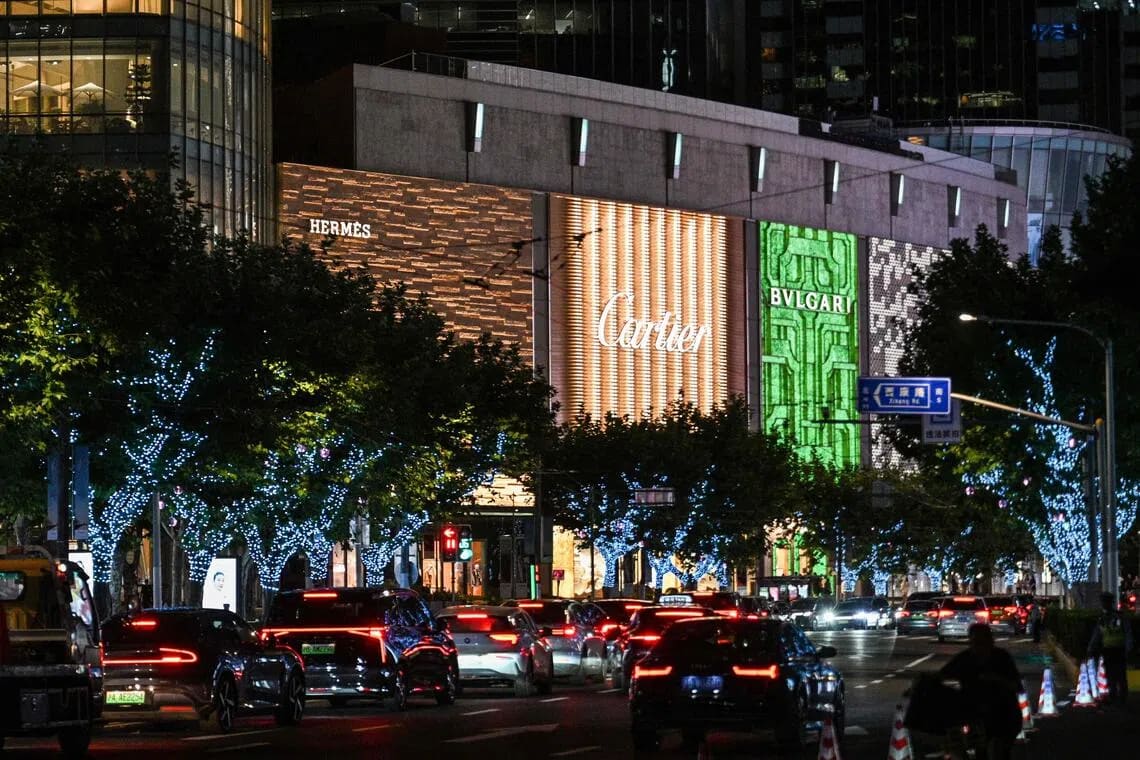
Hermes is expected to see accelerating growth in the region, while jewelry brand Pandora anticipates a slower pace of decline. Richemont, owner of Cartier and Van Cleef & Arpels, is benefiting from renewed tourism flows into Hong Kong and Macau, which serve as key luxury shopping destinations for mainland Chinese travelers.
Moncler, the Italian maker of luxury down jackets, has drawn analyst attention for untapped growth potential in both China and the United States. Citi analyst Thomas Chauvet raised his price target on the company, citing long-term opportunities in underserved market segments.
High-Net-Worth Consumers Drive Initial Rebound
The recovery underway in China follows a K-shaped pattern, with spending gains concentrated among high-net-worth individuals rather than mass affluent or middle-class consumers. Whether this improvement can broaden beyond the wealthiest shoppers remains the central question for luxury executives and investors.
Sales at the 25 largest luxury brands operating in China fell more than 10 percent in July, reflecting continued capital outflow controls and increased scrutiny of offshore wealth. These measures have dampened spending by the country's richest citizens, who historically accounted for outsized luxury purchases both domestically and abroad.
The stabilization now taking hold suggests that ultra-high-net-worth consumers are adjusting to the new regulatory environment and resuming discretionary spending, particularly in categories like jewelry, watches, and premium beauty products.
Broader Headwinds Persist
While China shows tentative signs of improvement, the global luxury sector faces pressure on multiple fronts. Inflationary conditions in Europe and North America are squeezing discretionary budgets for middle-tier luxury consumers. Conflict in the Middle East has reduced foot traffic in Dubai, a major luxury hub, and curtailed tourist flows into European shopping capitals.
Import flows into China remain subdued, and consumer confidence has yet to recover to pre-pandemic levels. Without a meaningful uptick in both sentiment and cross-border shopping activity, the path to sustained reacceleration remains unclear, according to Deutsche Bank analyst Do-Hyun Yoo.
For European luxury conglomerates, the stakes in China are existential. The market accounts for roughly 30 to 40 percent of global luxury sales when including purchases made by Chinese nationals abroad. A sustained recovery in the region would provide critical momentum for an industry that has seen growth stall across most major markets over the past 18 months.
What Comes Next
The coming quarters will test whether the green shoots now visible in China can develop into a broader recovery. Luxury executives are closely monitoring consumer sentiment indicators, import data, and tourism patterns for signals that spending is broadening beyond the ultra-wealthy.
Kering's return to growth in the fourth quarter, if realized, would mark a symbolic milestone for the sector. LVMH's stabilization in cognac and beauty suggests that Chinese consumers are selectively re-engaging with premium categories, even as they remain cautious about larger discretionary purchases.
For now, the luxury industry is navigating a fragile rebound in its most important market, balancing optimism about recent trends against the reality of structural challenges that have yet to fully resolve.
RELATED STORIES
Malaysian Rubber Prices Climb on China Restocking and Supply Risks
Priyanka V. Rao · 3 min
Taiwan's National Security Council Expands Role in Defense Strategy
Cheng Wei-Lun · 3 min
Wall Street's Access to Beijing's Leadership Fades Despite Market Opening
Cheng Wei-Lun · 3 min
Vietnam's National Assembly Closes Extraordinary Session With Nuclear and Renewable Energy Approvals
Tran Quoc Bao · 3 min
Spot something wrong? Email editor@briefasia.com. We log every correction publicly.