Technology · Policy
China's International Research Collaborations Decline as Western Partners Deepen Ties
Academic isolation grows even as questions emerge about the origins of recent Chinese AI and robotics breakthroughs

KEY TAKEAWAYS
- ·China's international research collaborations are declining while the UK, Germany, and US expand cross-border academic partnerships and joint publications.
- ·Recent launches of Moonshot AI's Kimi K3 model and Unitree Robotics's H1 robot have prompted scrutiny over the true domestic origins of Chinese innovation.
- ·The shift may signal a move toward self-reliant research infrastructure in China, with long-term consequences for knowledge transfer across Asia's technology ecosystem.
A Widening Academic Gap
China's academic and research networks are showing signs of international retreat, a shift that stands in sharp contrast to expanding cross-border collaboration among Western institutions. The divergence has become more visible following the debut of advanced Chinese technology products such as Moonshot AI's Kimi K3 model and Unitree Robotics's H1 humanoid robot, both of which have sparked debate about the depth of domestic innovation behind them.
While the UK, Germany, and the United States have increased the volume of joint research papers and institutional partnerships over recent years, Chinese institutions appear to be moving in the opposite direction. The trend suggests a recalibration of China's approach to knowledge sharing at a time when its technology sector is accelerating output across artificial intelligence, robotics, and semiconductor design.
The Collaboration Divide
Academic collaboration has long served as a barometer for openness in science and technology ecosystems. Joint publications, visiting scholar programs, and co-authored research reflect not only technical exchange but also trust and alignment on research priorities. In recent years, institutions in the UK, Germany, and the US have deepened these connections with one another and with partners across Asia, Europe, and North America.
China's trajectory has been different. Although its universities and research institutes remain prolific publishers, the share of internationally co-authored papers has declined. The reasons are complex and likely multifaceted, ranging from domestic policy shifts to external scrutiny over intellectual property and national security concerns. Export controls on advanced chips and restrictions on technology transfers have created friction, but the pullback appears broader than any single policy measure would explain.
Technology Launches Under Scrutiny
The timing of this academic drift has coincided with high-profile product announcements from Chinese companies. Moonshot AI's Kimi K3, a large language model positioned as a competitor to GPT-4 and other frontier systems, drew immediate attention for its capabilities and the speed of its development. Unitree Robotics's H1, a humanoid robot designed for industrial and research applications, similarly raised questions about the underlying components and training data.
Both products have been marketed as examples of indigenous innovation, yet analysts and industry observers have pointed to uncertainties about supply chains, training datasets, and whether key algorithmic advances were developed entirely within China or drew on international research. The scrutiny is not unique to these products but reflects a broader skepticism about how isolated innovation can be in fields that have historically relied on global collaboration.
Implications for Asia's Research Ecosystem
The weakening of China's international research ties has implications beyond its borders. For universities in Singapore, South Korea, Japan, and Taiwan, Chinese institutions have been important partners in fields ranging from materials science to computer vision. A reduction in collaboration could slow knowledge transfer and limit access to datasets, labs, and co-funding opportunities.
At the same time, the UK, Germany, and the US are positioning themselves as hubs for open research, particularly in areas where China has made gains. European and American universities have launched new programs targeting researchers from Asia, offering funding and visa pathways designed to attract talent that might have previously flowed to Chinese institutions.
The Path Ahead
Whether China's shift represents a temporary recalibration or a longer-term strategic pivot remains unclear. Some observers argue that the country is building a more self-reliant research infrastructure, one less vulnerable to external disruptions but also more insulated from global advances. Others see the trend as a byproduct of geopolitical tensions that could ease if trade and technology relationships stabilize.
For now, the data points to a bifurcation in global research networks. Western institutions are deepening ties with one another and with partners in Asia outside China, while Chinese institutions focus inward. The consequences for innovation, particularly in fields that thrive on cross-pollination, will take years to fully understand. But the early signs suggest that the era of seamless academic exchange between China and the West may be giving way to something more segmented.
RELATED STORIES
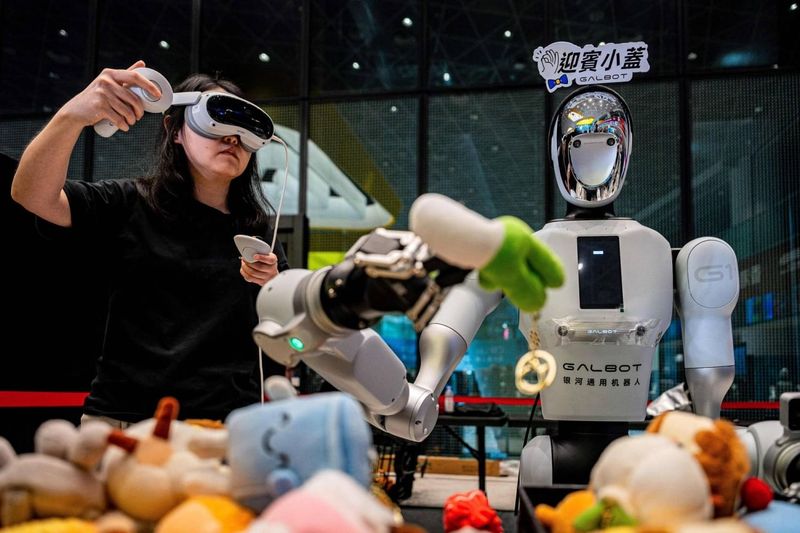
Hong Kong Debuts Robot-Run Convenience Store in Commercial Automation Push
Cheng Wei-Lun · 3 min

China Scrubs 5.6 Million AI-Generated Posts in Platform Cleanup
Cheng Wei-Lun · 3 min
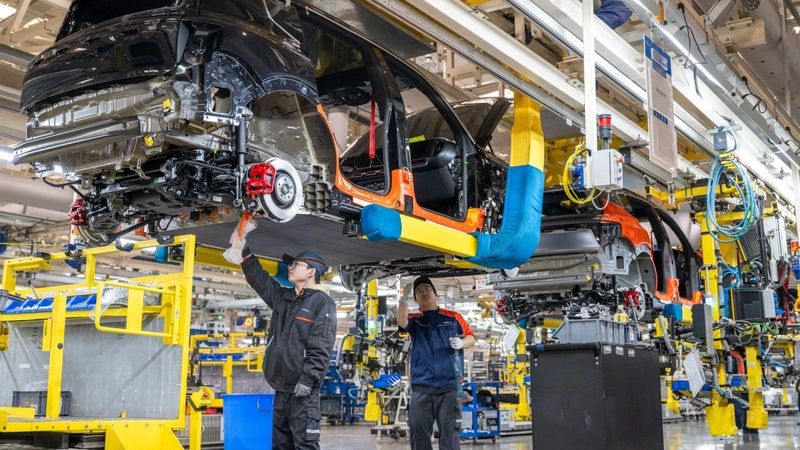
Chinese Automakers Target Hybrid Market After EV Dominance
Cheng Wei-Lun · 3 min
CaoCao Mobility Bets on Autonomous Taxis as Revenue Tops RMB 10 Billion
Cheng Wei-Lun · 3 min
Spot something wrong? Email editor@briefasia.com. We log every correction publicly.