Technology · Dev
China's Immersion DUV Lithography Ambitions Trail ASML by Four Technology Generations
Reports of domestic production plans triggered European chipmaking equipment sell-offs, but industry observers say the capability gap remains substantial
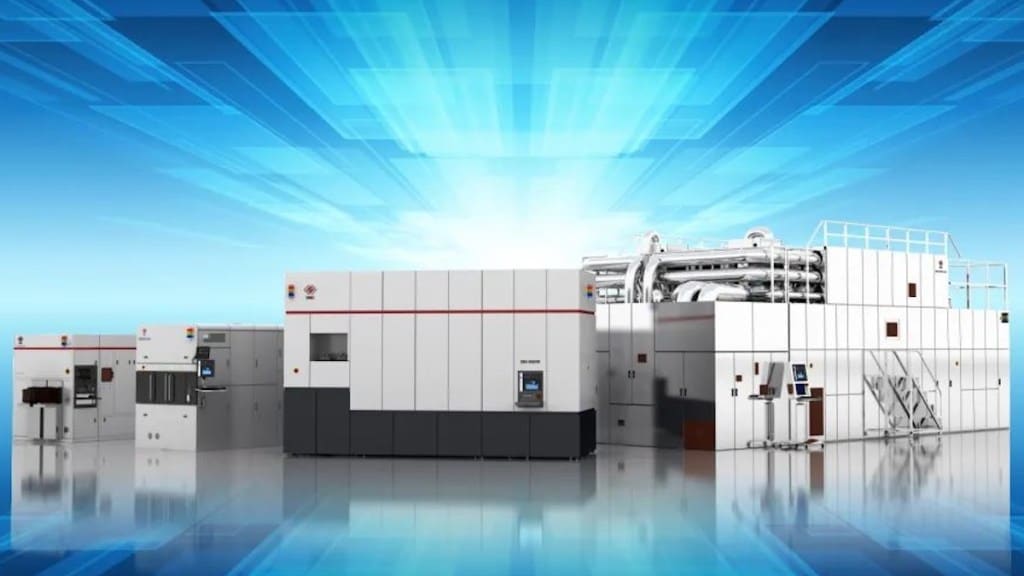
KEY TAKEAWAYS
- ·China's reported plan to manufacture immersion deep ultraviolet lithography machines triggered a selloff in European semiconductor equipment stocks this week.
- ·Chinese industry analysts assess that domestic immersion DUV technology would lag ASML's current generation by approximately four technology cycles.
- ·The gap reflects years of cumulative advances in optical design, alignment precision, and manufacturing scale that cannot be closed quickly despite state investment.
Market Reaction Outpaces Technical Reality
European semiconductor equipment stocks tumbled this week after reports surfaced that China intends to begin manufacturing immersion deep ultraviolet lithography machines domestically. The sell-off reflected investor nervousness about potential competition to ASML, the Dutch lithography giant that dominates advanced chipmaking equipment. Yet Chinese industry analysts are pushing back against the narrative, emphasizing that any domestic DUV capability would still lag far behind established Western technology.
The gap is not marginal. According to assessments from Chinese semiconductor experts, the country's immersion DUV lithography tools would trail ASML's current generation by approximately four technology cycles. That distance represents years of research, engineering refinement, and manufacturing scale that cannot be closed quickly, even with substantial state backing.
The Immersion DUV Landscape
Immersion lithography uses a liquid medium between the lens and the wafer to improve resolution, enabling the production of smaller transistors without moving to extreme ultraviolet wavelengths. ASML's immersion DUV systems have been the workhorses of leading-edge chip fabs for over a decade, and the company continues to refine the technology even as it pushes EUV adoption at the cutting edge.
China's semiconductor equipment sector has made notable strides in older dry DUV systems, which use air rather than liquid as the medium. But immersion DUV represents a significant jump in complexity. The optical systems, stage precision, and throughput requirements all escalate sharply. Chinese toolmakers have historically struggled with the sub-systems and supply chains needed to match the performance and reliability of ASML equipment.
Reports suggest that Shanghai Micro Electronics Equipment, the leading domestic lithography firm, is working toward immersion DUV capability. However, even optimistic timelines place initial production years away, and early-generation tools are expected to operate at lower throughput and resolution than ASML's mature platforms.
Why the Stock Market Reacted
Investor anxiety is less about immediate competition and more about trajectory. Export controls imposed by the Netherlands, under pressure from the United States, have restricted ASML from selling its most advanced DUV and all EUV systems to Chinese customers. Those restrictions aim to slow China's progress in advanced semiconductor manufacturing, particularly for chips below the 7-nanometer node.
If China can develop even a lower-performance immersion DUV tool, it could reduce dependence on foreign equipment and sustain domestic fabs that have been cut off from ASML's supply chain. That scenario would undermine the strategic leverage export controls are meant to provide, even if the technical gap remains wide.
European chipmaking equipment suppliers, including ASML, ASM International, and Besi, saw share prices drop as the news circulated. The market is pricing in a future where China builds parallel supply chains, not necessarily one where Chinese tools match Western performance in the near term.
The Four-Generation Problem
The four-generation lag cited by Chinese industry observers reflects cumulative advances in optical design, light source stability, alignment precision, and software integration. Each generation of lithography equipment delivers incremental improvements in resolution, overlay accuracy, and defect rates. Missing four generations means Chinese tools would likely produce chips with lower yields and higher costs, even if they nominally target similar feature sizes.
For China's semiconductor ambitions, that gap matters. Domestic chipmakers need equipment that can compete economically with Taiwanese, South Korean, and American fabs. Lower-performing tools might enable self-sufficiency in certain segments, but they will not close the competitiveness gap in high-margin products like smartphone processors, data center chips, or AI accelerators.
The Long Road Ahead
China has committed tens of billions of dollars to semiconductor self-sufficiency through its national integrated circuit fund and provincial incentives. Lithography remains the single biggest bottleneck. Progress in immersion DUV would represent a meaningful step, but it would not fundamentally alter the strategic balance in the near term.
ASML, meanwhile, continues to push the frontier. The company is shipping its latest-generation EUV tools and developing high-numerical-aperture EUV systems for sub-2-nanometer nodes. Even if China narrows the DUV gap, the EUV chasm is widening. That dynamic suggests the technology race will remain lopsided for years, barring breakthroughs or dramatic shifts in export policy.
The stock market reaction this week may have been premature, but it signals a broader recognition that China's semiconductor strategy is a marathon, not a sprint. Investors are beginning to price in a world where Chinese equipment vendors chip away at the edges, even if they remain far from the leading edge.
RELATED STORIES
China's Chip Makers Split Three Ways Beneath the Revenue Growth
Tran Quoc Bao · 3 min
JCET Eyes $968 Million to Scale AI Packaging Lines
Tran Quoc Bao · 3 min
Lithuania's Laser Industry Powers Taiwan's Chip Manufacturing Edge
Cheng Wei-Lun · 2 min
AliExpress Shifts Focus to Brand Building as AI Hardware Sales Surge Overseas
Cheng Wei-Lun · 2 min
Spot something wrong? Email editor@briefasia.com. We log every correction publicly.