Technology · AI
China's Film Crews Shrink as AI Takes Over Microdrama Production
Teams of five now deliver series once requiring dozens, while actors and editors see work evaporate in a market producing 128,000 titles in three months
KEY TAKEAWAYS
- ·China released 122,000 fully AI-generated microdramas in Q1 2026, up from near zero a year earlier, as the market crossed 120 billion yuan in projected annual revenue.
- ·Production crews shrank from dozens to five to ten people, with editing teams cut from six staff to one and actor casting calls replaced by AI character advertisements.
- ·Mid-tier actor fees dropped by half while over 60 percent of live-action microdrama crews suspended operations after Chinese New Year as automation eliminated backstage roles.
Production Model Overhaul
A Beijing producer launches a full microdrama series with a team of seven people in under a month. The budget runs 100,000 yuan, start to finish. A year ago, the same project demanded 300,000 to 500,000 yuan, a crew three times the size, and ten weeks of shooting and post-production.
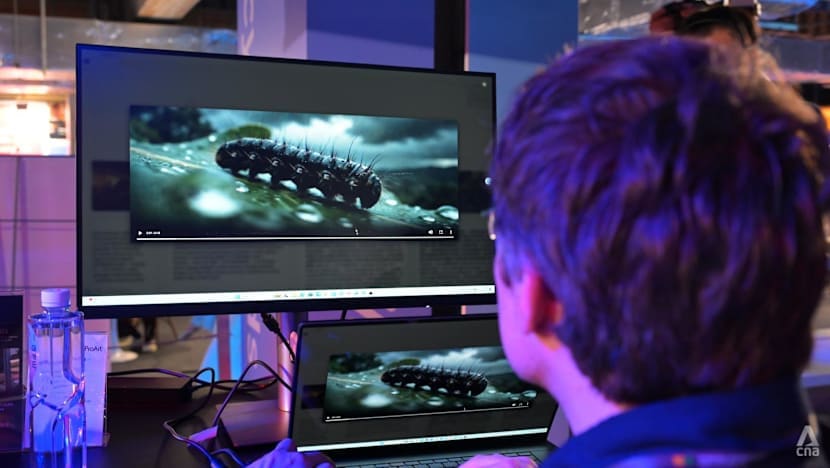
The shift is structural, not experimental. China released 128,000 microdramas in the first quarter of 2026, quadruple the volume from the same period in 2025, according to the China Netcasting Services Association. Of those, 122,000 titles were produced entirely through generative tools, without cameras or human performers. Twelve months earlier, fully automated productions were a rounding error.
The microdrama market crossed 120 billion yuan in projected revenue this year, overtaking theatrical box office for the second consecutive year. Streaming platforms now license AI-generated feature films for cinema release. Tencent Video's chairman announced in April that the company had completed a long-form drama using generative tools, while iQiyi CEO Gong Yu told China Entrepreneur in May that more than half of leading screen content could be machine-generated within five years.
Crew Composition Collapses
Junjun, a producer at a Beijing studio that abandoned live-action work entirely, described the personnel reduction in blunt terms. An editing suite that required five or six staff now operates with one. That remaining editor handles "generation artist" duties, running batch prompts and curating usable frames rather than cutting footage shot on set.
The company's roster of contract actors has been hit harder. "There really are fewer roles they can take now," Junjun said. She declined to name her employer, as she lacked authorization to speak publicly.
Actor Bi Zhiqiang tracked the demand collapse from Hengdian, the eastern production hub where he relocated from Shandong in 2021. Two years ago, casting calls arrived daily, often overlapping. "As long as I wanted to shoot, I could shoot non-stop," he told reporters. By Chinese New Year 2026, offers dropped to once or twice a month, leaving stretches of idle time he had not experienced since arriving.
Sun Bin, vice-dean at Communication University of China's School of Drama, Film and Television, framed the labor displacement as permanent restructuring rather than cyclical downturn. A survey by tech-commerce outlet Ebrun found over 60 percent of live-action microdrama crews had quietly suspended operations after the Spring Festival, citing automation as the final pressure point atop platform subsidy cuts and title oversupply.
Financial newspaper 21st Century Business Herald documented mid-tier actor fees falling by half, while backstage roles in lighting, costume, and photography shed positions in volume. Shanghai outlet The Paper reported casting calls replaced by advertisements for AI character roles.
Cost Arbitrage Drives Adoption
The economics are unambiguous. Wang Ze, a Shanghai Vancouver Film School graduate, completed a seven-minute animated short in ten days for a Shanghai International Film Festival showcase. Conventional production would have demanded a larger crew and extended timeline he could not afford. "Now I can borrow AI tools and make the film I want all by myself," he said.
The festival introduced an AI Backlot program in late June, pairing traditional directors with generative specialists to produce shorts over four weeks. Berlin filmmaker Mark Wachholz and Chinese director Hou Zuxin collaborated under the initiative, testing whether audiences could evaluate machine-assisted work without the "AI film" label influencing reception.
Hou, who continues shooting features, documentaries, and commercials in live-action, treats generative tools as gap-fillers for budget constraints. An establishing shot of a coastline a client cannot afford to reach physically can now be rendered on demand. "It's just more tools we can choose," she said. "The most important thing is to know what you want."
Wang noted the trade-off: directors using generative workflows now need working knowledge of cinematography, storyboarding, lighting, and art direction, skills previously delegated to department heads. The tool lowers production barriers but raises the baseline competency for solo creators.
Industry Calibration
Veteran director Huang Jianxin, who chairs the Beijing Film Association and runs Xiamen University's film school, offered a calibration framework at the Shanghai festival. "The stronger the tool, the more important human judgment becomes," he said. "Don't deify it, don't demonise it, don't fear it."
The National Film Administration licensed China's first fully AI-generated feature for theatrical release in April, a 90-minute science-fiction title from Bona Film Group classified as animation. Streaming giants have publicly acknowledged the trajectory. Tencent Video's leadership described generative tools as reorganizing the content supply chain, enabling small creative teams to deliver output that once required large crews while intensifying competition and raising quality thresholds.
Wachholz, the Berlin filmmaker, framed the access argument in structural terms. "Film is gatekept on so many levels," he said. Generative tools lower entry barriers for creators with ideas but without technical drawing skills or production capital.
The question facing China's screen sector is no longer whether machine-generated content will gain traction, but how quickly the labor market adjusts to production models that eliminate roles faster than new skills can be acquired. The microdrama figures from Q1 2026 suggest the adjustment window has already closed for many workers who built careers around live-action shoots. Studios now staff for batch generation workflows, not multi-department crews. The rebuild Sun Bin described is underway, and the personnel count is smaller.
RELATED STORIES

China Scrubs 5.6 Million AI-Generated Posts in Platform Cleanup
Cheng Wei-Lun · 3 min
Hong Kong Debuts Robot-Run Convenience Store in Commercial Automation Push
Cheng Wei-Lun · 3 min
Chinese Automakers Target Hybrid Market After EV Dominance
Cheng Wei-Lun · 3 min

CaoCao Mobility Bets on Autonomous Taxis as Revenue Tops RMB 10 Billion
Cheng Wei-Lun · 3 min
Spot something wrong? Email editor@briefasia.com. We log every correction publicly.