Technology · Dev
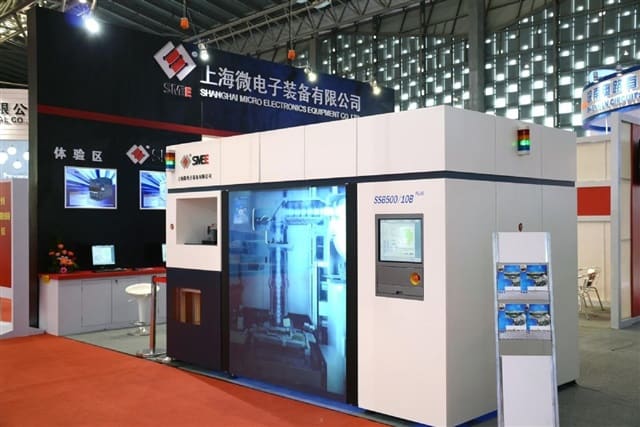
China Advances 28nm Lithography as Shanghai Aishengna Delivers First Systems
Five immersion DUV units mark a milestone in Beijing's drive for self-sufficiency in critical chipmaking equipment, with State Council oversight signaling strategic importance.
KEY TAKEAWAYS
- ·Shanghai Aishengna Electronic Technology delivered five immersion deep ultraviolet lithography systems designed for 28-nanometer chip production, now entering fab validation.
- ·State Council-level experts are reportedly guiding the program, reflecting Beijing's strategic priority to achieve self-reliance in critical semiconductor manufacturing equipment.
- ·Successful validation could reduce China's dependence on foreign lithography suppliers and accelerate domestic capacity expansion at the 28nm node within the next year.
A Homegrown Leap in Chipmaking Tools
Shanghai Aishengna Electronic Technology has delivered five immersion deep ultraviolet lithography systems, marking a critical step in China's effort to produce advanced semiconductor manufacturing equipment domestically. The machines, designed for 28-nanometer chip production, have entered the fab validation phase, according to Shanghai Aishengna.
The deployment comes as Beijing accelerates efforts to build a self-reliant semiconductor supply chain amid persistent export controls on advanced lithography tools from the Netherlands, Japan, and the United States. Immersion DUV systems are essential for producing chips at the 28nm node and below, a threshold that covers a wide range of applications from automotive controllers to industrial sensors and consumer electronics.
State Council-level experts are reportedly guiding the program, underscoring the strategic weight Beijing places on overcoming bottlenecks in lithography. While Shanghai Aishengna has not disclosed which fabs are conducting the validation trials, the involvement of top-tier government advisors suggests coordination across multiple state-backed semiconductor manufacturers.
Why 28nm Matters for China's Chip Ambitions
The 28nm process node occupies a crucial position in the global semiconductor landscape. Although no longer cutting-edge by the standards of smartphone processors or high-performance computing, 28nm remains the workhorse for a vast array of chips used in automobiles, power management, telecommunications infrastructure, and Internet of Things devices. Securing domestic production capability at this node would reduce China's reliance on foreign equipment suppliers and insulate key industries from supply disruptions.
Western export restrictions have targeted extreme ultraviolet lithography systems capable of producing chips at 7nm and below, but controls have also tightened around advanced DUV tools. ASML, the Dutch equipment giant that dominates the lithography market, has faced pressure to limit sales of its immersion DUV systems to Chinese customers. That constraint has created both urgency and opportunity for domestic players like Shanghai Aishengna.
Immersion lithography uses a liquid medium between the lens and the wafer to improve resolution, enabling tighter patterning than dry DUV systems. Mastering this technology represents a meaningful technical achievement, though it remains to be seen how Shanghai Aishengna's systems perform in terms of throughput, yield, and reliability compared to established tools from ASML, Nikon, or Canon.
Fab Validation and the Road Ahead
Fab validation is a lengthy and demanding process. Chipmakers subject new equipment to months of testing, examining everything from pattern fidelity and overlay accuracy to uptime and maintenance requirements. Only after a tool proves it can meet production standards does it move into volume manufacturing.
The fact that Shanghai Aishengna has delivered five units suggests the company is moving beyond prototype development. Multiple systems allow for parallel testing and provide redundancy, accelerating the feedback loop between equipment maker and fab operator. If validation proceeds smoothly, these tools could begin contributing to domestic chip output within the next year.
Shanghai has emerged as a focal point for China's lithography push, drawing on the city's concentration of research institutions, engineering talent, and proximity to major fabs. The city's government has backed equipment development through subsidies, land grants, and coordination with national initiatives. Shanghai Aishengna's progress reflects that ecosystem at work.
Yet challenges remain. Lithography systems are among the most complex machines ever built, integrating precision optics, advanced materials, metrology, and software. Even with State Council backing, replicating the performance and reliability of tools that ASML and its peers have refined over decades is no small feat. Questions around supply chain depth, component quality, and long-term serviceability will shape whether Shanghai Aishengna can scale production and support a growing installed base.
Regional Implications
China's progress in lithography reverberates across Asia's semiconductor ecosystem. Taiwan, South Korea, and Japan remain deeply integrated into global chip supply chains, and any shift in China's equipment self-sufficiency alters competitive dynamics. If Chinese fabs can source capable DUV tools domestically, they gain flexibility and reduce exposure to geopolitical friction. That could accelerate capacity expansion in mature nodes, intensifying competition in markets where regional players already operate.
For equipment suppliers elsewhere in Asia, China's advances present both a threat and a signal. Nikon and Canon, the Japanese lithography vendors that trail ASML, have historically served niches in the DUV market. A credible Chinese competitor could further squeeze their market share, particularly in price-sensitive segments. At the same time, the technical bar set by Shanghai Aishengna's immersion systems offers a benchmark for assessing how quickly China can close the gap.
Southeast Asian countries watching the semiconductor contest closely will note the pace of China's equipment indigenization. As manufacturing footprints diversify across the region, the availability of domestically produced Chinese tools could influence where fabs choose to locate and how they structure supply agreements.
The next phase will reveal whether Shanghai Aishengna's systems can sustain the rigors of high-volume production and whether the company can iterate quickly enough to keep pace with evolving process requirements. For now, the delivery of five immersion DUV tools represents a tangible milestone in a campaign that has moved from policy ambition to factory floor reality.
RELATED STORIES
China's Chip Makers Split Three Ways Beneath the Revenue Growth
Tran Quoc Bao · 3 min
Arm Unveils Mobile Compute Platform Targeting China's AI Handset Sector
Tran Quoc Bao · 3 min
JCET Eyes $968 Million to Scale AI Packaging Lines
Tran Quoc Bao · 3 min
Lithuania's Laser Industry Powers Taiwan's Chip Manufacturing Edge
Cheng Wei-Lun · 2 min
Spot something wrong? Email editor@briefasia.com. We log every correction publicly.