Perspectives · Opinion
China's $765 Million Fine Signals a Deeper Market Problem
Beijing's crackdown on Trip.com exposes how involution is forcing a regulatory reset across Chinese tech platforms
KEY TAKEAWAYS
- ·Chinese regulators fined Trip.com Group 5.2 billion yuan for monopolistic practices in the online travel sector.
- ·The penalty targets involution, where platforms burn capital in price wars before extracting rents from suppliers and users.
- ·Beijing's approach contrasts with Southeast Asia, where similar platform consolidation faces minimal regulatory oversight.
- ·The fine exceeds Trip.com's annual profit, signaling intent to change executive behavior rather than symbolic censure.
- ·Asia's tech investors now face a higher bar: platforms must show sustainable economics and competitive conduct, not just scale.
When Competition Eats Itself
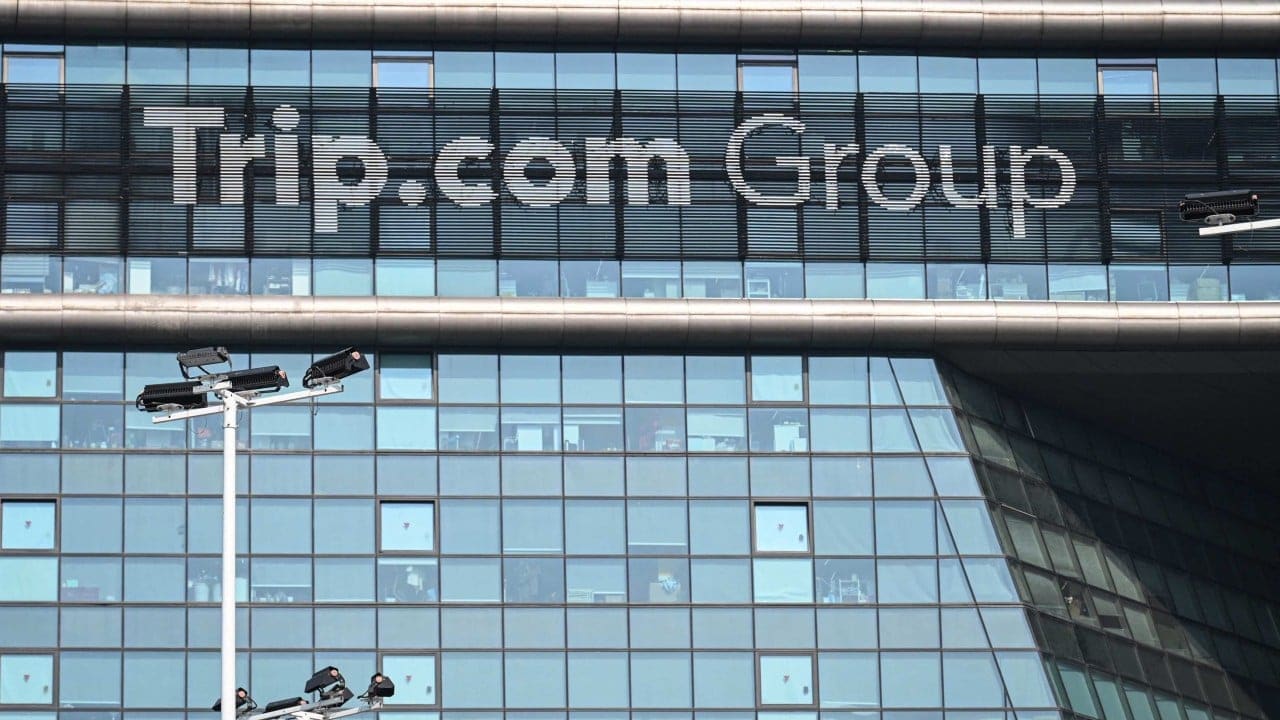
Trip.com Group just learned what happens when market dominance collides with Beijing's patience. The 5.2 billion yuan penalty handed down by Chinese regulators represents more than a record fine for the country's largest online travel platform. It crystallizes a question that has haunted Asia's digital economy for years: at what point does aggressive competition stop driving innovation and start destroying value?
The fine targets monopolistic behavior, but the regulatory logic runs deeper. Beijing has spent the past two years wrestling with a phenomenon Chinese discourse calls "involution," a term borrowed from anthropology to describe systems that grow more complex without producing better outcomes. In business terms, it manifests as price wars that shave margins to nothing, customer acquisition costs that dwarf lifetime value, and endless feature additions that users neither want nor need.
Trip.com operates in a sector where involution has become structural. Online travel agencies in China have burned through capital fighting over the same customers, offering unsustainable discounts, and replicating each other's services. The result is a market where scale matters less for efficiency gains and more for survival, where the largest player can use its position to squeeze suppliers and competitors alike.
The Economics of Exhaustion
The travel platform's penalty arrives as Chinese tech platforms face a profitability reckoning. Years of subsidized growth, funded by venture capital and public market tolerance for losses, created ecosystems where winning meant outlasting rivals rather than building sustainable business models. Food delivery, ride-hailing, e-commerce, and now travel booking all followed similar trajectories: cash-burning customer acquisition, followed by market consolidation, followed by attempts to monetize captive users.
What regulators see in these patterns is not just antitrust violation in the traditional sense. The concern is that dominant platforms, once they've eliminated competitors through subsidized pricing, pivot to extracting value from both sides of their marketplaces. Hotels and airlines face higher commission rates. Consumers see fewer genuine deals and more algorithmic pricing. The platform becomes a toll booth rather than a marketplace.
This dynamic is particularly acute in travel, where suppliers have limited alternatives and switching costs are high. A hotel that has built its customer base through Trip.com cannot easily walk away, even if commission structures become punitive. An airline that relies on the platform for distribution faces the same lock-in. The bargaining power shifts decisively, and with it, the incentive to compete on service quality rather than market power.
Asia's Regulatory Divergence
Beijing's approach contrasts sharply with regulatory inaction elsewhere in Asia. Southeast Asian e-commerce and super-app platforms exhibit similar patterns, yet Singapore, Jakarta, and Bangkok have largely allowed market forces to play out. The result is a region where Grab, Gojek, Shopee, and Lazada have consolidated power with minimal oversight, even as burn rates and competitive dynamics mirror China's earlier phase.
The divergence reflects different regulatory philosophies. Chinese authorities view platform monopolies as systemically risky, capable of distorting entire sectors and creating dependencies that undermine policy goals. When a single travel platform can effectively set pricing across an industry, it becomes a macroeconomic variable, not just a private company. When subsidies trained an entire generation of consumers to expect below-cost services, it warps expectations and makes sustainable business models harder to build.
Other Asian regulators have taken a more laissez-faire stance, betting that competition will self-correct or that the benefits of digital inclusion outweigh the risks of consolidation. That calculus may be changing as platforms mature and their extractive tendencies become clearer, but the regulatory infrastructure to intervene remains underdeveloped outside China.
What the Fine Actually Targets
The specifics of Trip.com's violation matter. Monopolistic practices, in the regulatory finding, likely include forced exclusivity arrangements with hotels, discriminatory pricing that favors the platform's own services over third-party providers, and use of data advantages to undercut competitors. These are textbook abuses of dominance, but they are also logical extensions of a business model built on network effects and winner-take-all dynamics.
Platforms defend such practices as efficiency. Exclusive partnerships ensure supply. Vertical integration improves user experience. Data analytics optimize pricing. But each of these mechanisms also raises barriers to entry and entrenches the incumbent. The line between competitive advantage and anti-competitive conduct becomes difficult to draw, which is precisely why regulators must draw it.
The size of the fine signals intent. At $765 million, the penalty exceeds symbolic censure and approaches material impact. Trip.com reported net income of roughly $500 million in its most recent fiscal year, meaning the fine represents more than a year of profit. That is enough to change executive behavior and force a rethinking of strategy, not just a legal settlement to be absorbed and forgotten.
The Involution Trap
Involution is not unique to China, but Chinese regulators have named it and made it a policy target. The concept captures something real: markets that become zero-sum, where participants compete harder for shrinking returns, where innovation gives way to imitation, and where the spoils go not to the best product but to the deepest pockets.
Travel booking is a textbook case. The core service, matching travelers with hotels and flights, is largely commoditized. Differentiation is difficult when every platform offers the same inventory at similar prices. So competition shifts to customer acquisition, user interface tweaks, loyalty programs, and payment incentives. None of these create lasting value; all of them cost money. The result is an industry that works harder each year to stand still.
Beijing's intervention is an attempt to break that cycle. By penalizing monopolistic conduct, regulators aim to prevent the endgame of involution, where a single winner extracts rents from a market it no longer needs to serve well. Whether the approach works depends on execution. Fines can punish past behavior, but they do not automatically create competitive markets or sustainable business models.
What Comes Next
The Trip.com fine is unlikely to be the last. Chinese regulators have signaled that platform oversight is a permanent feature of the policy landscape, not a one-time crackdown. Food delivery, ride-hailing, and e-commerce platforms should expect similar scrutiny, particularly if their market positions allow pricing power or exclusionary practices.
For Asia's tech investors, the message is clear: the era of growth-at-any-cost is over in China, and the regulatory model is likely to spread. Platforms will need to demonstrate not just scale but sustainable unit economics, not just market share but competitive conduct that passes regulatory review. That is a higher bar than the one that prevailed during the venture-funded boom years, and it will reshape valuations and strategies across the region.
The deeper question is whether regulation can solve what is ultimately a structural problem. Involution arises from overcapacity, low barriers to entry, and commoditized services. Fines can curb monopolistic abuse, but they cannot force innovation or create differentiation where none exists. The travel industry, like many platform sectors, may simply be maturing into a lower-margin, slower-growth business. If that is the case, the policy challenge is not to restore competition but to manage the transition without economic disruption.
Beijing's war on involution is warranted, but it is also an admission that market forces alone have produced outcomes the state finds unacceptable. The fine against Trip.com is a tool, not a solution. The real test is whether Chinese regulators can redesign incentives in ways that encourage platforms to compete on value rather than scale, and whether other Asian governments will follow suit or continue to let digital monopolies consolidate unchecked.
RELATED STORIES

Why Shokz Is Moving Beyond Bone Conduction Audio
Tran Quoc Bao · 4 min

China's Social Security Fund Doubles Offshore Holdings to $86 Billion
Jun-ho Seo · 3 min

China Tightens Pre-Sale Mortgage Release to Protect Homebuyers Amid Stalled Market
Cheng Wei-Lun · 3 min
China-US Bond Yield Gap Reaches Two-Decade Peak
Cheng Wei-Lun · 3 min
Spot something wrong? Email editor@briefasia.com. We log every correction publicly.