Finance · Markets
Celltrion Sets Second Straight Revenue Record as Brokerages Lift Price Targets
Korean biopharma's Q2 profit jumped 86% on stronger biosimilar demand, pushing operating margin past 32% for the first time
KEY TAKEAWAYS
- ·Celltrion reported 1.4 trillion won in Q2 sales and 451.8 billion won operating profit, an 86.3 percent year-on-year increase.
- ·The company's operating margin reached 32.4 percent, the highest on record and above most regional biosimilar peers.
- ·Brokerages in Seoul and globally raised twelve-month price targets following the results and ahead of new product launches.
Strong Quarter Fuels Valuation Shift
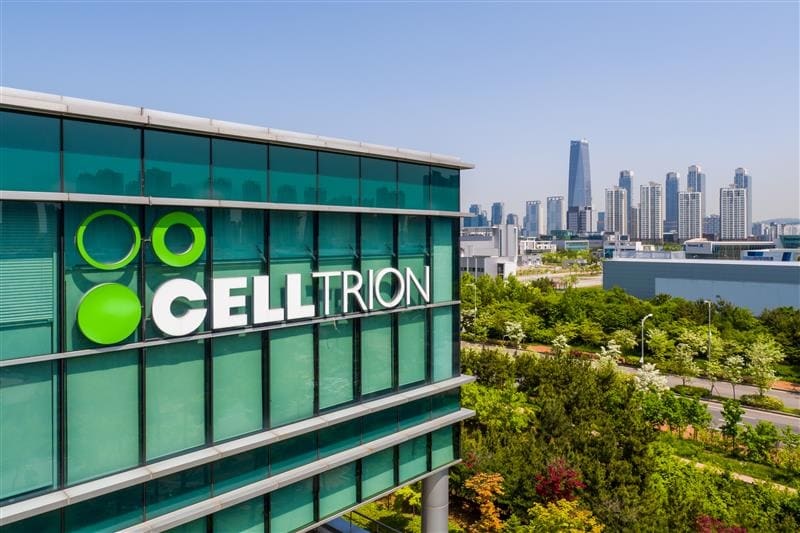
Celltrion posted 1.4 trillion won in revenue for the second quarter, the company announced, surpassing both analyst consensus and its own prior quarterly high. Operating profit climbed 86.3 percent year-on-year to 451.8 billion won, according to the company, lifting the operating margin to 32.4 percent. The figures mark the second straight quarter of record sales and have triggered a series of target-price revisions from brokerages in Seoul and abroad.
The Incheon-based biopharmaceutical maker has built its business around biosimilars, versions of expensive biologic drugs that lose patent protection. Its portfolio includes treatments for autoimmune conditions and cancer, marketed under names such as Remsima and Truxima. Demand for these therapies has accelerated in Europe and North America, where healthcare systems face budget pressure and physicians have grown more comfortable prescribing biosimilars.
Margin Expansion Draws Attention
The jump in profitability reflects both higher volumes and better pricing discipline. Celltrion's operating margin crossed 32 percent for the first time, a threshold that puts it ahead of many regional peers in the biosimilar space. The company has invested heavily in manufacturing capacity over the past three years, and those facilities are now running at higher utilization rates, spreading fixed costs across a larger output base.
Analysts at Korean securities houses have raised their twelve-month price targets in response. Several global investment banks followed suit, citing the combination of revenue momentum and margin improvement. The upgrades come as Celltrion prepares to launch additional biosimilar candidates in the second half of the year, broadening its addressable market.
Asia Biosimilar Race Heats Up
Celltrion operates in a fiercely competitive landscape. Indian and Chinese manufacturers have ramped up biosimilar production, eyeing the same high-value markets in Europe and the United States. Japan's Fujifilm and South Korea's Samsung Biologics also vie for contract-manufacturing deals and branded biosimilar partnerships. Celltrion's advantage lies in its vertically integrated model: it controls both development and large-scale manufacturing, reducing reliance on third-party contractors.
The company's success has implications for the broader Korean biopharma sector, which has attracted significant venture and private-equity capital in recent years. A sustained track record of profitability from an established player like Celltrion can lift sentiment across the industry, making it easier for smaller firms to secure funding and partnerships.
Pipeline and Capacity in Focus
Celltrion has six biosimilar programs in late-stage development, targeting blockbuster biologics that will face patent expiration over the next two years. The company has disclosed plans to file regulatory dossiers in the United States and Europe before year-end, though it has not provided detailed timelines for individual products. Manufacturing capacity remains a key constraint across the biosimilar industry; Celltrion's recent capital expenditure has positioned it to capture share as competitors struggle with production bottlenecks.
Investors will watch third-quarter results closely to gauge whether the margin expansion is sustainable or reflects one-time factors such as favorable product mix or currency movements. The won has depreciated moderately against the dollar over the past year, providing a tailwind for exporters like Celltrion. Any reversal in exchange rates could pressure reported earnings, though the company uses hedging instruments to smooth volatility.
The record quarter underscores a broader shift in Asia's pharmaceutical landscape. Companies that once focused on generic small molecules are moving up the value chain into biologics, betting that technical expertise and scale can offset the dominance of Western incumbents. Celltrion's performance suggests that bet is starting to pay off, at least for firms with the capital and regulatory know-how to navigate complex approval processes in multiple jurisdictions.
RELATED STORIES

KT&G Posts Fourth Consecutive Quarter of Double-Digit Profit Growth
Cheng Wei-Lun · 3 min

Asian Tech Stocks Surge as Weak US Jobs Data Dims Rate Hike Outlook
Cheng Wei-Lun · 4 min
Seoul Market Climbs on Tech Rally After US Jobs Data
Cheng Wei-Lun · 3 min
Samsung Settles Netlist Patent Fight With $897 Million Deal
Cheng Wei-Lun · 3 min
Spot something wrong? Email editor@briefasia.com. We log every correction publicly.