Travel & Dining · Trends
Cambodia's Tourism Decline Exposes Need for Broader Marketing Push
Land arrivals plunged 68 percent in early 2026, but air traffic fell just 20 percent, revealing a structural overdependence on Angkor Wat and regional crossings.
KEY TAKEAWAYS
- ·Cambodia's international arrivals fell 47.8 percent in the first five months of 2026, with land crossings down 68 percent and air arrivals down 20 percent.
- ·The Cambodia Tourism Board has launched green-season campaigns and secured visa-free access for Chinese nationals, but its promotional budget remains undisclosed.
- ·Cambodia's tourism infrastructure beyond Angkor Wat, including the Cardamom Mountains, Mekong river circuits, and Phnom Penh's food scene, remains largely unknown to international travelers.
A Year of Steep Losses
Cambodia recorded 5.57 million international arrivals in 2025, a 17 percent drop from the prior year. December alone saw arrivals fall 43 percent. The decline accelerated into 2026: the first five months registered a 47.8 percent year-on-year decline, with May arrivals reaching just 232,000, the lowest monthly figure in recent memory.
Prime Minister Hun Manet has attributed much of the downturn to safety concerns. Border tensions with Thailand prompted travel advisories and cancellations across multiple source markets. Separately, the country's association with cyber-scam compounds damaged its reputation in Asian outbound markets. Hun Manet described the scam operations as a black economy undermining legitimate business.
The Damage Is Lopsided
The headline numbers obscure an important asymmetry. Land arrivals fell 68 percent in the first five months of 2026, while air arrivals, which represent higher-spending leisure travelers, declined by only 20 percent. Land crossings include traders, day-trippers, and diaspora members who contribute far less to hotel occupancy and restaurant revenue than fly-in tourists.
The government announced a crackdown on scam compounds in mid-2025 and passed dedicated anti-scam legislation in April 2026. The effort is ongoing and has not yet reached all known sites, but the public commitment may help ease visitor concerns. The border dispute with Thailand remains unresolved; crossings have been closed for a year, and in June Hun Manet told Thai counterparts there was no immediate need to discuss reopening.
A Structural Weakness
Cambodia's tourism model rests heavily on Angkor Wat. The temple complex draws the bulk of international attention, yet the country holds a far wider inventory of assets that remain largely unknown abroad. The Cardamom Mountains shelter one of Southeast Asia's largest intact rainforests, with wildlife populations that neighboring countries cannot match. Ratanakkiri's volcanic crater lakes and indigenous communities attract minimal international coverage. Phnom Penh's food scene has gained attention in specialist media this year, with Khmer cuisine beginning to earn restaurant-level recognition.
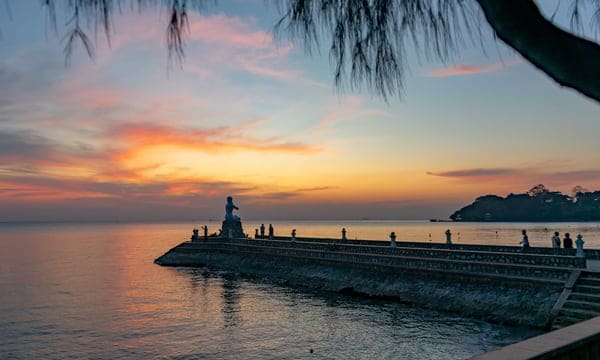
Coastal destinations including Kampot, Kep, and several offshore islands offer quiet, affordable alternatives to more crowded regional beaches. Dark tourism sites linked to the Khmer Rouge period draw thoughtful, longer-staying visitors who spend more per trip. Yet these attractions have not been packaged or promoted at scale.
A Board Without a Budget
The Cambodia Tourism Board was established in July 2024 to coordinate promotion with private-sector partners. In May 2026 it launched a green-season campaign to extend the traditional November-to-March peak. In June it secured a visa-free arrangement with China, the country's largest source market. The board signed a memorandum of understanding with Visa to access anonymized spending data for targeting high-value travelers and expanded its presence at ITB Berlin 2026.
What the board lacks is a budget commensurate with the task. The Tourism Authority of Thailand is allocated roughly 140 million USD for 22 strategic initiatives in 2026, with public targets and a unified narrative. TAT actively steers visitors toward secondary destinations through campaigns such as Hidden Gem Cities, reducing reliance on Bangkok and Phuket. The Cambodia Tourism Board's promotional budget has not been disclosed.
Connectivity and Product
Air arrivals into Phnom Penh dropped more than 25 percent in early 2026, while Thailand and Vietnam courted low-cost carriers and opened new routes. Improved connectivity requires direct incentives: underwriting seat blocks on new routes and distributing them as competition prizes would reduce airline launch risk while filling planes with visitors likely to share their experience.
The lower Mekong, Tonlé Sap, Irrawaddy dolphins at Kratie, and the four-rivers confluence in Phnom Penh remain underutilized. A packaged river circuit linking boat operators, guesthouses, and local guides would require no new infrastructure, only coordination and marketing to make it sellable through travel agents in London or Seoul.
Dark tourism assets including the Killing Fields and Tuol Sleng Genocide Museum attract hundreds of thousands of visitors annually, most of whom stay less than a day. A multi-day memory circuit linking Phnom Penh and provincial Khmer Rouge memorial sites, tied to reconciliation projects and professional interpretation, could become a differentiated product.
Phnom Penh offers fast internet, low rents, and a growing creative community, yet it has not targeted remote workers or digital nomads at scale. Bali, Danang, and Chiang Mai dominate that segment but are increasingly crowded and expensive. A long-stay visa, co-working partnerships, and a targeted campaign would cost little and generate word of mouth among Southeast Asia-based expatriates.
Khmer cuisine remains largely unknown outside the country. Amok, lok lak, and kuoy tiev are as distinctive as pho or tom yam but lack the same international recognition. Focused media engagement could begin to close that gap.
Kep's derelict French villas and Kampot's riverside shopfronts represent a vanishing architectural asset. Restoration grants or tax breaks tied to heritage preservation, protection of Bokor Hill Station's ruins, and density controls could protect these structures before rising land prices make intervention politically difficult.
Correcting the Record
Much of the reputational damage over the past year has been disproportionate to the actual risk. Phnom Penh ranks among the safest cities in the region for visitors by most measures. The scam compounds that dominated headlines targeted individuals contacted online from abroad, not tourists visiting the country. Verified safety data, embassy briefings, and journalist site visits could help align perception with reality.
Croatia, with a population of 3.9 million, receives 20 million visitors annually. Cambodia, larger in population and home to one of the world's most recognizable heritage sites, attracts a fraction of that. The gap reflects not a lack of product but a lack of awareness. The shocks of 2025 will fade. Whether Cambodia capitalizes on the next decade depends on whether it funds the institution capable of converting its attractions into arrivals.
RELATED STORIES
Thailand's $14 Tourist Levy Draws Industry Pushback Over Backpacker Impact
Siti Nuraini · 3 min

Thailand Targets 5 GW Rooftop Solar Push to Cut LNG Exposure
Priyanka V. Rao · 3 min

Mitsubishi Motors Brings Back Pajero SUV With Thailand Launch
Cheng Wei-Lun · 3 min
Southeast Asian Factories Adopt Proximity Planning to Retain Workers and Investors
Lim Hui Ying · 3 min
Spot something wrong? Email editor@briefasia.com. We log every correction publicly.