Asia · Business
California Surgical Robotics Firm Plants $500 Million Stake in Malaysia
Intuitive's Penang campus will anchor Southeast Asia's first production line for da Vinci system components, deepening the region's medtech supply chain.
KEY TAKEAWAYS
- ·Intuitive will invest roughly $500 million over five years in a 316,000-square-foot Penang facility producing surgical instruments and electromechanical components for its da Vinci robotic system.
- ·The plant is Intuitive's first in Southeast Asia and aims to employ 1,200 skilled workers by 2032, tapping Penang's dense medtech cluster that already hosts six of the world's top thirty device makers.
- ·Locating production closer to Asia-Pacific hospitals shortens lead times and diversifies supply-chain risk as regional demand for robotic-assisted surgery accelerates faster than in Western markets.
A Half-Billion-Dollar Bet on Malaysian Precision
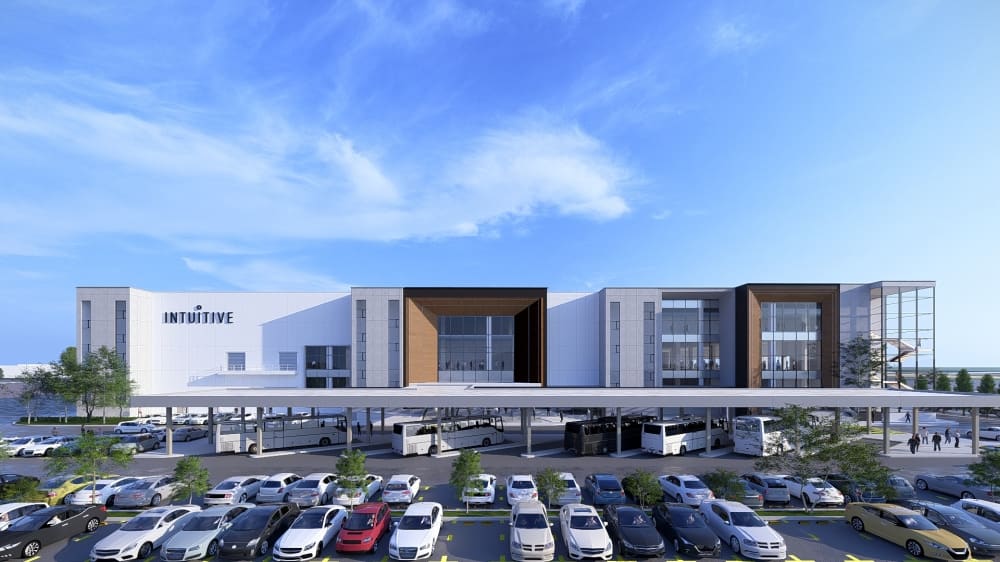
Intuitive, the Sunnyvale-based maker of the da Vinci surgical robot, will commit approximately $500 million to a new Penang manufacturing campus over the next five years, the company announced at a signing ceremony in George Town. The 316,000-square-foot plant marks the firm's first Southeast Asian production footprint and its second in Asia after an existing China operation.
Chief Manufacturing and Supply Chain Officer Mark Brosius told a press briefing that phase-one capital expenditure covering land acquisition and construction will reach $200 million, equivalent to 817 million ringgit. When operational spending and equipment installation are factored across the five-year horizon, total investment approaches the half-billion threshold. The facility is scheduled to begin output in 2028.
Brosius said the site will produce surgical instruments and electromechanical components that integrate with Intuitive's da Vinci platform, which surgeons use to perform minimally invasive procedures through small incisions. By 2032 the campus is expected to employ 1,200 people in roles spanning precision machining, quality assurance, and supply-chain coordination.
Why Penang Won the Mandate
Penang Chief Minister Chow Kon Yeow signed the land-lease agreement with Intuitive at his Komtar office, describing the deal as a fresh milestone for the state's medical-technology cluster. Chow noted that six of the thirty largest medtech companies by global revenue already run manufacturing lines in Penang, giving the island the densest concentration of such firms in both Malaysia and the broader Southeast Asian corridor.
The state's Bandar Cassia Technology Park, where Intuitive will anchor its operations, sits within a mature ecosystem of contract manufacturers, substrate suppliers, and technical training institutes. That density allows medtech assemblers to shorten lead times and tap a workforce already familiar with cleanroom protocols and regulatory documentation for markets including the United States, Europe, and Japan.
Brosius emphasized that scaling Intuitive's global network requires partners capable of sustaining the precision standards that define robotic surgery. The company's decision to enter Malaysia reflects confidence that Penang's industrial base can meet those tolerances while supporting accelerating demand across Asia-Pacific, where healthcare systems are investing heavily in robotic-assisted theater capabilities.
Regional Demand and Supply-Chain Calculus
Asia-Pacific hospitals have been adding da Vinci consoles at a faster clip than their Western counterparts, driven by rising surgical volumes, government reimbursement expansions, and a growing cohort of surgeons trained in robotic techniques. Locating instrument production closer to end users cuts shipping time and customs complexity, a material advantage when hospitals need replacement tools or new accessory kits on short notice.
Beyond logistics, the Penang plant diversifies Intuitive's manufacturing risk. Geopolitical friction and pandemic-era disruptions underscored the fragility of single-country supply chains; a second Asian hub offers redundancy should one site face export-control complications or public-health lockdowns.
The investment also aligns with Malaysia's national push to move up the value ladder. Kuala Lumpur has offered tax incentives and streamlined permitting for high-tech manufacturers willing to create skilled jobs and transfer know-how. Penang's state government has matched that effort with targeted infrastructure upgrades, including a new semiconductor design park and expanded port capacity at the nearby North Butterworth Container Terminal.
What the Plant Will and Will Not Do
Intuitive's Penang line will focus on instruments and electromechanical subassemblies rather than the console towers that house the robotic arms. Those towers, along with the vision carts and surgeon consoles, remain concentrated in the United States, where Intuitive maintains tighter control over core intellectual property and final system integration.
The Malaysian facility will handle mid-tier complexity: endoscopic graspers, bipolar forceps, needle drivers, and the motors and encoders that translate a surgeon's hand movements into robotic articulation. These components demand micron-level tolerances and rigorous testing, but their blueprints are more modular than the proprietary vision algorithms embedded in the console software.
By confining Penang to instruments and electromechanical parts, Intuitive preserves its system-level design advantage in California while capturing cost and proximity benefits in Asia. The approach mirrors strategies at other high-value device makers, which reserve core R&D and final assembly at headquarters and distribute component fabrication across regional hubs.
Workforce and Training Pipeline
Reaching 1,200 employees by 2032 will require Intuitive to recruit from Penang's technical colleges and poach talent from incumbent medtech and semiconductor plants. Brosius said the company plans partnerships with local universities to co-develop curricula in precision manufacturing and quality systems, ensuring a steady pipeline of graduates familiar with ISO 13485 medical-device standards and FDA design-control requirements.
Penang's labor market is already stretched; semiconductor fabs and electronics assemblers compete for the same pool of technicians and engineers. Intuitive's entry will likely push wages higher, a welcome development for workers but a challenge for smaller contract manufacturers operating on thinner margins.
The state government has responded by expanding vocational training capacity and easing visa rules for skilled expatriates, betting that a larger, better-paid technical workforce will attract even more advanced manufacturing projects and deepen the island's competitive moat.
Implications for Malaysia's Medtech Ambitions
Intuitive's commitment validates Malaysia's decade-long effort to position itself as a medtech manufacturing hub distinct from the electronics and semiconductor legacy. While those industries remain pillars of the economy, medical devices offer stickier relationships with end customers, higher margins, and greater resilience to commodity-price swings.
The Penang facility also signals to other U.S. and European device makers that Southeast Asia can handle sophisticated assembly beyond disposable gloves and syringes. If Intuitive succeeds in replicating its California quality standards on the island, competitors in imaging, diagnostics, and surgical robotics may follow with their own regional campuses, further entrenching Penang as the go-to site for precision medtech.
For Intuitive, the plant represents a calculated step toward a multi-continental manufacturing model that balances cost, risk, and speed to market. As robotic surgery becomes standard of care across more procedures, the company's ability to deliver instruments reliably and affordably will determine whether it retains its pioneering edge or cedes share to rivals in China, South Korea, and Europe. Penang's performance over the next five years will offer an early verdict on that strategy.
RELATED STORIES

Malaysia's Gig Worker Law Covers 1.64 Million, But Gaps Remain
Priyanka V. Rao · 4 min
Malaysia's FGVPI Sets Billion-Ringgit Target Amid Business Model Overhaul
Priyanka V. Rao · 3 min
Malaysia Regains Ground as Asia's Cocoa Processing Hub
Priyanka V. Rao · 2 min
Malaysia's Natural Rubber Output Jumps on Smallholder Strength
Priyanka V. Rao · 3 min
Spot something wrong? Email editor@briefasia.com. We log every correction publicly.