Finance · Banking
Bank of Japan Eyes October Rate Hike as Weak Yen Shifts Policy Timeline
Markets now price in accelerated tightening as currency pressure and economic resilience reshape central bank calculus
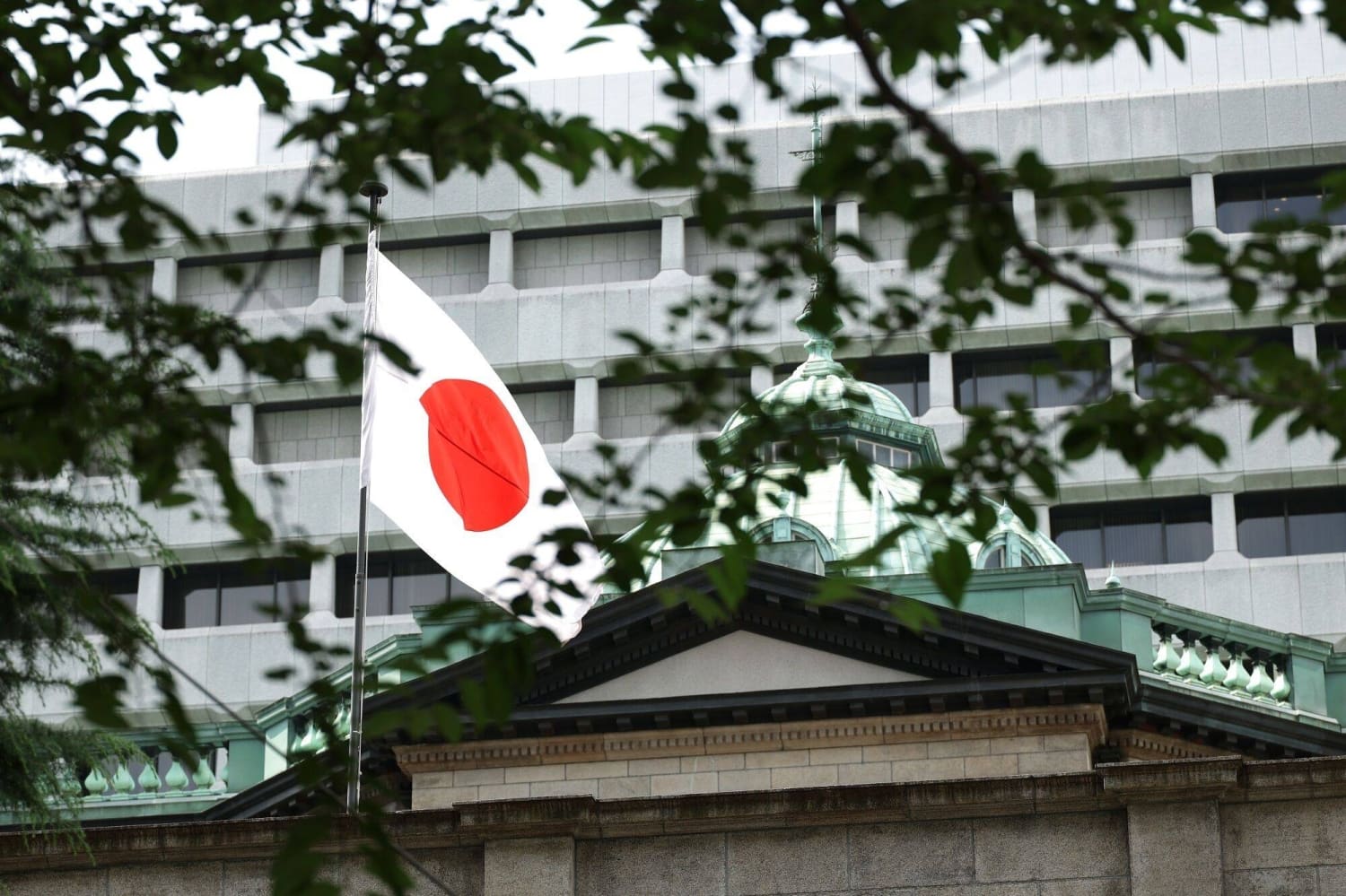
KEY TAKEAWAYS
- ·Markets now assign above 60% probability to a Bank of Japan rate hike by October, abandoning the previous six-month interval consensus.
- ·Yen depreciation past intervention thresholds and core inflation above 2% for over a year are pushing the BOJ toward faster tightening.
- ·Domestic economic resilience, including historic wage gains and stable business sentiment, gives the central bank room to act without derailing growth.
Timeline Compression
The Bank of Japan's rate-hike schedule is compressing. Until recently, consensus among economists held that Japan's central bank would maintain a measured pace, lifting borrowing costs roughly every six months. That timeline is no longer holding. Markets now assign meaningful probability to another increase arriving by October, a faster tempo than the BOJ signaled even weeks ago.
Two forces are reshaping the calculus. The yen's slide past intervention thresholds has raised the political and inflationary cost of inaction, while domestic economic indicators have proven more resilient than the central bank's dovish members anticipated. Together, they narrow the space for gradualism.
Currency Pressure Builds
Japan's currency has weakened steadily against the dollar through the second quarter, testing levels last seen during the Ministry of Finance's intervention episodes in late 2022 and mid-2023. A softer yen lifts import costs, particularly for energy and food, categories that weigh heavily in household budgets and feed directly into headline inflation.
For the BOJ, currency depreciation complicates the narrative that price pressures are transitory. Core inflation has stayed above the 2% target for more than a year, and a weaker yen threatens to entrench those gains through higher input costs for manufacturers and service providers alike. Governor Kazuo Ueda has repeatedly stressed that policy will respond to data, not forecasts, and the yen's trajectory now counts as data.
The Ministry of Finance has so far refrained from direct intervention, but verbal warnings have grown sharper. Finance officials have made clear that disorderly moves will not be tolerated, a stance that implicitly pressures the BOJ to tighten policy and narrow the yield gap with U.S. Treasuries.
Economic Resilience Surprises
Domestic activity has held up better than many forecasters expected. Household spending, while uneven, has not collapsed under higher prices. Corporate investment remains positive, supported by supply-chain reshoring and capital expenditure in semiconductors and green technology. Wage negotiations in the spring shunto delivered the largest nominal increases in three decades, and early signs suggest those gains are beginning to translate into sustained consumption.
Labor market tightness persists. The unemployment rate sits near historic lows, and job openings continue to exceed applicants by a wide margin. That imbalance gives workers bargaining power and raises the likelihood that wage growth will prove durable rather than a one-off adjustment.
The BOJ's own tankan survey, released in late June, showed business sentiment stable and capex plans intact. Large manufacturers reported improved conditions, and the outlook index remained in positive territory across most sectors. For a central bank that has long worried about fragility, the data offer room to move without derailing growth.
Market Pricing Shifts
Futures markets have repriced aggressively. The probability of a rate increase by the BOJ's October policy meeting has climbed above 60% in recent sessions, up from less than 30% a month earlier. Swap rates have adjusted accordingly, with traders now pricing in at least one additional 25-basis-point hike before year-end and a second move in early 2027.
That shift reflects both yen dynamics and a reassessment of the BOJ's reaction function. Investors had grown accustomed to the central bank prioritizing stability and downplaying upside inflation risks. The recent tone from board members suggests that calculus is evolving. Several officials have noted in public remarks that the balance of risks around inflation has tilted upward, language the market interprets as groundwork for earlier action.
Policy Dilemma Narrows
The BOJ faces a narrower set of choices than it did at the start of the year. Waiting until 2027 to raise rates again risks allowing inflation expectations to drift higher and currency weakness to become self-reinforcing. Moving too quickly risks snuffing out wage growth before it becomes embedded in the broader economy.
October represents a middle path. It would mark roughly four months since the last hike, faster than the previous six-month interval but still measured by global standards. It would also allow the BOJ to assess summer consumption data and the results of mid-year wage reviews before committing to a full tightening cycle.
The central bank has not pre-committed to any specific date, and officials continue to emphasize that decisions will be data-dependent. But the combination of currency pressure and economic resilience has shifted the distribution of outcomes. A rate hike by October is no longer an outlier scenario. It is now the base case priced into Japanese government bond markets and reflected in forward guidance from major brokerages.
What Comes Next
Attention will focus on the BOJ's July policy meeting and the quarterly outlook report that accompanies it. Any upward revision to inflation forecasts or acknowledgment of yen-related risks will be read as confirmation that the timetable has accelerated. Governor Ueda's press conference will be parsed for signals about the threshold for action and the pace of subsequent moves.
Market participants will also watch the Ministry of Finance's daily fixings and any commentary from senior officials. If currency intervention becomes necessary before October, it would likely cement the case for a rate hike at the next available meeting.
For now, the BOJ's gradual approach is giving way to a more reactive posture. The yen's weakness and the economy's resilience have combined to compress the policy timeline, and markets are adjusting accordingly.
RELATED STORIES
Bank of Japan Eyes Rate Increase as Inflation Risks Mount
Cheng Wei-Lun · 4 min
Bank of Japan Signals Possible Rate Increase This Month
Aiko Nakamura · 3 min
Yen Climbs to Eight-Month High as Rate Hike Expectations Shift Sentiment
Jun-ho Seo · 3 min
Japan's 10-Year Bond Yield Breaches 3% for First Time Since 1996
Aiko Nakamura · 4 min
Spot something wrong? Email editor@briefasia.com. We log every correction publicly.