Asia · Politics
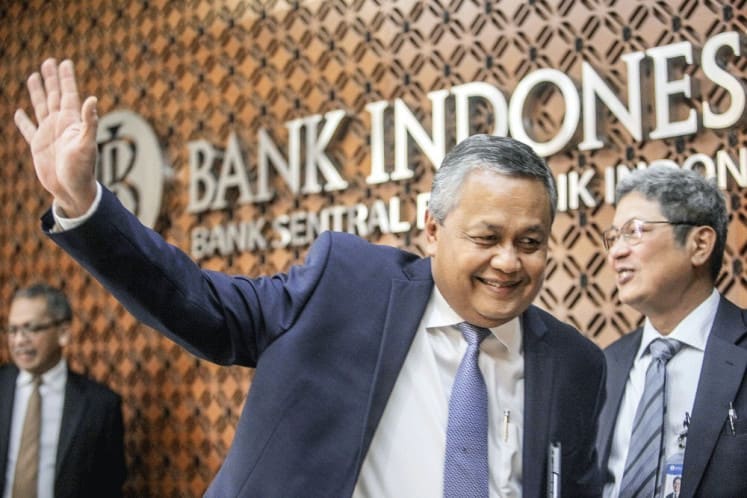
Bank Indonesia Governor Perry Warjiyo Steps Down Mid-Term
The departure of Perry Warjiyo after four decades at the central bank comes as Indonesia faces fiscal strain and fresh questions over monetary policy autonomy.
KEY TAKEAWAYS
- ·Perry Warjiyo resigned as Bank Indonesia governor mid-term after four decades at the central bank, amid global uncertainty and domestic fiscal strain.
- ·His departure follows exits by several senior economic officials and has revived questions about the central bank's autonomy under government pressure.
- ·Investors are watching the successor nomination closely for signals on whether monetary policy independence will be preserved or eroded.
A Surprise Exit at a Volatile Moment
Perry Warjiyo has resigned from his post as governor of Bank Indonesia, cutting short a second term that was due to run until 2028. The departure marks the end of a four-decade career at the central bank, where Warjiyo rose through the ranks before being appointed to the top job in 2018.
The timing is notable. Indonesia is navigating a complex macroeconomic environment: global interest rates remain elevated, capital flows to emerging markets have turned choppy, and Jakarta's fiscal position has weakened after years of pandemic-era stimulus and infrastructure spending. Warjiyo's exit follows the departure of several other senior economic officials over the past twelve months, a pattern that has unsettled investors and raised questions about policy continuity.
Bank Indonesia announced the resignation without elaborating on Warjiyo's reasons for stepping down. The central bank said it would continue to pursue its dual mandate of price stability and financial system resilience, and that an interim leadership structure would be put in place while the government nominates a successor.
Four Decades Inside the Institution
Warjiyo joined Bank Indonesia in the early 1980s, working in research and monetary policy divisions before moving into senior management. He served as deputy governor for economic and monetary policy before his elevation to the governorship, giving him deep institutional knowledge of Indonesia's monetary framework.
During his tenure as governor, Warjiyo presided over a period of relative rupiah stability, even as Indonesia absorbed shocks from the US-China trade war, the COVID-19 pandemic, and the 2022 commodity price surge. Under his watch, Bank Indonesia kept inflation within its target band for most quarters, though critics argued the central bank was sometimes slow to tighten policy when price pressures built.
Warjiyo also championed the expansion of digital payment infrastructure and pushed for greater coordination between monetary and fiscal policy, a stance that occasionally put him at odds with purists who favored a stricter separation of central bank and treasury operations.
Independence Under the Microscope
The resignation has brought the question of central bank independence back into focus. Indonesia's 1999 central bank law grants Bank Indonesia operational autonomy, but successive governments have sought closer alignment between monetary policy and broader economic goals such as employment, industrial development, and infrastructure financing.
In recent years, that tension has sharpened. The government has leaned on Bank Indonesia to help finance budget deficits by purchasing sovereign bonds in the secondary market, a practice that some economists warn blurs the line between monetary and fiscal policy. At the same time, political pressure to keep interest rates low in support of growth has occasionally clashed with the need to defend the rupiah or rein in inflation.
Warjiyo's departure comes at a moment when these trade-offs are particularly acute. The rupiah has weakened against the dollar over the past six months, and inflation has edged above the central bank's comfort zone. Meanwhile, the government is pushing ahead with ambitious spending plans tied to new capital city construction and green energy projects, both of which require substantial financing.
Observers note that the choice of Warjiyo's successor will signal how much autonomy Bank Indonesia retains in practice. A technocrat with a strong track record in monetary policy would reassure markets; a political appointee with close ties to the executive branch could stoke concerns about the erosion of institutional checks.
What Comes Next
Bank Indonesia's board of governors is expected to meet in the coming days to establish interim leadership. Under Indonesian law, the president nominates a new governor, subject to parliamentary approval. The process typically takes several weeks, though it can be expedited in times of financial stress.
Market participants will be watching for any hint of policy shift. Indonesia's benchmark interest rate currently stands at 6 percent, a level that balances domestic growth needs against external stability. Any indication that the next governor will favor looser monetary policy could trigger capital outflows and further rupiah weakness.
For now, Bank Indonesia has sought to project calm. Senior officials have emphasized that the institution's policy framework remains intact and that day-to-day operations will continue without interruption. But the abrupt nature of Warjiyo's resignation, combined with the broader churn in Indonesia's economic leadership, has left investors uneasy.
The episode underscores a broader challenge facing emerging-market central banks: maintaining credibility and independence in an era when governments face competing demands for growth, employment, and social spending. How Indonesia navigates this transition will shape not only the rupiah's trajectory but also the country's long-term macroeconomic stability.
RELATED STORIES

Indonesia's Record Current Account Deficit Threatens Rupiah Stability
Siti Nuraini · 3 min

Indonesia Unveils Bid to Become Global Commodity Price-Setter
Priyanka V. Rao · 3 min

Southeast Asian Firms Overlook Digital Pact Worth USD 2 Trillion
Lim Hui Ying · 4 min

Bayan Resources Halts Coal Deliveries After Indonesia Quota Dispute
Lim Hui Ying · 3 min
Spot something wrong? Email editor@briefasia.com. We log every correction publicly.