Asia · Trade
Bangkok Chip Diversion Probe Exposes Southeast Asia's Export Control Gap
Washington's pursuit of alleged GPU smuggling networks tests regional governments' ability to police AI hardware flows and corporate ownership chains
KEY TAKEAWAYS
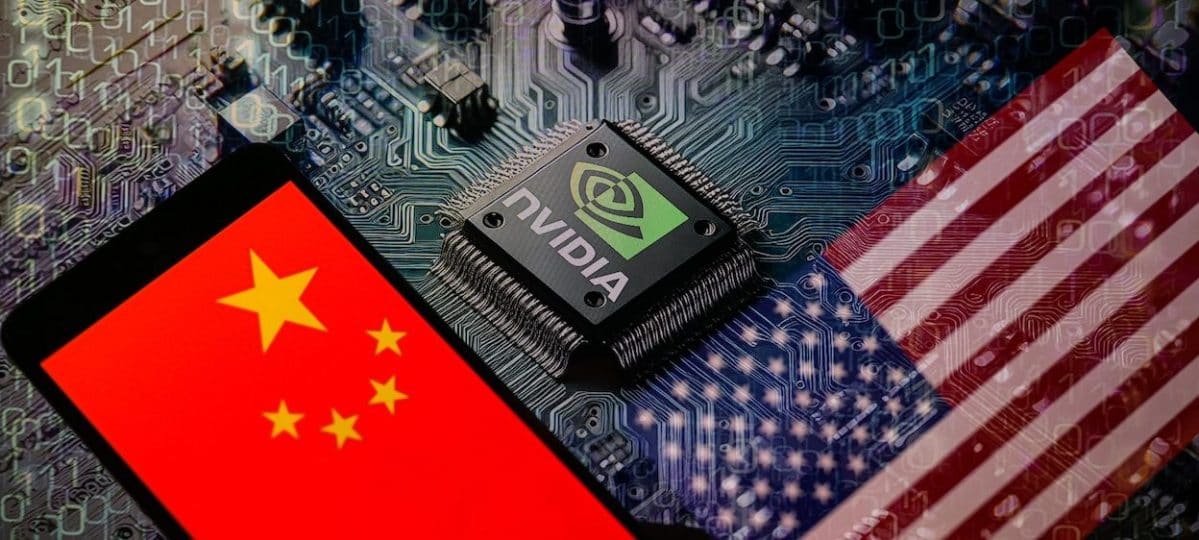
- ·US authorities flagged a Bangkok firm in May for allegedly diverting billions in Nvidia servers to Chinese buyers, including Alibaba, as part of Thailand's national AI push
- ·New US guidance shifts enforcement from buyer location to parent company headquarters, closing a loophole that allowed Chinese firms to access restricted chips through Southeast Asian subsidiaries
- ·Malaysia introduced a mandatory Strategic Trade Permit in July 2025 for high-performance AI chips, while Thailand faces greater reputational risk and Singapore must protect its status as a well-regulated hub
Washington Targets Bangkok Firm
US authorities flagged a Bangkok-based company in May for allegedly channeling billions of dollars in Nvidia-powered servers to Chinese entities, including Alibaba. The firm has ties to Thailand's national artificial intelligence initiatives, making the case politically sensitive for the Thai government and illustrating a broader enforcement shift in Washington.
The Bureau of Industry and Security has moved from sweeping restrictions toward targeted investigations of suspected diversion networks. New guidance issued earlier this year closes a loophole by redefining control based on parent company headquarters rather than subsidiary location. Any entity with a Chinese parent now faces the same export barriers as mainland firms, regardless of where its regional office sits.
Tracing Ownership Through Offshore Layers
Verifying ultimate ownership poses serious operational hurdles for Southeast Asian regulators. Chinese technology companies frequently structure investments through British Virgin Islands, Cayman Islands, or Hong Kong holding companies, creating multiple layers that obscure beneficial ownership. Mergers and reorganizations further complicate the picture.
Data center operators and local trade officials often lack real-time access to corporate registries, leaving them unable to confirm whether a customer is ultimately controlled by a restricted entity. Standard know-your-customer procedures fall short when ownership chains span three or more jurisdictions with limited transparency rules.
This administrative burden lands squarely on governments seeking to attract data center capital while avoiding secondary sanctions. Malaysia introduced a mandatory Strategic Trade Permit in July 2025 for high-performance AI chip exports, transshipments, and transit. Kuala Lumpur chose to tighten oversight rather than risk being labeled a weak enforcement point.
Thailand Under Pressure
Thailand's situation is more complex. The government has encouraged rapid expansion of data center projects to support national AI goals, but the May allegations linking a domestic firm to alleged diversion schemes have created reputational risk. If Washington determines that Thai oversight is insufficient, the country could face licensing requirements that slow hardware imports and deter foreign investors.
Singapore maintains stronger export control infrastructure and a more established data center sector, giving officials greater capacity to manage competing demands. Still, any indication that Chinese-controlled entities are routing restricted GPUs through Singapore could damage the city-state's standing as a well-regulated financial and technology hub.
Capital Versus Compliance
Regional governments face a difficult calculation. Accepting data center investment from Chinese firms without adequate safeguards invites US secondary sanctions that can sever access to American semiconductor supply chains. Imposing strict compliance measures risks alienating Beijing, a major source of infrastructure capital.
The Trump administration rolled back its January 2025 AI Diffusion Rule after data center investment surged, but Washington is now preparing country-specific licensing frameworks for Malaysia and Thailand. The shift reflects a strategy of applying pressure selectively rather than imposing uniform global restrictions.
On June 12, the US imposed controls on Anthropic's Fable 5 and Mythos 5 models. If this pattern continues, Southeast Asian regulators will need to monitor not only hardware shipments but also access to and deployment of advanced AI models, adding another layer of compliance complexity.
Institutional Capacity Shortfall
For many governments in the region, the constraint is not political will but technical capacity. Tracing corporate ownership and monitoring end-use across hundreds of data center racks requires specialized personnel and real-time data systems that several countries have yet to build.
Regional coordination on export controls could reduce the risk of external powers exploiting gaps between jurisdictions. Officials would also benefit from communicating clearly with both Washington and Beijing about enforcement limits and red lines, rather than reacting to each new investigation or guidance update.
The window for proactive measures is narrowing. US enforcement will continue to grow more granular, and demand for advanced computing capacity across Southeast Asia shows no sign of slowing. Governments that invest in building their own verification systems and define clear investment criteria now will retain greater flexibility. Those that wait risk finding their choices constrained by infrastructure decisions made under external pressure.
RELATED STORIES

Energy Infrastructure Deals Climb in Southeast Asia Amid AI Demand and Security Concerns
Cheng Wei-Lun · 4 min
Southeast Asian Factories Adopt Proximity Planning to Retain Workers and Investors
Lim Hui Ying · 3 min

Southeast Asian Firms Race to Raise Green Debt as Region Falls Behind on Renewables
Priyanka V. Rao · 3 min

WeRide Eyes Regional Push Across Australia and Asia-Pacific Markets
Cheng Wei-Lun · 2 min
Spot something wrong? Email editor@briefasia.com. We log every correction publicly.