Technology · AI
Baidu Reports AI Operations Now Half of Core Revenue as Robotaxi Fleet Expands
The Chinese tech giant's artificial intelligence business reached 50% of general revenue in Q2 2026, driven by computing infrastructure and application demand
KEY TAKEAWAYS
- ·Baidu reported that AI-powered operations represented 50% of its general business revenue in the second quarter of 2026, marking a major shift from its legacy advertising model.
- ·Growth was driven by demand for computing infrastructure and AI applications, including the ERNIE large language model family used by enterprises and developers.
- ·The company is simultaneously expanding its Apollo robotaxi service across multiple Chinese cities, adding operational complexity and capital requirements to its AI strategy.
AI Takes Center Stage in Baidu's Business Mix
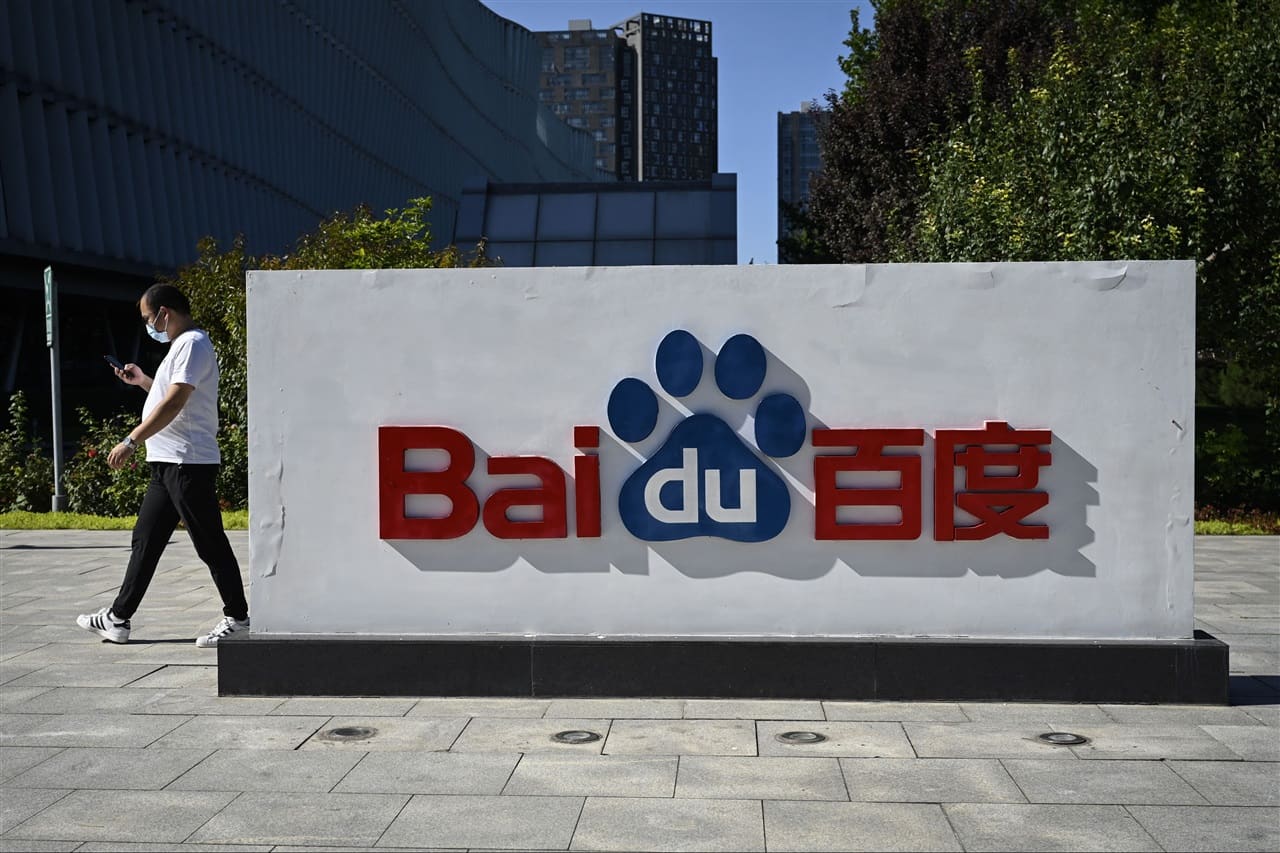
Baidu has reached a turning point in its transformation strategy, with artificial intelligence operations now representing half of its general business revenue during the second quarter of 2026. The shift underscores how quickly China's search giant is pivoting from its legacy advertising model toward compute-intensive AI services and applications.
The company's AI segment has grown on the back of sustained demand for computing infrastructure and a widening portfolio of AI-powered applications. This milestone arrives as Baidu simultaneously accelerates deployment of its Apollo robotaxi service across multiple Chinese cities, positioning itself as both a cloud AI provider and a consumer-facing autonomous mobility operator.
Computing Infrastructure Drives Near-Term Growth
The revenue split signals that enterprises and developers are increasingly turning to Baidu's cloud AI platform for model training, inference workloads, and application hosting. China's domestic push for AI sovereignty has created a favorable environment for local providers like Baidu, which can offer GPU clusters and specialized accelerators without the regulatory friction that foreign cloud vendors face.
Baidu's ERNIE large language model family has become a key anchor for the AI business, powering everything from enterprise chatbots to code-generation tools. The company has also licensed its models to third-party developers, creating a recurring revenue stream that complements its infrastructure sales.
The 50% threshold is notable because it represents a structural shift rather than a temporary spike. AI workloads tend to be stickier than advertising spend, with longer contract cycles and higher switching costs. This dynamic gives Baidu more predictable revenue visibility, a quality that investors in China's volatile tech sector have been seeking.
Robotaxi Rollout Adds Operational Complexity
While the AI cloud business scales through software and shared infrastructure, Baidu's robotaxi expansion introduces a capital-intensive, operationally complex layer. The company has been deploying autonomous vehicles in cities including Beijing, Shanghai, Shenzhen, and Wuhan, with plans to extend service zones and increase fleet size throughout 2026.
Each robotaxi deployment requires local permits, mapping data, charging or refueling infrastructure, and fleet maintenance. Unlike pure-play software services, the unit economics of autonomous ride-hailing depend on utilization rates, local labor costs for remote supervision, and vehicle depreciation schedules.
Baidu has yet to disclose whether its robotaxi operations are contributing positively to the AI revenue line or remain in investment mode. Industry observers note that even Waymo, the most mature autonomous operator globally, has only recently begun to approach breakeven in select markets. For Baidu, the robotaxi push serves dual purposes: it generates real-world data to improve perception algorithms, and it offers a tangible consumer product that keeps the company visible in the AI race.
Competitive Pressure from Alibaba and Tencent
Baidu's AI-first positioning comes as Alibaba Cloud and Tencent Cloud ramp up their own model offerings and enterprise AI tools. Alibaba's Tongyi Qianwen models have gained traction among e-commerce and logistics clients, while Tencent's Hunyuan models are being integrated into gaming, social, and fintech applications.
The three companies are effectively competing for the same pool of enterprise customers, many of whom are experimenting with multiple vendors before committing to a single platform. Pricing has remained aggressive, with cloud providers offering discounted GPU hours and bundled inference credits to win long-term contracts.
Baidu's advantage lies in its early investment in autonomous driving and its deep expertise in mapping and sensor fusion. These capabilities are harder to replicate than general-purpose language models, and they give Baidu a credible story in verticals like logistics, public transit, and last-mile delivery.
What Comes Next
Reaching the 50% AI revenue mark is a validation of Baidu's multi-year strategy, but it also raises the bar for future growth. The company will need to demonstrate that it can maintain gross margins as competition intensifies and that its robotaxi business can eventually contribute profit rather than simply consuming capital.
Investors will be watching whether Baidu can sustain double-digit growth in its AI segment through the second half of 2026, especially as comparisons become tougher and as the initial wave of enterprise AI adoption matures. The robotaxi expansion, meanwhile, will be judged on fleet utilization metrics and progress toward regulatory approval in additional tier-one cities.
For now, Baidu has positioned itself as the most AI-centric of China's major internet platforms. Whether that translates into durable competitive advantage will depend on execution in both the cloud and the physical world.
RELATED STORIES

Microsoft Scales Back China Operations as AI Strategy Reshapes Regional Presence
Cheng Wei-Lun · 3 min
WeRide Eyes Regional Push Across Australia and Asia-Pacific Markets
Cheng Wei-Lun · 2 min

Apple Trains Proprietary AI Model for China Market With Alibaba Support
Cheng Wei-Lun · 3 min
Tsinghua Unigroup Cuts Ties With Collapsed Dongguan Semiconductor Project
Cheng Wei-Lun · 3 min
Spot something wrong? Email editor@briefasia.com. We log every correction publicly.