Real Estate · Homes
Australia's Housing Market Slides Into Steepest Downturn Since Pandemic
Sydney and Melbourne prices drop 5% as rate hikes and tax policy shift trigger retreat among buyers and investors
KEY TAKEAWAYS
- ·Home prices in Sydney and Melbourne have fallen nearly 5% year-to-date as the Reserve Bank of Australia raised rates three times and the government ended negative gearing tax breaks for investors.
- ·Mortgage inquiries dropped 14% in June compared to a year earlier, with first-time buyers and investors pulling back sharply despite lower nominal prices.
- ·New South Wales cut its four-year stamp duty revenue forecast by A$5.3 billion in June, while bank shares have shed more than A$60 billion in market value since February.
Cooling Momentum in Sydney and Melbourne
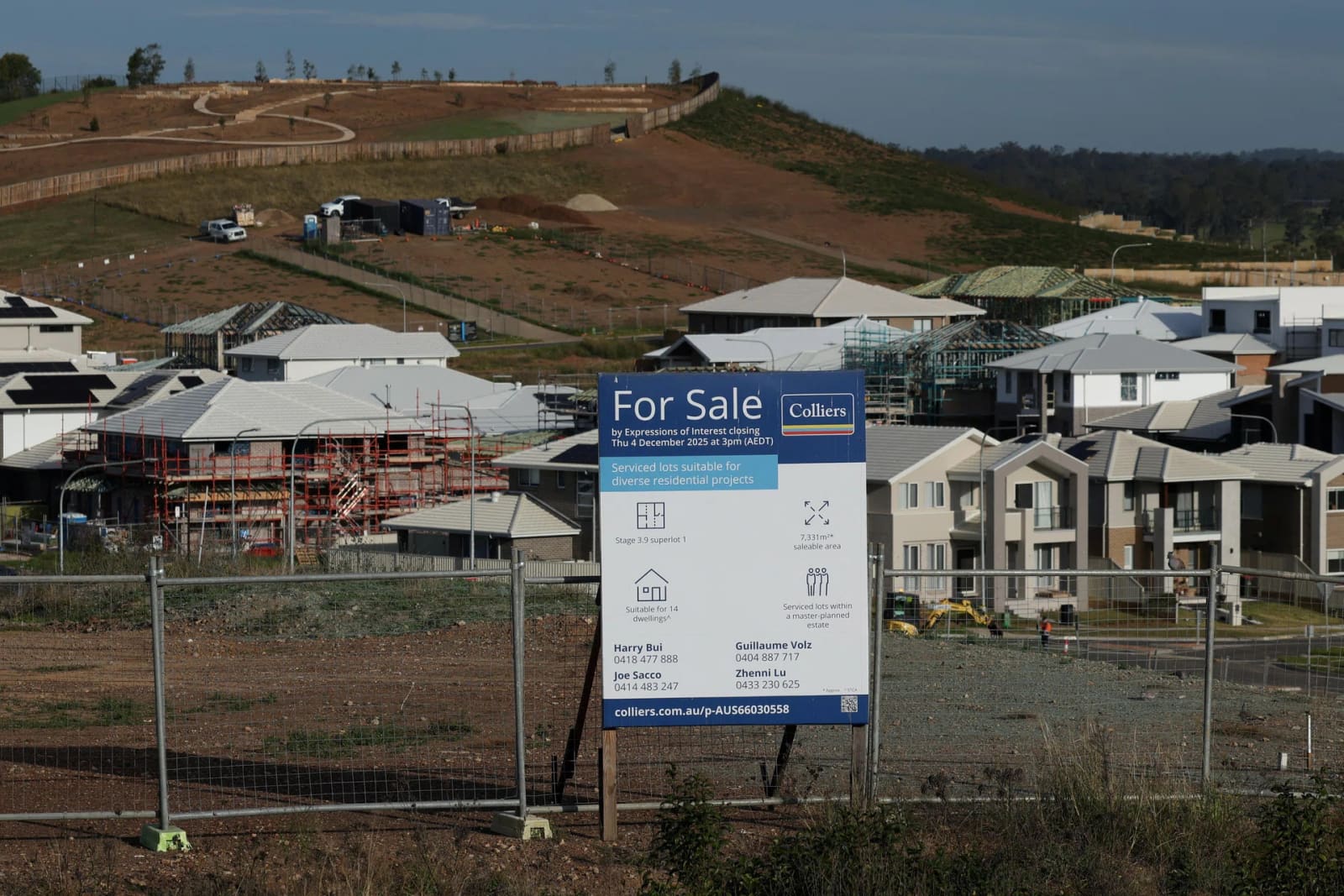
Australia's residential property sector is experiencing its sharpest contraction since the pandemic, driven by higher interest rates and policy changes that have upended investor calculations. Home values in Sydney and Melbourne have declined nearly 5% year-to-date, reversing what had been a multi-decade run of steady appreciation.
The Reserve Bank of Australia lifted rates three times between February and May to combat inflation pressures stemming from the Iran conflict, unwinding the accommodative stance adopted last year. The cumulative effect has been a marked shift in buyer sentiment, with open house attendance in Sydney averaging just 2.1 visitors in the four weeks to mid-July, according to Ray White. Auction clearance rates have tumbled, and property listings are lingering unsold for extended periods.
At the same time, Canberra's overhaul of negative gearing rules for established homes and the elimination of capital gains tax concessions for property investors have removed key financial incentives. The combined policy shift has prompted many would-be landlords to withdraw from the market entirely.
Credit Demand Contracts Sharply
Mortgage inquiry volumes dropped 14% in June compared to the same month a year earlier, data from Equifax shows. That marks a sharp reversal from January, when loan inquiries were up nearly 11%. First-time buyers, typically more sensitive to financing costs, are leading the pullback. Despite lower nominal prices, research from Cotality indicates that affordability in Sydney and Melbourne has not improved when measured against borrowing capacity.
Liza Cheong, a Sydney-based mortgage broker, noted that younger clients are hesitant to commit to long-term liabilities in the current environment. Investors who had previously relied on negative gearing strategies have shelved acquisition plans, she added, describing the shift in client energy as stark.
The downturn is weighing on Australia's banking sector. The overall bank share index has fallen 12% since February, erasing more than A$60 billion in market value as competition for a shrinking pool of borrowers intensifies. Mortgage lending, historically the largest revenue stream for Australian lenders, faces mounting pressure.
Broader Economic Ripple Effects
The property slowdown is beginning to show up in adjacent sectors. Department store Myer issued a profit warning this week, citing weaker consumer spending in June and July and pointing to housing market conditions among the headwinds facing households. Shares in the retailer dropped 10% following the announcement.
Small business owners are also feeling the impact. Jason Zhang, who runs a kitchen renovation business in Sydney, said many clients have postponed projects, leaving him concerned about pipeline visibility into next year. He expects conditions to remain subdued unless the central bank reverses course on rates.
State governments are bracing for a significant hit to stamp duty revenue. New South Wales in June revised its four-year stamp duty forecast downward by A$5.3 billion, reflecting the sharp decline in transaction volumes. Sydney unit sales totaled just 2,495 in June, the lowest level in at least five years excluding the seasonal January trough.
Policy Dilemma for the Central Bank
RBA Governor Michele Bullock described the housing market as a "litmus test" for whether monetary policy is sufficiently restrictive to bring inflation back to target. Speaking on Tuesday, she acknowledged that the property sector has cooled more than the central bank had anticipated, but stopped short of signaling any near-term policy shift.
"If it looks like inflation is not coming down, then I think the board have some difficult decisions to make," Bullock said.
Market expectations for rate cuts next year have evaporated as oil prices remain elevated, leaving households and businesses to adjust to a higher-for-longer rate environment. Sebastian Watkins, CEO of Lendi Group, Australia's largest retail mortgage broker, said the industry will adapt to the new conditions, though the timeline for normalization remains uncertain.
High Base Complicates Assessment
The current downturn follows an extraordinary run-up in values. The aggregate worth of Australia's 11.5 million residential properties surged 87% this decade to reach A$12.8 trillion, making Australian real estate among the most expensive globally relative to income. Around two-thirds of households own their homes, meaning that property wealth has long underpinned consumer confidence and spending behavior.
Whether the slowdown deepens or stabilizes will hinge largely on the central bank's next moves and the trajectory of inflation. For now, the combination of tighter credit conditions, policy headwinds, and elevated financing costs has brought a decades-long boom to an abrupt pause.
RELATED STORIES
Australian Property Investors Retreat as Tax Break Cuts Bite
Priyanka V. Rao · 2 min
Australian Housing Downturn Tightens Financial Conditions Beyond Rate Hikes
Priyanka V. Rao · 2 min
Australia's Property Tax Overhaul Splits Housing Market into Winners and Losers
Priyanka V. Rao · 4 min
HSBC Sheds A$36 Billion Australian Loan Book in Blackstone Deal
Priyanka V. Rao · 3 min
Spot something wrong? Email editor@briefasia.com. We log every correction publicly.