Technology · Dev
AUO Elevates CFO Chang Po-Yi to President After Ko's Exit
Taiwan's display maker reshuffles top leadership as financial chief takes operational helm following departure of longtime executive
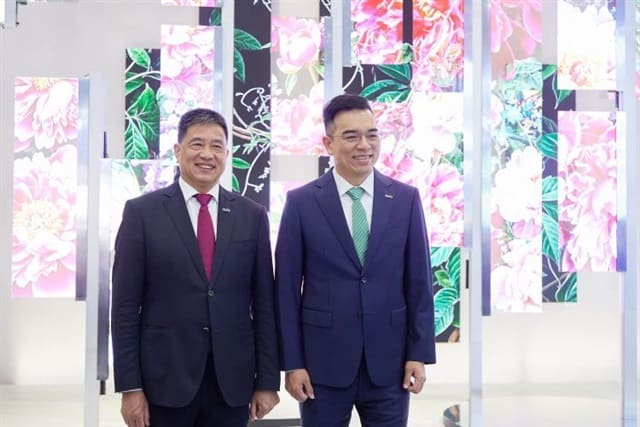
KEY TAKEAWAYS
- ·AU Optronics appointed CFO Chang Po-Yi as president on July 30 after Frank Ko resigned for personal reasons.
- ·The promotion reflects a trend in Taiwan tech where financial leaders take operational roles in capital-intensive, margin-pressured industries.
- ·Chang inherits challenges including Chinese LCD capacity dominance, automotive display opportunities, and balancing immediate profitability with long-term positioning.
Leadership Transition at Display Giant
AU Optronics, one of Taiwan's major LCD panel manufacturers, announced a senior management reshuffle on July 30, elevating Chief Financial Officer Chang Po-Yi to the role of president. The board's decision follows Frank Ko's departure from the presidency, which the company attributes to personal considerations.
The promotion positions Chang at the operational center of a company navigating intensifying competition in the display sector and searching for growth beyond commodity LCD production. AUO has spent recent years diversifying into automotive displays, medical imaging panels, and specialty industrial applications as margin pressure mounts in consumer electronics.
Chang's ascent from the finance function to the top operational post reflects a broader pattern across Taiwan's technology sector, where CFOs increasingly step into president roles as companies prioritize capital allocation discipline and investor communication alongside technical execution. The move signals that AUO's board views financial stewardship and strategic resource deployment as critical to the company's next chapter.
From Finance to Operations
Chang Po-Yi has served as AUO's CFO through a turbulent period for the global display industry. Panel prices have cycled through sharp swings since 2020, driven by pandemic demand volatility, inventory corrections, and capacity additions from Chinese competitors. Managing cash flow, capital expenditure timing, and balance sheet resilience during these cycles has been central to AUO's survival strategy.
The CFO role at a capital-intensive manufacturer like AUO extends well beyond traditional accounting. Chang has overseen decisions on fab depreciation schedules, equipment lease structures, and the financial engineering required to maintain competitiveness without the scale advantages enjoyed by Samsung Display or BOE Technology Group. That experience now transfers directly to the president's office, where strategic choices about which product lines to expand and which to exit will define AUO's trajectory.
Taiwan's display sector has seen similar finance-to-operations transitions at other firms. The logic is straightforward: in a maturing industry where differentiation increasingly hinges on cost structure and capital efficiency rather than pure technology leadership, a president with deep financial acumen can make faster, more disciplined calls on resource allocation.
Ko's Tenure and the Road Ahead
Frank Ko's departure closes a significant chapter in AUO's history. While the company did not disclose the specific personal reasons behind his resignation, leadership changes at this level typically involve months of succession planning. Ko's tenure saw AUO weather the worst of the LCD downcycle and begin the pivot toward higher-value segments, including automotive instrument clusters and head-up displays that command better margins than television or monitor panels.
The timing of the transition comes as the display industry enters a new phase. Demand for IT panels has stabilized after two years of inventory digestion, but pricing power remains elusive. Automotive displays offer better economics but require different sales cycles, certification processes, and customer relationships than consumer electronics. Medical and industrial displays provide niche opportunities but lack the volume to offset declines in core markets.
Chang inherits a company that must balance immediate profitability concerns with long-term positioning. AUO's competition extends beyond fellow Taiwanese firms like Innolux to include South Korean giants with OLED capabilities and Chinese manufacturers that have added massive LCD capacity in recent years, often with state backing. Differentiation through mini-LED backlighting, advanced driver circuits, and specialized form factors will be essential.
Regional Context and Competitive Dynamics
The leadership change unfolds against a backdrop of shifting display supply chains across Asia. China's panel makers now dominate global LCD capacity, forcing Taiwanese and South Korean firms to migrate toward premium segments or exit commodity lines entirely. AUO has closed older fabs and consolidated production, a painful but necessary adjustment that Chang's financial oversight helped manage.
Taiwan's broader technology ecosystem provides some advantages. Proximity to semiconductor design houses, packaging specialists, and component suppliers enables tighter integration for advanced display products. AUO's work on micro-LED technology, while still pre-commercial at scale, benefits from collaboration with LED chipmakers and equipment vendors concentrated in the Hsinchu and Tainan science parks.
The company's automotive push aligns with Taiwan's effort to deepen ties with global carmakers. As vehicles incorporate larger and more numerous displays, from dashboard screens to rear-seat entertainment and augmented reality windshields, AUO positions itself as a supplier that can deliver both the panels and the integrated electronics. This systems-level approach requires operational coordination that extends beyond any single function, making the president role more demanding than in previous eras.
Financial Discipline in a Capital-Heavy Sector
Chang's background brings particular relevance to AUO's capital expenditure decisions. Display fabs require billions of dollars in upfront investment, with payback periods stretching across years. Misjudging demand cycles or committing to the wrong technology generation can saddle a company with underutilized assets and depreciation burdens that erode competitiveness.
AUO has been conservative on capex in recent quarters, focusing spending on yield improvement and product mix optimization rather than capacity expansion. This discipline reflects lessons learned from the industry's boom-bust cycles and the reality that adding LCD capacity now would likely destroy value. Chang's promotion suggests the board wants to maintain that cautious stance while identifying selective growth investments in higher-margin categories.
The company's balance sheet health will be critical as it navigates the transition. Maintaining investment-grade credit metrics, managing working capital through demand fluctuations, and generating sufficient free cash flow to fund R&D without excessive leverage are all priorities that sit at the intersection of finance and operations. Chang's dual expertise positions him to make integrated decisions that previous generations of display executives, often promoted from engineering ranks, might have approached differently.
What Comes Next
AUO faces strategic questions that will define its next decade. How aggressively should it invest in OLED or micro-LED when LCD still generates the bulk of revenue? Which automotive customers warrant deep co-development partnerships? Can medical imaging and industrial control panels grow fast enough to offset structural declines in IT displays?
Chang's leadership will be tested on execution as much as strategy. The display industry rewards operational excellence: yield rates, defect density, cycle times, and equipment utilization all directly impact unit economics. A CFO-turned-president must demonstrate command of these operational levers while maintaining the financial rigor that earned the board's confidence.
The broader Taiwan tech sector will watch closely. If Chang successfully steers AUO toward sustainable profitability and market share gains in premium segments, it reinforces the case for finance leaders taking operational roles in mature, capital-intensive industries. If the transition proves rocky, it may prompt other boards to reconsider similar moves.
For now, AUO's board has made its choice. Chang Po-Yi steps into the president's office with a mandate to apply financial discipline to operational decisions, navigate a hyper-competitive regional landscape, and position the company for relevance as the display industry's center of gravity continues its eastward shift.
RELATED STORIES
Hon Hai Posts Record August Revenue on AI Server Demand
Jun-ho Seo · 3 min
Taiwan's Vecow Sees Western Markets Drive Robotics Push
Cheng Wei-Lun · 3 min
Taiwan UPS Maker Eyes Record Quarter on Data Center Demand
Cheng Wei-Lun · 3 min
Integrated Systems Will Drive Next Wave of AI Growth, Says TSMC
Cheng Wei-Lun · 4 min
Spot something wrong? Email editor@briefasia.com. We log every correction publicly.