Asia · Trade
ASEAN Deepens Integration as Global Trade Fractures
Singapore's deputy prime minister says regional trust built through crises enables progress on digital trade, AI governance, and supply chain resilience despite protectionism.
KEY TAKEAWAYS
- ·ASEAN is accelerating economic integration through digital trade frameworks and supply chain coordination in response to rising global protectionism and geopolitical fragmentation.
- ·The Digital Economy Framework Agreement takes effect in 2027, creating common rules for data flows and online transactions; AI governance will follow as the next major regional agenda.
- ·Amazon Web Services plans over $33 billion in cloud and AI infrastructure investment across Indonesia, Malaysia, Singapore, and Thailand by 2039, projected to add $64 billion to GDP.
A Diverging Path
While major economies erect trade barriers and geopolitical fault lines deepen, Southeast Asia is charting a different course. ASEAN member states are accelerating economic integration, driven by trust accumulated through successive crises from the pandemic to recent tariff shocks.
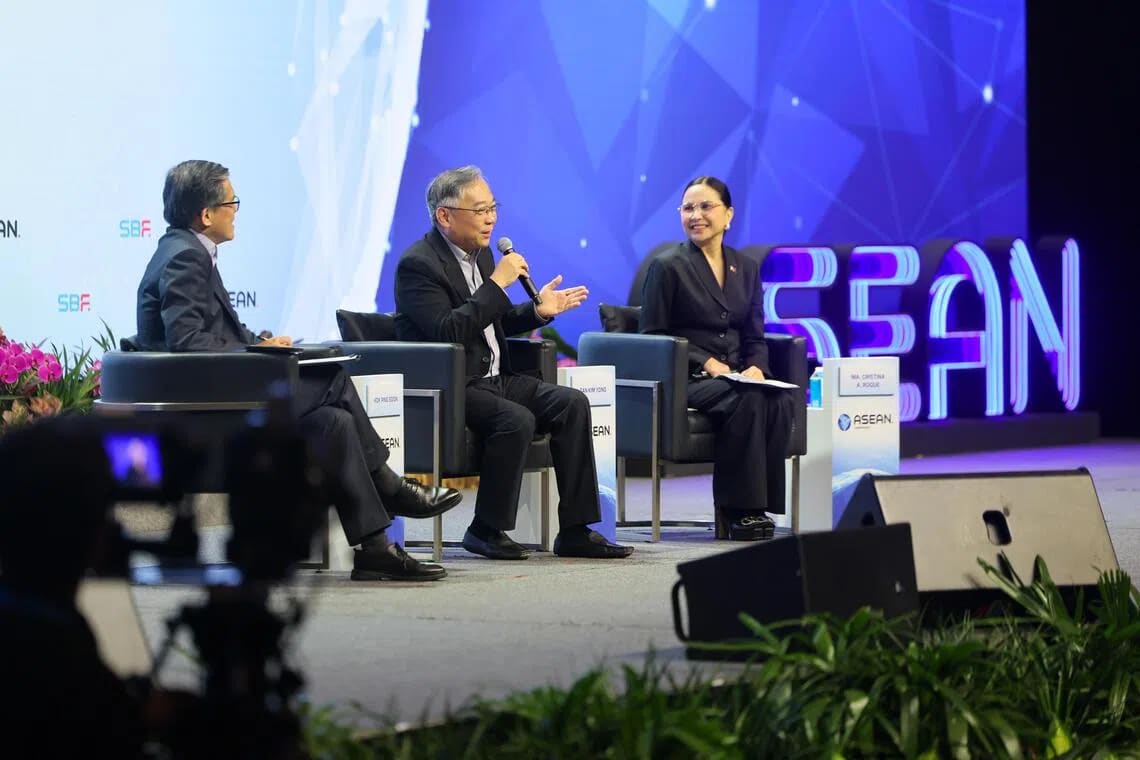
Deputy Prime Minister Gan Kim Yong told business leaders at the Singapore Business Federation ASEAN Conference 2026 that the bloc's response to fragmentation is integration itself. The regional grouping strengthened supply chains during Covid-19 and upgraded its Trade in Goods Agreement in 2025 when Washington announced sweeping global tariffs.
The foundation of this cohesion is not economic similarity but accumulated trust, according to Gan. ASEAN's ten economies span vastly different development stages and political systems, yet repeated crisis management has built confidence in collective action.
Digital Framework Takes Effect
The Digital Economy Framework Agreement represents the latest test of that integration. Set to take effect in 2027, DEFA will create common rules for digital trade, data flows, payments, and online transactions across the region. The framework aims to simplify cross-border expansion for small and medium enterprises, which often struggle with fragmented regulatory environments.
After DEFA implementation, artificial intelligence will become ASEAN's next major digital agenda, Gan said. Priorities will include capability development, interoperability standards, governance principles, and practical applications. Singapore will assume the ASEAN chairmanship in 2027 with a mandate to continue internal integration while expanding global engagement.
Not all integration efforts move at the same pace. The Green Economy Agreement and ASEAN Power Grid projects require more time to achieve consensus among member states with divergent energy profiles and climate commitments.
Infrastructure Investment Accelerates
Cloud and AI infrastructure investment is ramping up across the region. Amazon Web Services plans to deploy over $33 billion in Indonesia, Malaysia, Singapore, and Thailand by 2039, according to John Kain, who leads the company's financial services market development globally. The investment is projected to add $64 billion to the four countries' combined GDP by 2039 and support thousands of jobs annually.
Amazon has trained more than 2.7 million individuals across Southeast Asia in cloud skills since 2017, Kain said. He urged companies to begin AI adoption immediately rather than wait for mature solutions, noting that models will continue evolving. The implementation challenge lies in integrating technology into business operations to boost productivity and efficiency.
UOB's corporate banking head Edmund Leong framed AI as an economic growth story rather than merely a technology shift. Companies are adopting AI because it delivers positive economic returns, he said, emphasizing the tangible business impact beyond the hype cycle.
Energy Resilience in Focus
Energy security has become urgent following supply disruptions and price spikes tied to conflict in Iran. Aw Kah Peng, chairman of Shell Companies in Singapore, emphasized the need to build resilience into energy investments now, while the window remains open.
ASEAN represents roughly 10 percent of global population but consumes only 50 to 60 percent of the European Union's energy levels. That gap signals substantial room for energy investment without compromising cleaner energy goals, Aw said. The region can continue investing for growth while addressing climate commitments.
Volatility has become the new normal, Aw noted. Middle East events and geopolitical tensions demonstrate that businesses must learn to operate and grow in uncertain conditions rather than wait for stability to return. Companies cannot afford to pause expansion plans until geopolitical clarity emerges.
Trust as Infrastructure
Philippine Minister of Trade and Industry Ma. Cristina A. Roque joined Gan and Singapore Business Federation CEO Kok Ping Soon at the ministerial dialogue, underscoring the cross-border coordination underpinning integration efforts.
The conference brought together business leaders and government officials from across Southeast Asia to discuss challenges including trade wars, tariffs, and AI transformation. The discussions reflected a region acutely aware of external pressures but determined to deepen internal cohesion as a buffer.
Gan's emphasis on trust as the foundation of ASEAN centrality suggests the bloc views integration not as a policy choice but as a strategic imperative. Each crisis weathered together strengthens the case for collective action on the next challenge, whether digital governance, energy resilience, or navigating great power competition.
For investors and multinational corporations, the integration trajectory signals opportunities in digital infrastructure, cross-border payments, and regional supply chains. The test ahead is whether ASEAN's trust-based model can sustain momentum as external pressures intensify and internal development gaps widen.
RELATED STORIES

Southeast Asian Firms Overlook Digital Pact Worth USD 2 Trillion
Lim Hui Ying · 4 min

Five ASEAN Members Back Regional Oil Stockpile as Study Nears Completion
Tran Quoc Bao · 3 min

Philippine National Bank Finances $109 Million Solar-Storage Plant in Iloilo
Priyanka V. Rao · 4 min
Singapore Economists Lift 2026 Growth Outlook to 5% as Chip Exports Surge
Priyanka V. Rao · 3 min
Spot something wrong? Email editor@briefasia.com. We log every correction publicly.