Real Estate · Land
Apartment Builders in South Korea Navigate New Energy Production Rules
Regulations now compel residential developers to install solar and other renewable systems, reshaping construction economics across the country's housing sector
KEY TAKEAWAYS
- ·South Korea now requires private apartment developers to generate at least 13% of building energy on-site, a significant shift from zero previous obligation.
- ·Incheon's Geomdan New Town goes further, mandating Zero-Emission Building Grade 4 status with 20% energy self-sufficiency for new residential projects.
- ·Construction costs rose 34% between 2020 and early this year, driven more by labor shortages and material prices than energy efficiency rules.
Incheon Sets the Bar Higher
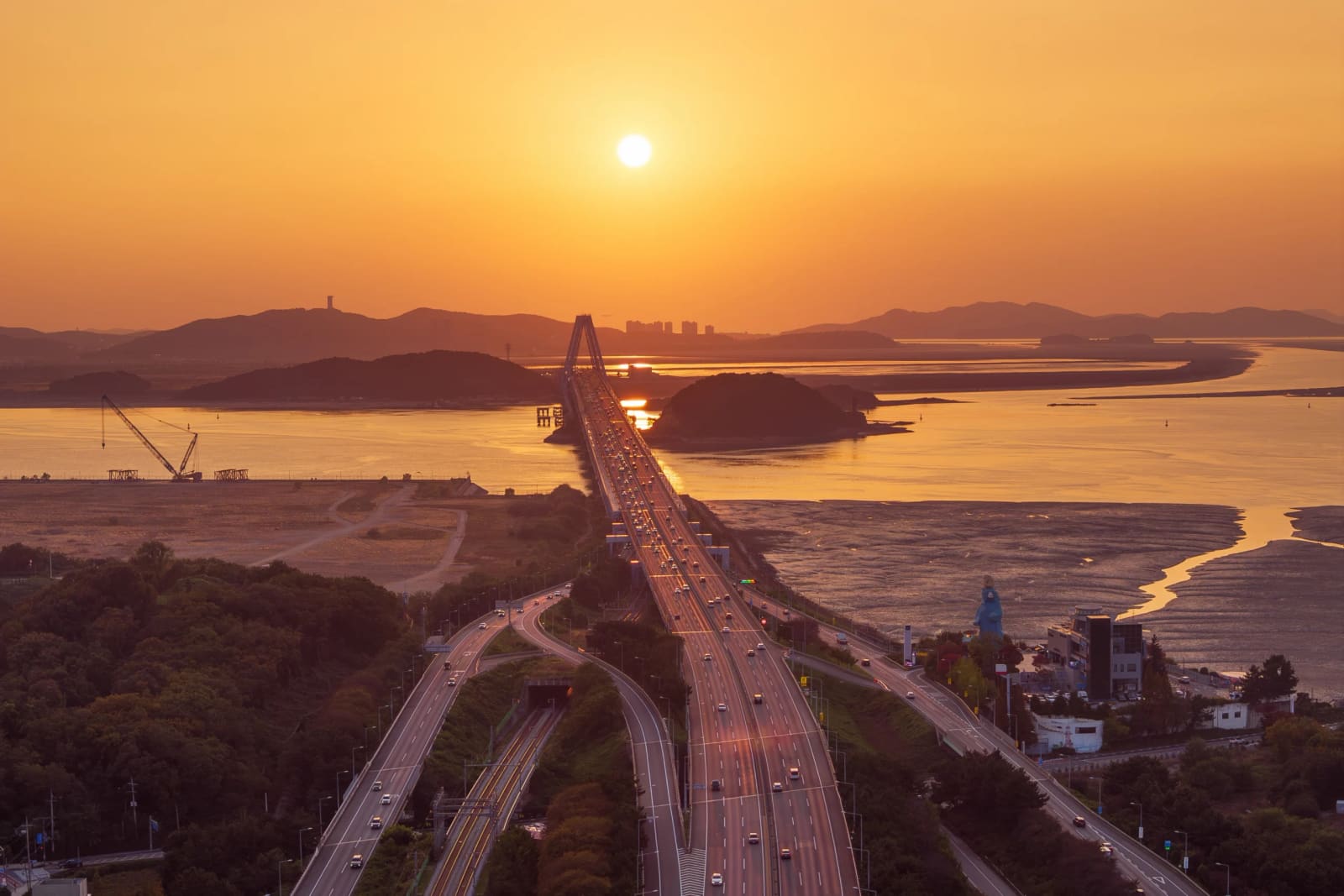
Private housing developers working on Geomdan New Town, a residential zone northwest of Incheon International Airport, face a tougher benchmark than most of their peers. The district, announced in early June, requires apartments to achieve Zero-Emission Building Grade 4 status, meaning each structure must supply a minimum of one-fifth of its own power.
Ryu Yun-ki, president of Incheon Metropolitan City Urban Development Corporation, describes the project as an eco-friendly complex designed to match the ambitions of a special development zone. Geomdan has grown into one of the fastest-expanding areas in Incheon since its inception in the late 2000s, and the latest phase pushes energy performance standards further than earlier iterations.
The Incheon requirement sits well above the national baseline introduced last year, signaling how local governments are using district-level controls to accelerate decarbonization in the residential sector.
National Baseline Takes Effect
In June of last year, South Korea's Ministry of Land, Infrastructure and Transport issued a mandate requiring newly built private apartment developments to produce at least 13% of their energy on-site. The rule represents a break from previous practice, which imposed no such obligation on residential builders.
The regulation places South Korea alongside Japan in the race to tighten energy performance standards for housing across Asia. It also forms part of the country's broader commitment to reach net-zero greenhouse gas emissions by 2050, a target that hinges on upgrading the built environment.
Hong Seongjun, head of the ministry's Green Building Division, points out that private buildings make up the bulk of the country's real estate stock. Raising their energy performance is essential if national climate goals are to be met, he notes.
Industry Pushback and Compromise
The government had initially planned to enforce Zero-Emission Building Grade 5 certification for all new private apartment projects with more than 30 units, a threshold that would have required 40% energy self-sufficiency. That timeline, set to begin in early 2024, drew sharp criticism from developers and industry associations.
The Architectural Institute of Korea warned that the stricter standard could drive construction costs up by 35%, a figure that spooked builders already grappling with rising apartment prices and a national debate over housing affordability. After sustained pressure, the government postponed implementation by one year and spent much of 2024 consulting with the private sector.
The compromise, announced mid-2025, lowered the energy production requirement to 13% while maintaining other performance criteria. The ministry estimates the new rule will add approximately KRW1.3 million, or USD860, to the cost of an 84-square-meter unit, with households saving around KRW220,000 annually on energy bills. According to official projections, the upfront investment pays for itself within five to six years.
Solar Panels and Insulation
Rooftop photovoltaic arrays have become the default solution for meeting the new thresholds, supplemented by improved insulation and other demand-reduction measures. In December, a second set of regulations came into force, tightening standards for building envelopes and requiring developers to plan for renewable energy installations at the permit stage.
Jimmy Park, head of ESG Solutions at CBRE South Korea, explains that the combined rules oblige builders to incorporate high-performance insulation and space for additional renewable systems early in the design process. While concerns about regulatory burden persist, Park says they tend to blend into broader complaints about cumulative compliance costs rather than surfacing as targeted opposition to energy standards.
Public-Private Collaboration
To help the industry adapt, the government has backed joint ventures between public agencies and private builders. A five-year research consortium launched last year includes Ewha Womans University, Samsung, Posco E&C, Lotte E&C, and state-owned LH. Its first project, a 27-story complex in Gunpo south of Seoul, targets 60% energy self-sufficiency by covering the building's exterior walls and rooftop with solar panels.
LH, the public housing developer, announced the Gunpo scheme in November as a demonstration of what can be achieved when design, materials, and renewable technology align from the outset.
Construction Cost Pressures
Energy regulations account for only part of the cost equation. South Korea's Construction Cost Index, tracked by the Korea Institute of Civil Engineering and Building Technology, rose 34% between 2020 and the start of this year. Labor expenses have climbed in parallel, driven by a shortage of construction workers that emerged during the pandemic and has yet to resolve.
Park at CBRE argues that while the Zero-Emission Building framework does add expense, it is not the primary driver of cost inflation in the apartment sector. Rising wages, material prices, and stricter safety protocols exert more immediate pressure on project budgets, he notes.
What Comes Next
The phased rollout suggests the government is prepared to tighten standards incrementally rather than impose a single, disruptive shift. Local authorities such as Incheon are already moving ahead of the national baseline, testing higher thresholds in greenfield districts where infrastructure and planning controls offer more flexibility.
As the country approaches 2050, the performance gap between public and private housing stock will narrow. Developers who invest in renewable capacity and energy-efficient design now are likely to face fewer retrofit costs later, while those who delay may find themselves squeezed by both regulation and rising energy prices.
RELATED STORIES
South Korea's Import Prices Drop 1% in July on Currency Strength and Lower Oil
Cheng Wei-Lun · 2 min

South Korea Commits $880 Billion to AI and Chip Infrastructure
Jun-ho Seo · 3 min
Emart Posts $30 Million Loss as Starbucks Korea Boycott Bites
Jun-ho Seo · 2 min
HiteJinro Expands Vietnam Footprint with Scholarship Program and New Production Facility
Cheng Wei-Lun · 3 min
Spot something wrong? Email editor@briefasia.com. We log every correction publicly.