Travel & Dining · Trends
AirAsia Group Reports RM527 Million Loss as Fuel Shock Forces Fleet Cuts
The Malaysian carrier is pulling back 25 older aircraft and slashing seat capacity by up to a quarter after jet fuel surged 66 percent in a single quarter
KEY TAKEAWAYS
- ·AirAsia Group recorded a net loss of RM527.16 million in Q2 2026, driven by a 66 percent surge in average fuel prices and RM330.97 million in foreign exchange losses.
- ·The carrier will cut seat capacity by 20 to 25 percent year-on-year in Q3 2026 and return 25 older, less fuel-efficient aircraft to lessors during the financial year.
- ·Jet fuel prices have climbed above USD 140 per barrel, and the group has suspended updates to internal targets due to geopolitical instability and energy market volatility.
Fuel Prices Slam Asia's Low-Cost Giant
AirAsia Group Bhd recorded a net loss of RM527.16 million in the second quarter ending June 30, 2026, marking one of the sharpest reversals for Southeast Asia's largest budget carrier since the pandemic recovery began. The Kuala Lumpur-based airline attributed the loss to a dramatic escalation in jet fuel prices and widespread currency weakness across its core markets.
The group generated RM5.08 billion in revenue during the quarter. Average fuel prices climbed 66 percent compared to the previous three-month period, a spike the carrier linked directly to intensifying geopolitical conflict in West Asia that has disrupted global energy flows and tightened supply.
Aircraft fuel expenses alone reached RM2.80 billion for the quarter, accounting for more than half of total revenue. Maintenance and overhaul costs added RM537.34 million, while user charges contributed RM506.51 million to the cost base. The combination left little margin for a carrier operating on the thin spreads typical of low-cost aviation.
Currency Headwinds Compound Pressure
Beyond fuel, AirAsia Group absorbed a net foreign exchange loss of RM330.97 million during the quarter. The hit came as the Malaysian ringgit, Thai baht, Indonesian rupiah, and Philippine peso all weakened against the US dollar, the currency in which fuel contracts and aircraft leases are typically denominated.
For carriers operating across multiple Southeast Asian jurisdictions, this creates a double exposure. Revenue is collected in local currencies that have softened, while the bulk of operating expenses are settled in a strengthening dollar. The mismatch erodes margins even when passenger demand holds steady.
For the first half of 2026, the group posted a cumulative net loss of RM682.04 million on revenue of RM11.03 billion. No year-on-year comparisons were provided, a result of the reverse acquisition structure through which AirAsia Aviation Group Ltd was folded into the listed entity. The privately held predecessor had not prepared interim financial statements, rendering historical benchmarks unavailable.
Capacity Pullback and Fleet Rationalization
In response to the cost surge, AirAsia Group announced it will reduce seat capacity by 20 to 25 percent year-on-year in the third quarter of 2026. The move represents one of the most aggressive capacity adjustments by a major Asian carrier outside of the pandemic period and signals a sharp pivot from the expansion mode that characterized the first half of the year.
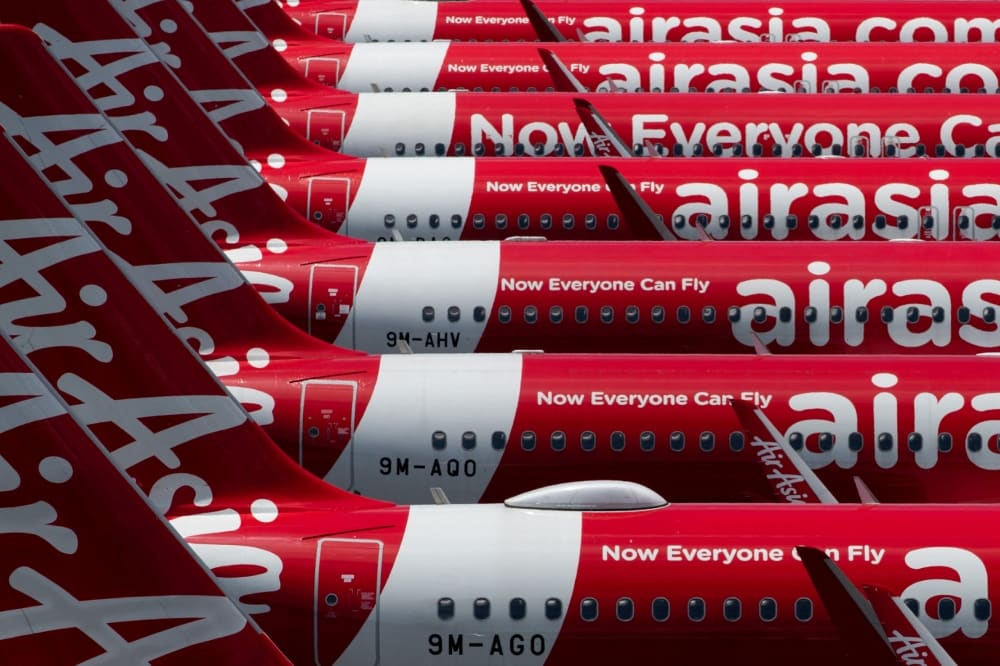
The group is also accelerating fleet optimization, planning to return 25 older and less fuel-efficient aircraft to lessors before the end of the financial year. Retiring these planes will lower maintenance expenses and improve per-seat fuel efficiency, but it also constrains the network flexibility that has been central to AirAsia's growth strategy across Thailand, Indonesia, the Philippines, and Malaysia.
The decision to cut capacity comes as jet fuel prices have climbed above USD 140 per barrel, erasing a brief period of moderation in June. Energy market volatility remains elevated, and the carrier sees little near-term relief. The group noted that the operating environment is fluid, with geopolitical instability continuing to inject uncertainty into fuel forecasting.
Strategic Reset After Restructuring
AirAsia Group Bhd is the product of a sweeping corporate reorganization completed earlier this year. In January 2026, the entity acquired AirAsia Aviation Group Ltd and AirAsia Bhd from Capital A Bhd, consolidating the various operating units under a single listed holding company. The transaction was structured as a reverse acquisition, with the listed vehicle effectively becoming the new parent.
The name change from AirAsia X Bhd to AirAsia Group Bhd took effect on July 2, 2026, following shareholder approval the previous month. The restructuring was designed to streamline governance, improve capital allocation, and provide a unified platform for the carrier's pan-regional operations.
However, the timing of the consolidation has coincided with one of the most challenging cost environments in recent memory. The group has suspended updates to its internal targets, citing persistent geopolitical uncertainties, volatile energy prices, and the need to adjust capacity in line with market conditions. No dividend was declared for the quarter.
Regional Implications for Low-Cost Aviation
The pressures facing AirAsia Group are not unique. Across Asia, low-cost carriers are navigating a cost structure that has fundamentally shifted since 2024. Fuel, which typically represents 30 to 40 percent of operating expenses for budget airlines, has become a source of acute margin compression as geopolitical risk premiums persist.
Currency volatility adds a second layer of complexity, particularly for carriers with diversified regional networks. Unlike full-service airlines that can offset some exposure through premium cabin revenue and corporate contracts, low-cost operators have limited pricing power and fewer hedging tools.
The capacity cuts announced by AirAsia Group will ripple through Southeast Asian aviation markets. Reduced seat supply could support yields on key routes, but it also risks ceding market share to competitors less exposed to currency swings or better hedged on fuel. The carrier's ability to navigate this balance will be closely watched by investors and industry peers.
What Comes Next
AirAsia Group's third-quarter performance will serve as a critical test of whether the capacity and fleet adjustments can stabilize margins in a high-cost environment. The group has not provided updated guidance, reflecting the difficulty of forecasting in a period where fuel prices can swing by double-digit percentages within weeks.
The return of older aircraft to lessors will take time to execute, and the financial impact of early lease terminations or renegotiations has not been disclosed. Meanwhile, the group's revenue base remains heavily weighted toward leisure travel within Southeast Asia, a segment that is price-sensitive and vulnerable to economic headwinds.
For now, the carrier is betting that a smaller, more efficient fleet can deliver better unit economics than trying to maintain pre-crisis capacity levels. Whether that strategy holds depends on factors largely beyond management's control, including the trajectory of West Asian geopolitics and the resilience of regional currencies against the dollar.
RELATED STORIES

AI Demand Pushes Southeast Asia Data Centre Investment Despite Power Constraints
Cheng Wei-Lun · 2 min

Singapore Dessert Chain Deploys 30 Robot Vending Machines After Profit Margin Collapses
Lim Hui Ying · 3 min

Malaysia's Natural Rubber Output Jumps on Smallholder Strength
Priyanka V. Rao · 3 min

Hong Kong Opens Kuala Lumpur Office in Asia Network Push
Cheng Wei-Lun · 4 min
Spot something wrong? Email editor@briefasia.com. We log every correction publicly.