Technology · Dev
AI Server Boom Stretches High-End Capacitor Lead Times to 40 Weeks
Supply divergence emerges as specialized MLCC components face mounting bottlenecks while mainstream inventory stabilizes
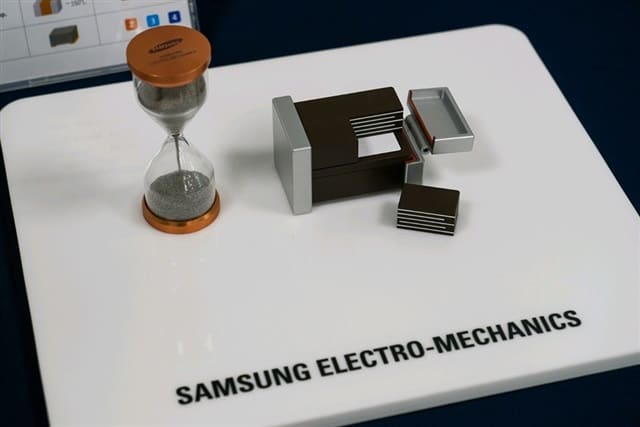
KEY TAKEAWAYS
- ·High-specification multilayer ceramic capacitors used in AI servers now face lead times approaching 40 weeks, while mainstream MLCC supply remains stable at 8 to 12 weeks.
- ·The bottleneck stems from AI accelerator power requirements that demand advanced capacitors with capacitance above 100 microfarads and voltage tolerance exceeding 50V.
- ·Server manufacturers in Taiwan and South Korea are locking long-term MLCC allocations as spot-market pricing climbs 30 to 50 percent above contract rates.
A Widening Supply Gap
The global multilayer ceramic capacitor market is experiencing an unusual split. While standard-specification MLCCs maintain relatively normal availability, advanced components required for artificial intelligence server infrastructure now command wait times stretching toward ten months.
This divergence marks a significant shift in the component supply landscape across Asia's electronics manufacturing hubs. High-capacitance, high-specification MLCCs have become critical bottlenecks as data center operators from Singapore to Seoul accelerate AI infrastructure buildouts.
The AI Infrastructure Driver
The extended lead times stem directly from surging demand for specialized passive components capable of handling the power density and thermal requirements of modern AI accelerators. Unlike consumer electronics or standard enterprise servers, AI training and inference systems require MLCCs that can manage rapid voltage fluctuations and maintain performance under sustained high-temperature operation.
Major MLCC manufacturers in Japan, South Korea, and Taiwan are seeing order books fill months in advance for these premium-tier products. The components typically feature capacitance ratings above 100 microfarads with voltage tolerances exceeding 50V, specifications that require more complex ceramic layering and tighter manufacturing controls.
Production capacity for these advanced MLCCs cannot be expanded quickly. New fabrication lines require 12 to 18 months to bring online, and existing lines producing standard components cannot be easily retooled for high-specification variants without significant capital investment.
Mainstream Supply Holds Steady
By contrast, MLCCs used in smartphones, automotive electronics, and traditional computing applications face no comparable constraint. Lead times for these mainstream products remain in the 8 to 12-week range, consistent with historical norms.
This stability reflects years of capacity expansion following earlier supply crunches in the automotive and consumer electronics sectors. Manufacturers added substantial production volume for mid-range MLCCs between 2021 and 2024, creating a buffer that now insulates these segments from the AI-driven demand surge.
The supply divergence creates planning challenges for electronics manufacturers serving multiple markets. Companies building both AI servers and conventional IT hardware must now manage dual procurement timelines, with some components arriving within weeks while others require nearly a year of advance ordering.
Regional Manufacturing Implications
The bottleneck is particularly acute in Taiwan and South Korea, where server ODMs and hyperscale infrastructure suppliers are concentrated. These manufacturers are now locking in MLCC allocations through long-term supply agreements, a practice more common in semiconductor procurement than passive component sourcing.
Japanese MLCC producers, who control significant market share in high-end ceramic capacitor technology, are fielding requests to prioritize AI server customers over other applications. This has triggered concerns among automotive and industrial equipment manufacturers who also rely on premium-grade MLCCs for safety-critical and high-reliability systems.
Some server manufacturers are exploring design modifications to reduce MLCC count or substitute alternative capacitor technologies, though these changes require extensive validation and may not be feasible for near-term production runs.
Forward Pressure
The 40-week lead time figure represents current conditions for new orders placed in mid-2026. If AI infrastructure investment maintains its current trajectory, particularly with planned data center expansions across Southeast Asia and India, lead times could extend further into 2027.
Component distributors in Hong Kong and Shenzhen report that spot-market pricing for high-specification MLCCs has climbed 30 to 50 percent above contract rates over the past quarter, signaling persistent supply tightness. Gray-market activity has also increased, with unverified suppliers offering shorter delivery windows at premium pricing.
The situation underscores a broader challenge in the AI supply chain: while semiconductor capacity and advanced packaging receive significant attention and investment, passive components and supporting materials face less visibility despite their critical role in system performance and availability.
RELATED STORIES
Graphics Card Shortage to Push PC Prices Higher as AI Infrastructure Demand Tightens Supply
Cheng Wei-Lun · 2 min
Nvidia Mobilizes $500 Billion Financing Push for AI Data Centers
Cheng Wei-Lun · 4 min
Alibaba Cloud Deploys New AI Supernode at Inner Mongolia Data Center
Cheng Wei-Lun · 4 min
South Korean Memory Exports Jump Nearly 280% While System Chips Stall
Cheng Wei-Lun · 3 min
Spot something wrong? Email editor@briefasia.com. We log every correction publicly.