Technology · AI
Abu Dhabi Fund Eyes $6.3 Billion AI Data Center in Northern Japan
Mubadala Investment considers massive stake in 500MW facility that would rank as the country's largest computing infrastructure project
KEY TAKEAWAYS
- ·Abu Dhabi sovereign wealth fund Mubadala Investment is evaluating a $6.3 billion investment in a 500MW AI data center in Akita Prefecture, Japan.
- ·The facility would become Japan's largest data center, addressing a capacity gap as the country hosts only 180MW of AI-optimized infrastructure compared to regional peers.
- ·Gulf sovereign funds are competing to secure Asian computing assets, with UAE and Saudi vehicles committing over $40 billion to AI infrastructure since 2024.
Gulf Capital Targets Japan's AI Infrastructure
Abu Dhabi sovereign wealth fund Mubadala Investment is evaluating a JPY1 trillion investment in an artificial intelligence data center in Akita Prefecture, a move that would establish the facility as Japan's largest computing infrastructure project. The proposed commitment, equivalent to approximately $6.3 billion, targets a 500-megawatt operation in the northern prefecture.
The scale of the potential investment reflects accelerating competition among Gulf states to secure stakes in Asia-Pacific computing infrastructure as demand for AI processing capacity outpaces supply. Mubadala, which manages roughly $302 billion in assets, would lead the financing structure for the Akita facility.
Strategic Positioning in Japan's Power Grid
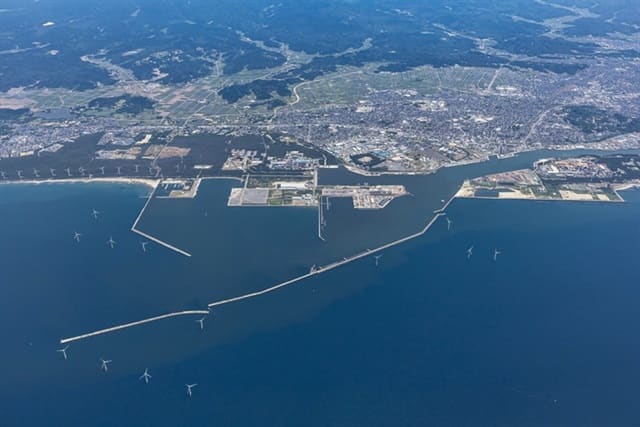
Akita Prefecture offers specific advantages for hyperscale data center development. The region sits outside Tokyo's congested power grid and provides access to renewable energy sources, including offshore wind capacity under development along the Sea of Japan coast. Japan's Ministry of Economy, Trade and Industry has identified northern prefectures as priority zones for data center expansion due to available transmission capacity and cooler ambient temperatures that reduce cooling costs.
The 500MW power allocation would place the facility among the largest single-site data centers globally. For comparison, most enterprise-scale facilities operate between 50MW and 150MW. The planned capacity suggests the project targets training workloads for large language models and inference operations that require sustained, high-density computing.
Middle East Competition for Asian AI Assets
Mubadala's evaluation follows a pattern of Gulf sovereign wealth funds deploying capital into Asian technology infrastructure. Abu Dhabi's MGX, a separate vehicle focused on AI investments, committed $1.5 billion to a partnership with Blackstone for data center development across Asia earlier this year. Saudi Arabia's Public Investment Fund has allocated more than $40 billion to AI and computing projects globally since 2024.
The United Arab Emirates has positioned itself as a bridge between Western AI developers and Asian manufacturing and deployment capacity. Abu Dhabi-based technology firm G42 maintains partnerships with OpenAI, Microsoft, and Cerebras Systems, while simultaneously pursuing joint ventures in India, Indonesia, and Japan.
Japan's Data Center Capacity Gap
Japan lags regional peers in hyperscale data center capacity despite being the world's third-largest economy. The country hosts approximately 180MW of operational AI-optimized computing infrastructure, compared to Singapore's 620MW and South Korea's 410MW, according to infrastructure research firm DC Byte. Regulatory constraints on land use, high electricity costs, and limited fiber connectivity outside metropolitan areas have historically deterred foreign investment.
The Japanese government introduced streamlined permitting for data centers exceeding 100MW in 2025 and extended tax incentives for facilities that source at least 60% of power from non-fossil sources. Akita Prefecture separately established a JPY50 billion fund to co-invest in infrastructure projects that create at least 200 permanent jobs.
What Comes Next
Mubadala has not confirmed a timeline for finalizing the investment decision. The fund typically conducts 12- to 18-month due diligence processes for commitments exceeding $5 billion. If the project advances, construction would likely require 24 to 30 months, suggesting the facility could begin operations in late 2028 or early 2029.
The Akita proposal arrives as Japan seeks to reduce dependence on U.S. cloud providers for government and enterprise workloads. Tokyo has prioritized domestic computing capacity in national security planning, particularly for defense applications and critical infrastructure management. A Gulf-backed facility on Japanese soil would test whether foreign capital can satisfy sovereignty requirements while delivering the scale Japan's AI sector requires.
RELATED STORIES
Taiyo Yuden Lifts Full-Year Forecast as AI Server Demand Boosts Capacitor Sales
Cheng Wei-Lun · 3 min
Japan Embeds Cyber Defense in Air Force Systems as AI Threats Grow
Aiko Nakamura · 4 min
Ajinomoto Lifts Forecast as AI Server Demand Drives Semiconductor Material Sales
Cheng Wei-Lun · 3 min

Tesla Expands Japan Delivery Network to Meet Rising EV Demand
Aiko Nakamura · 3 min
Spot something wrong? Email editor@briefasia.com. We log every correction publicly.