Sustainability · Energy
A Brown Completes $40 Million Stake in Philippine Wind Portfolio
Property developer finalizes investment in two Alternergy wind farms ahead of commissioning, taking 40-percent equity in combined 192-MW capacity
KEY TAKEAWAYS
- ·A Brown Co. closed a 2.3 billion peso investment for 40-percent equity in Alternergy's 128-MW Tanay Wind and 64-MW Alabat Wind projects, with Alternergy retaining majority control and management.
- ·Alternergy plans to use the capital to develop up to 500 MW of additional renewable capacity by year-end, as the Philippines targets 35 percent renewables in its generation mix by 2030.
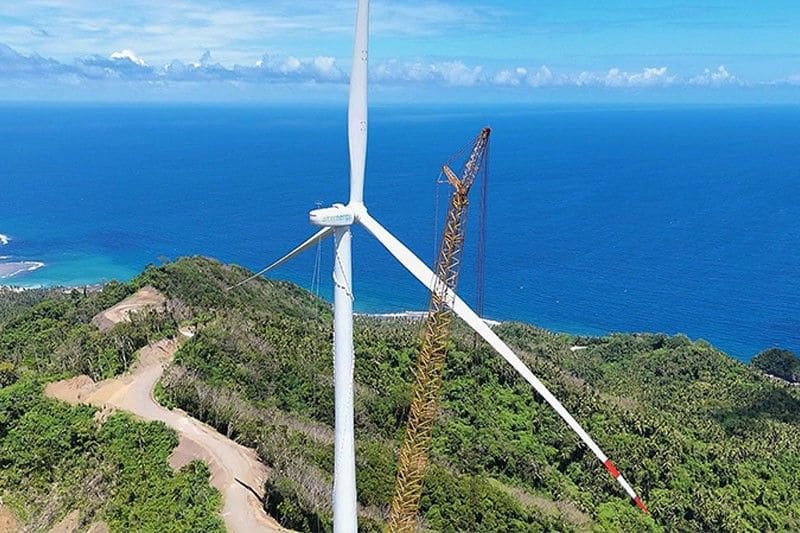
- ·The Tanay Wind facility is 89 percent complete and expected to begin commercial operations in October, adding capacity to Luzon's grid amid ongoing power shortages during peak demand.
Deal Closes Ahead of Schedule
A Brown Co. has finalized its 2.3 billion peso investment in two wind power facilities operated by Alternergy Holdings Corp., completing the transaction ahead of the projects' commercial launch. The property developer, through its subsidiary ABC Energy, now holds a 40-percent equity stake in both the 128-megawatt Tanay Wind facility in Rizal province and the 64-MW Alabat Wind project in Quezon.
Alternergy announced Monday that the deal closed earlier than originally scheduled, with A Brown opting to complete the share purchase before the wind farms begin generating revenue. The renewable energy developer retains majority ownership at 60 percent and continues to manage both facilities.
The transaction cleared the Philippine Competition Commission in March and was structured through direct share subscription in the two project companies. Final pricing included an adjustment clause reflecting the early closing, according to Alternergy president Gerry Magbanua.
Capital for Expansion Push
Alternergy plans to deploy the fresh capital toward its target of bringing 500 MW of additional renewable energy capacity online by the end of 2026. The company operates a pipeline of wind, solar, and run-of-river hydro projects across the archipelago, positioning itself as one of the larger independent renewable developers in a market historically dominated by coal and imported natural gas.
The Tanay Wind project in Rizal is now 89 percent complete and entering final commissioning phases, with grid connection expected in October. Alabat Wind, located on an island off Quezon's eastern coast, follows a similar timeline. Combined, the two facilities will generate enough electricity to power roughly 150,000 households once operational.
A Brown chairman emeritus Walter Brown framed the investment as aligned with the company's broader approach to sustainable development. "Businesses endure when they contribute meaningfully to society," he said, describing the wind portfolio as part of an energy transition that benefits the broader population.
Renewable Build-Out in Southeast Asia's Costliest Power Market
The Philippines remains the most expensive electricity market in Southeast Asia, with industrial and residential tariffs significantly higher than regional peers including Thailand, Vietnam, and Indonesia. High costs stem from a legacy reliance on imported fuel, transmission bottlenecks, and a generation mix still weighted toward coal and liquefied natural gas.
The government has set a target of 35 percent renewable energy in the generation mix by 2030, up from roughly 22 percent today. Wind power accounts for a small fraction of installed capacity, constrained by limited suitable sites, permitting delays, and financing challenges. Solar has grown faster due to lower capital costs and shorter construction timelines.
Alternergy's two wind farms add incremental capacity in a market where new renewable projects have struggled to keep pace with demand growth. The country's grid operator has flagged capacity shortages during peak demand periods, particularly on the main island of Luzon, where both Tanay and Alabat are located.
Property Sector Moves into Energy
A Brown's entry into renewable energy marks a diversification for a company historically focused on residential and commercial real estate. The developer joins a broader trend of Philippine conglomerates moving into power generation, seeking stable returns in a sector underpinned by long-term power purchase agreements and government renewable energy incentives.
ABC Energy, the investment vehicle for the Alternergy stake, was established specifically to pursue clean energy opportunities. The company has not disclosed whether additional renewable investments are planned, though the structure suggests a longer-term strategy beyond the two wind farms.
For Alternergy, the partnership provides both capital and a potential avenue for future co-investment as it scales its project pipeline. The company has historically relied on a mix of equity from financial investors, project finance, and partnerships with strategic players to fund construction. Bringing in a corporate partner with balance sheet strength offers another financing channel as the company pursues its 500-MW target.
The wind sector in the Philippines remains small relative to the country's energy needs, but a combination of declining turbine costs, improved financing terms, and regulatory support for renewables has made new projects more viable. Whether that translates into a sustained build-out will depend on grid infrastructure improvements and the speed at which permitting and land acquisition issues can be resolved.
RELATED STORIES
Seventeen Firms Compete for Manila's $200 Million Geothermal Risk Fund
Priyanka V. Rao · 3 min

Manila's Hyperscaler Bet Draws Fire Over Job Creation and Grid Strain
Priyanka V. Rao · 5 min

Philippines Energy Budget Climbs 26% as Electric Vehicle Funding Surges
Priyanka V. Rao · 3 min
Philippine Nickel Miners Push for Unified Policy Framework as Critical Minerals Race Intensifies
Priyanka V. Rao · 3 min
Spot something wrong? Email editor@briefasia.com. We log every correction publicly.