Technology · Dev
Zhen Ding Brings PCB Manufacturing to Thailand as Asia Supply Chain Shifts
Taiwan's leading circuit board maker launched Thai production in 2025 and is now training local engineers to support Southeast Asia expansion
KEY TAKEAWAYS
- ·Zhen Ding Technology began commercial PCB production in Thailand during the third quarter of 2025 after a 2023 investment.
- ·The Taiwanese manufacturer is partnering with Thai universities to train local engineers in circuit board fabrication and semiconductor processes.
- ·Thailand's electronics sector employs roughly 900,000 workers and exports over 1.8 trillion baht in components annually as of 2024.
Taiwan PCB Giant Plants Roots in Southeast Asia
Zhen Ding Technology Group, one of Taiwan's largest printed circuit board manufacturers, has moved into commercial production in Thailand following a two-year buildout that marks a significant shift in Asia's electronics manufacturing footprint. The company broke ground on the Thai facility in 2023 and brought the plant online in the third quarter of 2025, according to Zhen Ding.
The Taiwanese firm supplies PCBs for smartphones, automotive electronics, and computing devices to major global brands. Its decision to establish capacity in Thailand reflects broader momentum among Asian electronics manufacturers seeking alternatives to concentrated production in Greater China.
Building a Local Workforce
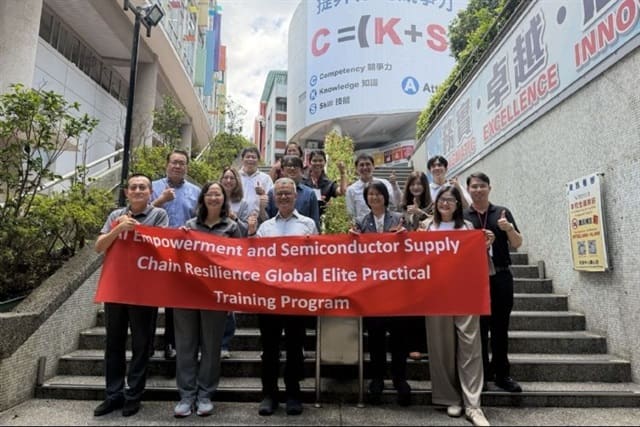
Beyond bricks and machinery, Zhen Ding is investing in human capital. The company has initiated partnerships with Thai universities and technical institutes to develop a pipeline of engineers and technicians trained in PCB fabrication and chip-related processes.
Industry-academia collaboration in Thailand has historically lagged behind programs in Taiwan, South Korea, and Singapore, where semiconductor and electronics manufacturers have long co-designed curricula and funded labs. Zhen Ding's effort represents an attempt to transplant that model to a market where electronics manufacturing has grown rapidly but technical education infrastructure remains uneven.
The company has not disclosed the scale of its training programs or the number of engineers it plans to hire locally. However, the initiative signals a longer-term commitment than simple contract manufacturing, which typically relies on transient labor and minimal skills transfer.
Thailand's Bid for Electronics Investment
Thailand has positioned itself as a manufacturing hub for hard disk drives, automotive parts, and increasingly, semiconductors. The government offers tax incentives under its Board of Investment framework, including corporate income tax holidays and import duty exemptions for machinery.
Zhen Ding's Thai plant adds to a growing roster of electronics investments in the country. Western Digital, Seagate, and a cluster of Japanese automotive electronics suppliers already operate large facilities there. More recently, chip packaging and testing firms have announced plans to set up operations, drawn by lower labor costs than coastal China and proximity to Southeast Asian consumer markets.
Thailand's electronics sector employed approximately 900,000 workers as of 2024, with exports of electronic components and parts exceeding 1.8 trillion baht annually. PCBs, while a smaller segment than hard drives or semiconductors, are critical inputs across consumer electronics, automotive, and industrial equipment.
Regional Supply Chain Reconfiguration
Zhen Ding's move is part of a multi-year reconfiguration of Asian electronics supply chains. Geopolitical friction between Washington and Beijing, coupled with pandemic-era disruptions, has prompted manufacturers to diversify production away from single-country reliance.
Vietnam has captured much of the smartphone and consumer electronics assembly that left China. Thailand, with stronger infrastructure and a more developed industrial base, is competing for higher-value segments like automotive electronics and advanced PCBs.
Taiwan remains the dominant force in PCB manufacturing, accounting for roughly one-third of global output by value. Zhen Ding, along with rivals Unimicron and Tripod Technology, has historically concentrated production on the island and in mainland China. The Thai expansion represents a geographic hedge, particularly as labor costs in China's coastal provinces continue to climb.
Zhen Ding has not announced planned capacity figures for the Thailand site or disclosed capital expenditure totals for the project. The company operates more than a dozen facilities across Taiwan, China, and now Southeast Asia.
Talent as the Long Game
The emphasis on local talent development distinguishes Zhen Ding's approach from purely cost-driven relocation. Electronics manufacturing in Southeast Asia has often struggled with high turnover and shallow technical expertise, limiting the complexity of products that can be reliably produced outside established hubs.
By embedding training partnerships early, Zhen Ding is betting it can cultivate a stable, skilled workforce capable of handling advanced PCB designs, including high-layer-count boards for servers and multilayer flexible circuits for mobile devices. Success in that effort would reduce the company's dependence on expatriate engineers and make Thailand a more credible long-term base.
Whether other Taiwanese PCB makers follow suit will depend on customer demand, cost economics, and the effectiveness of Thailand's incentives. For now, Zhen Ding's Thai plant stands as a test case for how quickly Southeast Asia can absorb sophisticated electronics manufacturing and the engineering talent it requires.
RELATED STORIES
Thailand Faces Quantum Computing Threat to Encrypted Data
Priyanka V. Rao · 3 min

Thailand's AI Passport Program Stores All User Data Locally Under Privacy Law
Priyanka V. Rao · 3 min
Delta Electronics Thailand Hits $100 Billion Market Cap Milestone
Priyanka V. Rao · 4 min

WeRide Eyes Regional Push Across Australia and Asia-Pacific Markets
Cheng Wei-Lun · 2 min
Spot something wrong? Email editor@briefasia.com. We log every correction publicly.