Finance · Markets
Yen Heads for Steepest Weekly Drop Since May as Intervention Effect Fades
Currency surrenders half its intervention-driven gains, testing 160 threshold that may trigger fresh official action from Tokyo
KEY TAKEAWAYS
- ·The yen is set for its largest weekly decline in three months at around 1 percent to 159.43 per dollar, erasing half the gains from late July and early August intervention.
- ·Markets now price a 76 percent chance of a Bank of Japan rate hike in September, up from 24 percent on July 30, following US Treasury signals that intervention needs policy support.
- ·Traders view the 160 per dollar level as a potential trigger for renewed official buying after the currency traded near 164 before July intervention.
Intervention Gains Evaporate
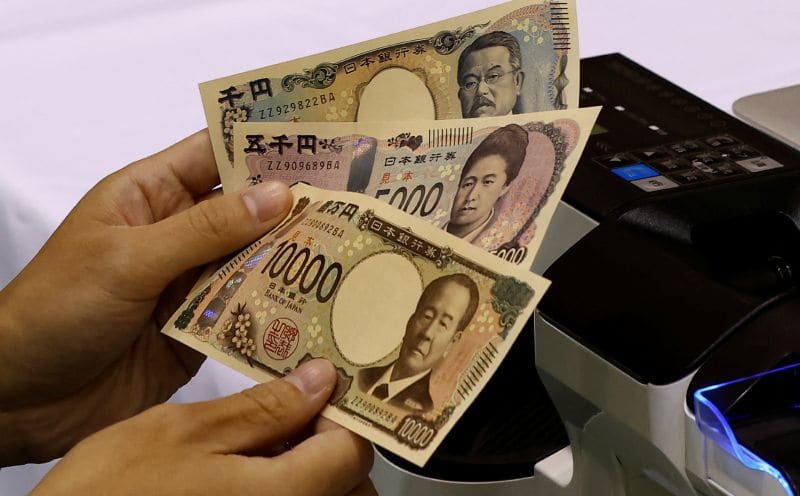
The Japanese yen is sliding toward its steepest weekly loss in three months, erasing roughly half the gains generated by coordinated intervention in late July and early August. The currency has weakened approximately 1 percent this week to 159.43 per dollar, approaching the 160 level that traders view as a potential flashpoint for renewed official buying.
Before the July intervention, the yen was trading near 164 per dollar. The current retreat marks the currency's biggest weekly slide since May, when it similarly backslid after an earlier round of official purchases. Against the euro, the yen has fallen about 0.8 percent this week to 183.91, its sharpest weekly drop since April.
The currency traded relatively flat in early Friday sessions but remains under structural pressure from persistently low interest rates and mounting concerns over government fiscal management. The yen had touched four-decade lows before authorities stepped in.
Market Dynamics and Rate Expectations
The broader foreign exchange market has shown relative stability this week. Support for the dollar from elevated oil prices and Middle East tensions has been counterbalanced by benign US employment and inflation data, which dampened expectations for further Federal Reserve rate increases.
US producer price figures released overnight showed no change in July, further reducing bets on a September rate hike to approximately 35 percent probability. The euro edged 0.2 percent lower to $1.1536 this week, while sterling held steady at $1.3489.
In the Pacific region, a surprisingly low inflation expectations reading initially knocked the New Zealand dollar on Thursday, though it recovered as swap markets maintained an 85 percent probability of a September rate hike. The Australian dollar hovered around $0.7060.
Pressure Mounts on Bank of Japan
Mitsuhiro Furusawa, Tokyo's former top currency diplomat, indicated that Japan may conduct additional joint yen intervention at any time. He suggested authorities could also signal faster-than-expected interest rate increases to arrest further declines.
Markets have already begun pricing in a more aggressive Bank of Japan stance after US Treasury Secretary Scott Bessent stated that Japan should reinforce currency intervention with policy measures and fundamentals that support the yen. BOJ rate hike probability for September has surged to 76 percent, according to Tokyo Tanshi data, a dramatic jump from 24 percent on July 30.
That sharp repricing creates its own risk. If the central bank fails to meet elevated market expectations, the yen could face renewed selling pressure.
OCBC strategist Sim Moh Siong noted that for intervention to alter the yen's trajectory, a more hawkish BOJ stance is essential. Markets are attempting to price in such a shift, but validation from the central bank remains critical.
Regional Currency Movements
South Korea's won, which also received support from official intervention when authorities sold dollars alongside Japan last month, has demonstrated greater stability than the yen. Still, the won was set to register a modest 0.6 percent loss against the dollar this week.
China's yuan traded at 6.7452 in offshore markets on Friday, not far from the three-and-a-half-year high it reached last week.
Limits of Official Action
Omar Slim, co-head of Asia public fixed income at MetLife Investment Management, expressed skepticism about the lasting power of currency intervention. He characterized such actions as temporary measures at best, regardless of coordination or scale, and at worst as invitations for markets to test official resolve.
The yen's persistent weakness underscores the challenge facing Japanese authorities: without addressing the fundamental interest rate differential with other major economies and fiscal concerns, intervention alone may prove insufficient to durably reverse the currency's multi-year decline.
RELATED STORIES
Yen Slides Toward 160 per Dollar as Market Tests Tokyo's Resolve
Cheng Wei-Lun · 3 min
Japan and US Stage Joint Intervention as Yen Slides Past ¥155
Aiko Nakamura · 3 min

Bessent's Yen Support Pledge Faces Reality of Constrained U.S. Intervention Tools
Cheng Wei-Lun · 4 min
Renminbi Faces Upward Pressure After US-Japan Yen Intervention
Cheng Wei-Lun · 3 min
Spot something wrong? Email editor@briefasia.com. We log every correction publicly.