Finance · Markets
Yen Slides Toward 160 per Dollar as Market Tests Tokyo's Resolve
Currency weakness deepens despite recent intervention, signaling persistent pressure on Japanese authorities to defend the exchange rate
KEY TAKEAWAYS
- ·The yen is approaching 160 per dollar again, reversing gains from Tokyo's ¥5.5 trillion intervention in late July.
- ·A 370 basis point gap between US and Japanese yields continues to drive speculative selling and capital outflows.
- ·Repeated interventions face diminishing returns as traders test official resolve and Japan's $1.29 trillion reserve buffer.
Currency Pressure Mounts
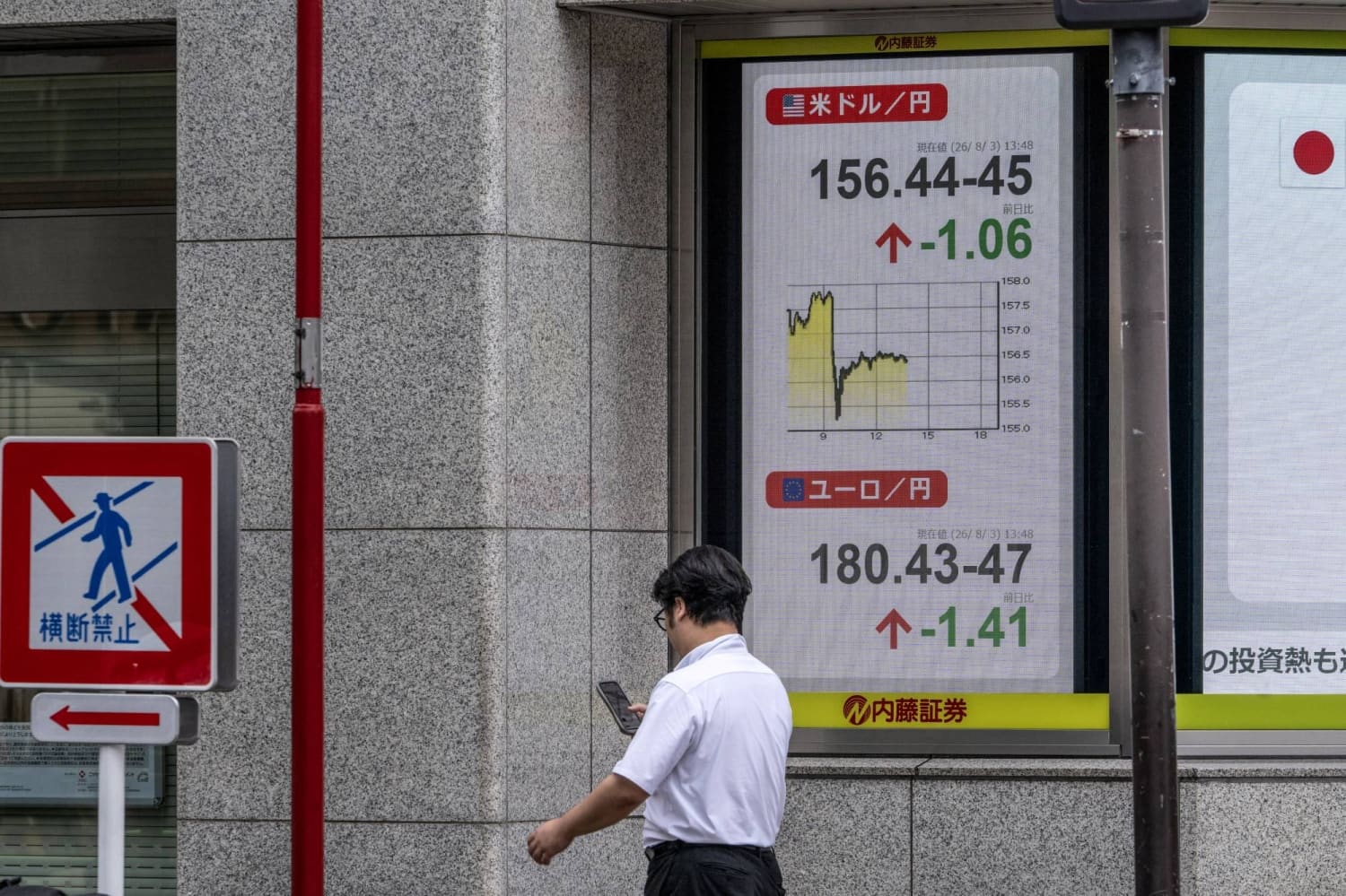
The Japanese yen is sliding back toward the psychologically significant 160-per-dollar level, retracing ground gained during Tokyo's late July intervention in foreign exchange markets. The renewed weakness underscores the limits of official action when underlying monetary policy divergences remain wide.
Japan's Ministry of Finance spent an estimated ¥5.5 trillion in late July to prop up the yen, temporarily pushing the currency stronger. Yet within weeks, selling pressure has resumed. Traders are betting that the interest rate gap between Japan and the United States will keep the yen under strain, regardless of sporadic official purchases.
Rate Differentials Drive the Trade
The core dynamic is straightforward: US Treasury yields hover near multi-year highs while the Bank of Japan maintains its ultra-loose stance. Ten-year US government bonds yield around 4.3 percent, compared with Japan's benchmark rate near 0.75 percent. That gap makes dollar-denominated assets more attractive, pulling capital out of yen and into dollar instruments.
Hedge funds and currency speculators have been quick to re-establish short yen positions after the July intervention faded. Options market data shows elevated demand for downside protection on the yen, with three-month risk reversals skewed heavily toward puts. The message from derivatives desks is clear: participants expect further depreciation.
Intervention Fatigue
Tokyo's toolkit for defending the currency is both well-known and limited. Direct market intervention can deliver short-term shocks, but it cannot alter the fundamental interest rate arithmetic. Each operation also draws down Japan's foreign exchange reserves, which stood at $1.29 trillion as of the end of July.
Finance ministry officials have repeated their warning that excessive volatility is unacceptable, a phrase markets have learned to interpret as a signal that intervention may be imminent. Yet the threshold for action remains opaque. In April, authorities stepped in when the yen breached 160. The current approach suggests a similar line, but with diminishing returns on each successive operation.
Regional Implications
A weaker yen has mixed effects across Asia. Japanese exporters benefit from improved price competitiveness, particularly in electronics and automotive sectors where margins are thin. Toyota, Sony, and other multinationals have seen profit forecasts lifted by favorable currency translation.
Conversely, import costs rise. Japan relies on overseas suppliers for energy, raw materials, and food. A sustained move beyond 160 would feed into domestic inflation, complicating the Bank of Japan's calculus on when to tighten policy further. Governor Kazuo Ueda has signaled patience, but rising living costs may force a faster pace of rate hikes than currently priced into markets.
For neighboring economies, yen weakness can spark competitive devaluations. South Korea and Taiwan, both export-oriented, watch Tokyo's currency closely. A race to the bottom on exchange rates would unsettle regional trade flows and invite scrutiny from Washington, which monitors currency practices under bilateral trade agreements.
What Comes Next
Market participants are focused on two catalysts. The first is US Federal Reserve policy. Any hint that rate cuts may arrive sooner than expected would narrow the yield gap and relieve pressure on the yen. The second is Japanese data: if inflation proves stickier than anticipated, the Bank of Japan may be compelled to accelerate normalization, lifting domestic rates and supporting the currency.
For now, the path of least resistance remains downward. Speculative positioning is heavily skewed, intervention threats have lost some credibility, and the interest rate divergence shows no sign of closing quickly. Unless one of those variables shifts, the yen is likely to test 160 again, and possibly move beyond it, in the coming weeks.
RELATED STORIES
Japan and US Stage Joint Intervention as Yen Slides Past ¥155
Aiko Nakamura · 3 min

Bessent's Yen Support Pledge Faces Reality of Constrained U.S. Intervention Tools
Cheng Wei-Lun · 4 min
Japan's Government Debt Reaches ¥1.3 Quadrillion by End of June
Aiko Nakamura · 3 min

US Treasury Secretary and Japanese PM Diverge on BOJ Policy Amid Currency Intervention
Aiko Nakamura · 4 min
Spot something wrong? Email editor@briefasia.com. We log every correction publicly.