Perspectives · Opinion
Washington's Yen Intervention Will Carry a Heavy Price Tag for Tokyo
Scott Bessent's proposed currency rescue signals a fundamental shift in U.S.-Japan economic relations, where nothing comes free anymore
KEY TAKEAWAYS
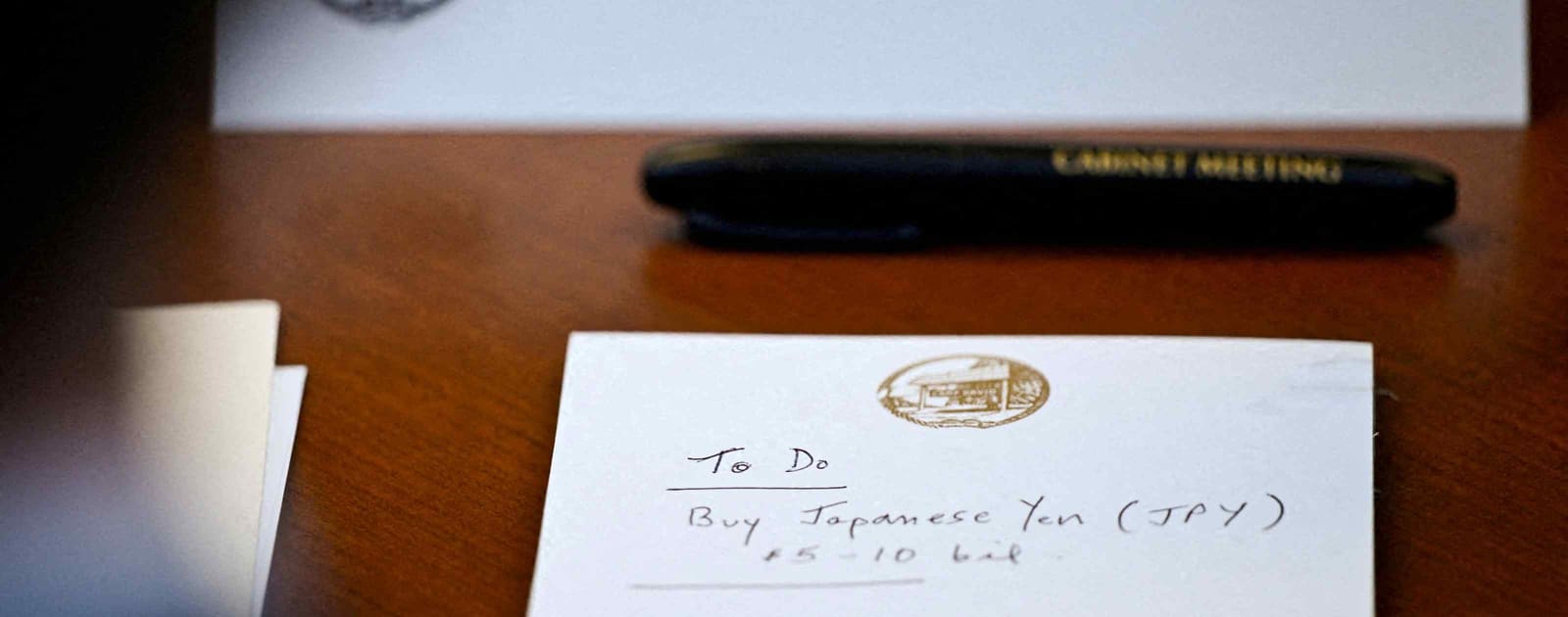
- ·Treasury Secretary Scott Bessent's notepad revealed plans for a $5-10 billion yen purchase at a July 31 Camp David meeting, marking a reversal of longstanding U.S. currency policy
- ·Washington will expect Tokyo to accelerate BOJ rate normalization, expand defense commitments including Hormuz operations, and align more closely on China policy in exchange for currency support
- ·The intervention creates leverage for U.S. demands on trade concessions, semiconductor technology transfer, and Japanese strategic posture across Asia
- ·Japan faces a choice between accepting American conditions that constrain policy autonomy or managing currency volatility without Washington's help
The Note That Changed Everything
When Reuters cameras captured Treasury Secretary Scott Bessent's notepad at Camp David on July 31, the scribbled line "To Do -- Buy Japanese Yen (JPY) $5-10 bil" sent ripples through currency markets. The yen strengthened immediately. Japanese officials exhaled. But anyone watching U.S.-Japan relations closely knows this kind of rescue never comes without conditions. The Trump administration doesn't do favors; it does transactions.
The proposed intervention marks a dramatic reversal from decades of American currency policy. Washington has historically championed free-floating exchange rates and criticized direct market manipulation. That Bessent would even consider direct yen purchases suggests either genuine alarm about regional financial stability or a calculated move to extract concessions from Tokyo. Most likely, it's both.
For Japan, the timing is particularly sensitive. The yen has been under sustained pressure as the Bank of Japan maintains ultra-loose monetary policy while the Federal Reserve has kept rates elevated. The currency hit multi-decade lows against the dollar earlier this year, triggering inflation concerns and eroding household purchasing power. Prime Minister Sanae Takaichi's government has faced mounting criticism over the cost of living crisis, making currency stability a political imperative.
But accepting American help now means accepting American leverage later. And Bessent's Treasury Department has proven adept at converting financial assistance into policy influence across Asia.
The Monetary Policy Constraint
The first and most immediate string attached to any yen rescue will involve Bank of Japan policy. Washington will expect Governor Kazuo Ueda to accelerate the normalization process, raising interest rates faster than the BOJ's cautious timeline currently allows. This puts Ueda in an impossible position.
The BOJ has been trying to exit its extraordinary stimulus measures for years, but every attempt has sparked market volatility. Japan's economy remains fragile, with weak wage growth and tepid domestic demand. Corporate debt levels remain elevated after years of cheap borrowing. Moving too quickly on rates risks triggering a credit crunch and pushing the economy back into deflation.
Yet if Washington props up the yen through direct purchases, it will demand that Tokyo do its part by making yen-denominated assets more attractive through higher yields. The implicit bargain is clear: we'll support your currency in the short term, but you need to make structural changes that reduce the need for ongoing intervention.
This creates a dangerous dynamic. The BOJ may feel compelled to raise rates not based on domestic economic conditions but to satisfy American political demands. Monetary policy becomes subordinated to diplomatic considerations. For a central bank that has fought hard to establish independence and credibility, this represents a fundamental compromise.
The risk of policy error increases substantially. If the BOJ tightens prematurely to appease Washington, Japan could face renewed recession. If it resists American pressure, the yen support evaporates and currency volatility returns. Either way, Tokyo loses control over its own economic destiny.
Defense Spending and the Hormuz Question
The second major expectation will center on security commitments. The Trump administration has made burden-sharing a cornerstone of its alliance management. Japan has already committed to doubling defense spending to 2% of GDP by 2027, but Washington will want more concrete contributions.
The Strait of Hormuz represents the most immediate test. With tensions in the Persian Gulf escalating and American naval resources stretched thin, the U.S. will expect Japan to play a more active role in protecting energy shipment lanes. Japanese tankers rely on Hormuz for the majority of their oil imports, but Tokyo has historically been reluctant to deploy Self-Defense Forces far from home waters.
A yen rescue package gives Washington the perfect opportunity to push for expanded Japanese naval presence in the Middle East. The argument will be framed in terms of shared responsibility: if America is supporting Japanese financial stability, Japan should support American security operations that protect Japanese economic interests.
This puts Tokyo in a difficult position domestically. Public opinion remains divided on overseas military deployments. Constitutional constraints limit what the SDF can do in combat zones. And regional sensitivities, particularly with China, make any expansion of Japanese military activity politically fraught.
But refusing American security demands after accepting currency intervention support will be nearly impossible. Bessent's notepad may have mentioned yen purchases, but the real transaction involves Japanese destroyers in the Strait of Hormuz.
Trade Concessions and Market Access
The third string involves trade policy. The Trump administration has been frustrated by what it sees as persistent Japanese barriers to American agricultural products, automobiles, and services. A yen intervention gives Washington renewed leverage to demand market opening measures.
Expect pressure on Japan to reduce tariffs on U.S. beef and pork, ease restrictions on rice imports, and streamline regulatory approval for American pharmaceutical and medical device companies. The administration may also push for commitments on government procurement, requiring Japanese ministries and agencies to give American firms equal consideration in contract bidding.
The automotive sector presents particular complications. Japanese manufacturers have invested heavily in U.S. production facilities, but Washington still views the bilateral auto trade balance as unfavorable. The administration may demand commitments that Japanese automakers increase domestic content in vehicles sold in Japan or guarantee minimum purchase levels of American-made auto parts.
These trade concessions will face stiff resistance from Japanese agricultural lobbies and industrial groups. But with currency stability hanging in the balance, Tokyo's negotiating position weakens considerably. Bessent understands that financial pressure creates political flexibility.
Technology Transfer and Semiconductor Strategy
The fourth condition will involve technology policy and semiconductor supply chains. Washington has made clear that reshoring advanced chip production represents a national security priority. Japan's leadership in materials, equipment, and certain manufacturing processes makes it an essential partner in this effort.
Expect the U.S. to demand expanded cooperation from Japanese semiconductor firms, including technology sharing agreements and commitments to build additional fab capacity in America. Companies like Tokyo Electron and Shin-Etsu Chemical may face pressure to transfer proprietary processes or establish joint ventures that give American firms access to critical capabilities.
The administration will also expect Japan to align more closely with U.S. export controls targeting China. Tokyo has been reluctant to fully embrace Washington's aggressive stance on semiconductor restrictions, fearing retaliation from its largest trading partner. But accepting American currency support will make maintaining that balancing act far more difficult.
Japanese technology firms find themselves caught between two imperatives: maintaining commercial relationships with China and satisfying American security demands. A yen rescue package tips the scales decisively toward Washington, potentially forcing companies to choose sides in a way they've managed to avoid until now.
The Broader Realignment
The fifth and most fundamental string involves Japan's overall strategic posture in the region. Washington will expect Tokyo to position itself more explicitly as a counterweight to Chinese influence, going beyond general alliance commitments to take concrete steps that constrain Beijing's options.
This could include more aggressive participation in freedom of navigation operations in the South China Sea, stronger support for Taiwan's security, and willingness to join American-led economic initiatives that exclude China. The message will be unambiguous: if you want our help managing your currency, you need to stand with us in managing China.
For Japan, this represents a fundamental shift in its post-war foreign policy approach. Tokyo has traditionally tried to maintain productive economic relations with China while preserving its security alliance with America. That balancing act becomes exponentially harder when financial stability depends on American goodwill.
The risk is that Japan becomes over-extended, taking on commitments that exceed its capabilities or interests in order to maintain currency support. Financial dependence creates strategic vulnerability. And once Tokyo accepts that dynamic, reversing course becomes nearly impossible without triggering the very currency crisis the intervention was meant to prevent.
The Price of Stability
Bessent's notepad revealed more than a potential currency intervention. It exposed the transactional nature of the current U.S.-Japan relationship and the leverage that financial instability creates. For Tokyo, the choice is stark: accept American conditions and surrender policy autonomy, or reject the help and manage currency volatility alone.
The broader implication extends beyond Japan. Every Asian economy watching this dynamic understands that American support comes with strings attached. Currency stability, market access, and financial assistance all carry conditions that constrain domestic policy choices and force alignment with Washington's broader strategic agenda.
In the short term, a yen intervention may provide relief. But the long-term cost, measured in lost autonomy and forced concessions across monetary policy, defense, trade, technology, and regional strategy, may prove far higher than Tokyo anticipates. Bessent's $5-10 billion isn't a gift. It's the down payment on a much larger bill that Japan will be paying for years to come.
RELATED STORIES

Japan's Yen Intervention Masks a Deeper Fiscal Crisis
Cheng Wei-Lun · 5 min
Bank of Japan Signals Willingness to Accelerate Rate Hikes Amid Rising Inflation Concerns
Aiko Nakamura · 3 min

Modi Set to Address Nation Amid Job Crisis as SMIC Reports Earnings
Priyanka V. Rao · 4 min

Japan's Economy Poised to Clock Third Consecutive Quarter of Expansion
Aiko Nakamura · 5 min
Spot something wrong? Email editor@briefasia.com. We log every correction publicly.