Finance · Markets
Vietnamese Dong Weakens on Unofficial Market Despite Global Dollar Retreat
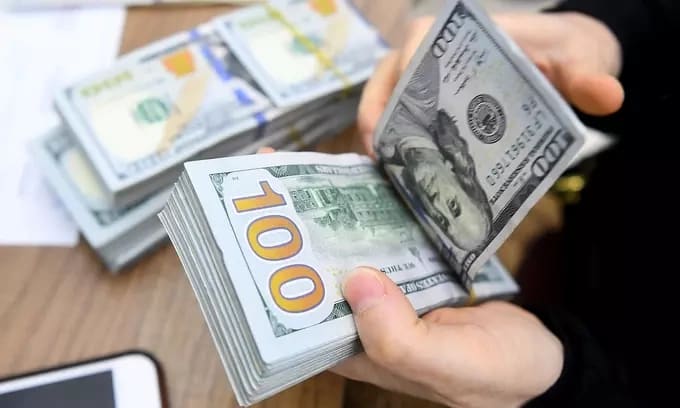
The greenback climbed 0.34% to VND26,200 at black market exchanges while the State Bank raised its reference rate, even as the dollar index hovered near six-week lows internationally.
KEY TAKEAWAYS
- ·The U.S. dollar climbed 0.34% to VND26,200 on Vietnam's black market Wednesday while the State Bank raised its reference rate by 0.1% to VND25,405.
- ·The move contrasts with the dollar index hovering near six-week lows at 99.85 as Middle East optimism and yen intervention eased safe-haven demand.
- ·The gap between unofficial and official rates narrowed to under 1%, suggesting contained parallel market activity as Vietnam balances export competitiveness against inflation risks.
Black Market Rate Diverges from Official Channels
The U.S. dollar gained ground against the Vietnamese dong on unofficial exchanges Wednesday morning, climbing 0.34% to approximately VND26,200 at black market trading points. The move came as the State Bank of Vietnam raised its daily reference rate by 0.1% to VND25,405, according to central bank data.
Vietcombank, the country's largest commercial lender by market capitalization, maintained its quoted rate at VND26,460. The gap between the black market rate and official banking channels narrowed to roughly 260 dong, or less than 1%, suggesting relatively contained parallel market activity compared to periods of acute currency pressure.
The divergence between Vietnam's unofficial market and formal banking rates highlights the persistent dual-track nature of foreign exchange access in the Southeast Asian economy, where capital controls and regulatory oversight push some transactions into grey-market channels.
Dollar Under Pressure Globally
The dong's weakness on Vietnam's parallel market contrasts with the dollar's broader trajectory in international trading. The dollar index, which measures the greenback against six major currencies including the euro and yen, held steady at 99.85 on Wednesday after touching a six-week low earlier in the week.
The euro traded flat at $1.1533, near its recent peak of $1.1559, while sterling held at $1.3453. The Japanese yen firmed slightly to 157.61 per dollar after retreating from Monday's high of 155.20, following suspected intervention by Tokyo authorities and vocal support from Washington for a stronger yen.
Currency markets have entered a holding pattern as traders assess the durability of recent moves. Fresh optimism over potential de-escalation in Middle East tensions has weighed on safe-haven demand for the dollar, while coordinated signaling from U.S. and Japanese officials has tempered speculative yen selling.
Intervention Effects Questioned
Market participants remain divided on whether Tokyo's recent currency operations will produce lasting results or merely slow the pace of yen depreciation. Vincent Chung, co-portfolio manager for diversified income bond strategy at T. Rowe Price, noted that muted market moves suggest investors "remain sceptical about how long the effects of the recent interventions will last."
The yen has depreciated sharply over the past year as the Bank of Japan maintains ultra-loose monetary policy while the Federal Reserve holds rates elevated to combat inflation. Japanese authorities have stepped into markets multiple times since 2024 to stem rapid declines, but the currency has consistently resumed weakening after brief intervention-driven rallies.
For Vietnam, the State Bank's incremental reference rate adjustment reflects a calibrated approach to managing the dong amid competing pressures. The central bank must balance export competitiveness, which benefits from a weaker currency, against imported inflation and capital outflow risks that accompany excessive depreciation.
Regional Currency Dynamics
Vietnam's currency management takes place against a backdrop of divergent monetary policy across Asia. While Japan maintains near-zero rates and China has recently eased policy to support slowing growth, other regional economies including Indonesia and the Philippines have kept rates elevated to defend their currencies and contain inflation.
The dong's performance on unofficial markets serves as a real-time gauge of market sentiment toward Vietnam's currency trajectory, often moving ahead of adjustments in official rates. The State Bank typically intervenes through a combination of reference rate shifts, foreign exchange sales, and moral suasion to keep the dong within an unofficial trading band.
Vietnam's foreign exchange reserves stood at approximately $95 billion as of mid-2026, providing the central bank with substantial firepower to manage currency volatility. The country has maintained a current account surplus for most of the past decade, supported by robust export growth in electronics, textiles, and agricultural products.
The modest gap between official and black market rates suggests the State Bank's current policy mix is broadly containing currency pressures, even as global dollar dynamics and domestic demand for foreign exchange continue to test the dong's stability.
RELATED STORIES

Vietnamese Gold Hits Two-Week High as US Jobs Data Lifts Global Prices
Priyanka V. Rao · 2 min

Vietnam's Gold Bars Retreat as Traders Lock in Gains After Seven-Week Rally
Priyanka V. Rao · 5 min

DatVietVAC Turns Profitable in First Half, Eyes Concert Season Boost
Tran Quoc Bao · 4 min

Vietnam's Stock Index Expected to Hold Near 1,800 as Markets Consolidate
Tran Quoc Bao · 3 min
Spot something wrong? Email editor@briefasia.com. We log every correction publicly.