ExclusivePerspectives · Interviews
Alireza Atashkhiz on Why Vietnam Funds New Roads Faster Than It Repairs Old Ones
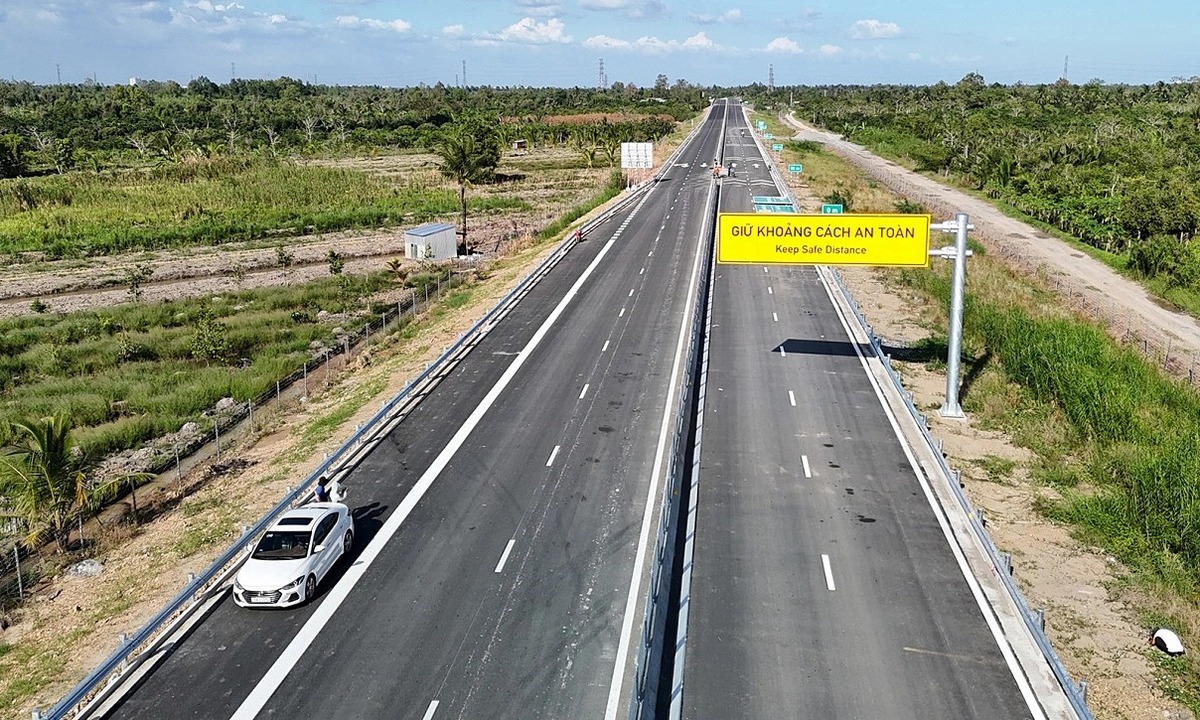
Vietnam has set a minimum target of more than 5,000 kilometres of expressway by 2030, with the state budget alone expected to cover roughly VND334 trillion of that build. What happens to the roads already open barely enters the same conversation, and the account for that gap comes due later, at a much higher price.
KEY TAKEAWAYS
- ·Vietnam's expressway network is targeted to exceed 5,000 kilometres by 2030, with the state budget alone expected to cover an estimated VND334 trillion of a dozen priority routes, per the Ministry of Construction.
- ·Road construction already accounts for over 70 per cent of Vietnam's total bitumen consumption, a ratio a regional conference organiser says is typical of a country still completing its planned network, not a sign of neglect on its own.
- ·The cost of delay compounds. A widely cited review by South Africa's national roads agency, hosted on the World Bank's public-private partnership resource site, put the cost of a road neglected for five years at eighteen times what timely upkeep would have required.
A new expressway gets a ribbon and a minister. A resurfaced one gets neither.
That asymmetry, according to Alireza Atashkhiz, Event Manager at BituGroup, the organiser behind the Bituroad conference series for the bitumen and road industry, goes a long way toward explaining why maintenance keeps losing to construction in national budgets, in Vietnam and well beyond it.
“A road construction project is visible and is a political achievement. That's why most politicians would find it easier to fund a new road being constructed than one already there being maintained.”
Atashkhiz, whose work puts him in regular contact with government officials, contractors and suppliers across several markets through the Bituroad events, frames Vietnam's position as a stage of development rather than a policy failure. Vietnam is a developing country with ambitious plans for the future and is still in development and build-mode for its road network, he said, and that stage is itself part of why maintenance gets pushed down the list, in budget and in planning alike.
A ratio that tracks the stage, not the country
Road construction accounts for over 70 per cent of Vietnam's total bitumen consumption, according to market research firm Mobility Foresights. On its own, that could read as a Vietnam-specific imbalance. Atashkhiz places it in a wider frame: Malaysia, he said, directs roughly 65 per cent of its own bitumen consumption to construction, a comparable share he supplied from his own reading of the regional market and which BriefAsia has not independently verified.
The pattern, in his account, tracks where a country sits in its build cycle rather than any one government's priorities. Once a country is past the bulk of its planned network, he said, attention typically shifts, though not automatically. Some governments build that shift into a programme well ahead of time. Others wait until the neglect becomes visible.
What waiting actually costs
Atashkhiz put the cost of delay at three to six times higher than resurfacing on schedule, a figure he described as drawn from data and citations circulating in the industry rather than a single study. Published estimates for deferred pavement repair vary by market and methodology, but tend to sit in a similar range, from roughly four times the cost under a World Bank pavement deterioration model to as much as ten times in research cited by US state transport departments.
For a longer horizon, Atashkhiz pointed to what he called a World Bank example: a road left unattended for five years, he said, can cost eighteen times more to repair than one maintained on schedule. The figure traces to a review by the South African National Roads Agency, which found that delaying maintenance for three years raises costs sixfold, and for five years, eighteenfold, a finding hosted and cited on the World Bank's Public-Private Partnership Resource Center.
The cost is not confined to the resurfacing bill. Atashkhiz linked road conditions directly to Vietnam's export ambitions: vehicle damage, higher accident risk and freight delay all rise with deteriorating surfaces, at a time when the country is pushing more manufactured goods toward international markets.
An import Vietnam did not expect to still be making
One detail points to a gap in the supply chain rather than the budget. The specialty emulsions used in newer maintenance methods, Atashkhiz said, are mostly imported into Vietnam instead of produced locally, a dependency that runs against what he described as a broader global trend of new emulsion plants coming online elsewhere. He said he hopes to see that capacity built domestically.
Machinery is a second constraint. Not every road contractor owns the equipment newer methods such as microsurfacing require, and Bituroad's own programming has shifted to address it: this year's edition added technical sessions aimed at giving contractors the confidence to apply methods still new to the market.

Who is already doing this well
Asked where the region gets this right, Atashkhiz pointed to Japan, South Korea and Singapore, three markets he said treat maintenance as a system rather than a response. South Korea, in his account, uses pavement management systems and automated condition surveys to decide when and where to intervene, ahead of visible failure rather than after it.
“With frequent inspections, fast pothole repair and condition-led resurfacing, potholes detected fell almost 70 per cent from 2021 to 2024.”
Singapore's own figures support the shape of that claim, if not the exact framing. In a parliamentary reply, the Ministry of Transport said the total number of potholes detected each year fell by almost 70 per cent from 2021 to 2024, citing Land Transport Authority data that put the count at 9,702 in 2021 and 3,013 in 2024, attributed to more frequent inspection and pre-emptive resurfacing rather than any single technology.

What Vietnam does next
Atashkhiz's own prescription centres on incentives rather than mandates: government support for private sector adoption of newer methods, a defined and recurring maintenance programme rather than one revisited each budget cycle, and greater use of monitoring technology, including artificial intelligence, to catch damage while it remains cheap to fix.
“The earlier a pothole or road damage is treated, the cheaper it will be. These are investments that will pay off in the long run, and are quite essential as well.”
He is cautiously optimistic Vietnam avoids the outcome he says he is watching for: a large road network that ends up inefficient because upkeep never caught up with construction. His read is that the government has, so far, shown the alertness such an outcome would require to avoid.

All images courtesy of Alireza Atashkhiz.
RELATED STORIES

Why Shokz Is Moving Beyond Bone Conduction Audio
Tran Quoc Bao · 4 min

When Paper Wealth Outpaces Real Revenue: The Villar Land Valuation Puzzle
Anand Sundaram · 7 min

Nguyen Dang Quang and the long, quiet path to mastery
Manh Khang · 7 min

Research Is Architecture: Jenchieh Hung on Running a Practice That Pays for Its Own Curiosity
Tu C. Nguyen · 9 min
Spot something wrong? Email editor@briefasia.com. We log every correction publicly.