Asia · Business
Vietnam Launches Five-Year Initiative to Build Globally Competitive Business Leaders
The chamber of commerce programme targets a new generation of CEOs equipped for international markets through 2030
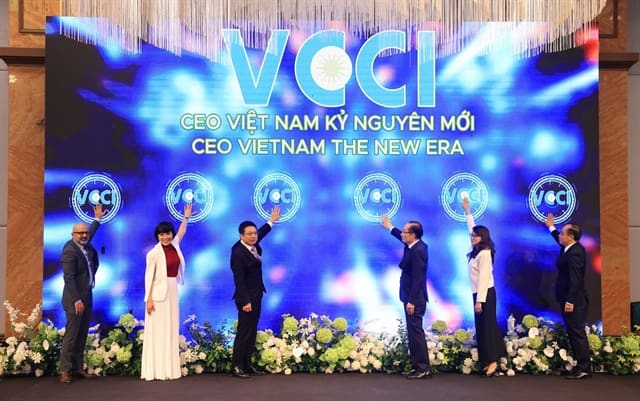
KEY TAKEAWAYS
- ·The Vietnam Chamber of Commerce and Industry launched a five-year CEO development programme on July 25, running through 2030 to prepare executives for international markets.
- ·The initiative targets a leadership capability gap as Vietnamese firms face pressure to expand beyond domestic boundaries and compete regionally for investment and talent.
- ·Success will be measured by whether participating CEOs secure international financing, enter new export markets, and improve governance in their firms.
A Strategic Push for Executive Capability
Vietnam's business community has begun a concerted effort to cultivate leadership talent capable of competing on the world stage. The Vietnam Chamber of Commerce and Industry introduced a five-year leadership development initiative on July 25, designed to prepare a cohort of chief executives for international markets.
The programme, titled "Vietnam CEO for a New Era," runs through 2030 and represents an institutional commitment to building executive capacity at a moment when Vietnamese firms face increasing pressure to expand beyond domestic boundaries. VCCI's move comes as regional economies intensify competition for investment, talent, and market share across Southeast Asia.
Why Executive Development Matters Now
Vietnam's economic trajectory over the past decade has been shaped by foreign direct investment in manufacturing and export-led growth. Yet the country's corporate leadership pipeline has not always kept pace with the operational complexity that comes with integration into global supply chains. Multinational firms operating in Vietnam have long recruited senior executives from Singapore, Hong Kong, and Thailand, highlighting a gap in locally developed leadership.
The chamber's initiative acknowledges this shortfall. By focusing on CEO-level capability, VCCI is addressing the highest leverage point in organizational performance. Chief executives set strategy, allocate capital, negotiate partnerships, and represent firms in international forums. A CEO who understands global market dynamics, regulatory environments, and cross-border financing can unlock opportunities that remain invisible to domestically oriented leaders.
This is not the first leadership programme in Vietnam, but it is among the most explicit in its ambition. Earlier efforts have focused on mid-level management or technical skills. VCCI's decision to target the CEO role signals recognition that the bottleneck is at the top.
Regional Context and Competitive Pressure
Vietnam's initiative arrives in a crowded field. Singapore has long operated executive education programmes through INSEAD and the National University of Singapore. Thailand's Sasin School of Management and the Philippines' Asian Institute of Management have trained generations of regional leaders. China's business schools, backed by state resources, have scaled rapidly over the past two decades.
What distinguishes the VCCI programme is its timing. Vietnam is in the middle of a generational transition. Founders who built businesses in the 1990s and 2000s, often in trading or light manufacturing, are beginning to hand off to successors who must navigate a more complex landscape: digital transformation, environmental regulation, geopolitical supply chain shifts, and capital markets that demand transparency and governance.
The programme's five-year horizon suggests VCCI is thinking in cohorts, not one-off classes. A sustained commitment of this length allows for curriculum iteration, alumni networks, and measurable impact on firm performance. It also provides a timeline that aligns with Vietnam's broader economic planning cycles.
What Globally Competitive Means in Practice
The phrase "internationally competitive" is deliberately broad, but in practice it encompasses several discrete capabilities. First, fluency in global capital markets. Vietnamese firms seeking to scale need access to equity and debt beyond domestic banks. That requires understanding term sheets, investor relations, and the governance standards expected by institutional investors in Singapore, Tokyo, or New York.
Second, the ability to negotiate and manage cross-border partnerships. Whether it is a joint venture with a Japanese automotive supplier or a distribution agreement with a European retailer, CEOs must navigate different legal systems, cultural expectations, and business practices.
Third, strategic agility in the face of geopolitical uncertainty. The US-China technology rivalry, export controls on semiconductors, and shifting trade alliances all affect where firms source inputs, locate production, and sell output. A CEO who can model these scenarios and adjust strategy accordingly has a significant edge.
Fourth, digital and operational fluency. The leaders VCCI aims to develop must understand not just traditional manufacturing or services, but also how technology reshapes value chains, customer engagement, and competitive advantage.
Execution Questions and What Comes Next
VCCI has announced the programme but has not yet detailed curriculum, faculty, selection criteria, or partnerships. These details will determine whether the initiative becomes a flagship for Vietnamese executive education or remains symbolic.
Key questions include: Will the programme partner with international business schools or rely on domestic faculty? Will it incorporate residencies or study tours in major financial centers? How will participants be selected, and will the programme be open to private sector CEOs only, or also include state-owned enterprise leaders? Will there be a capstone project or thesis requirement that ties learning to real business challenges?
The success of the programme will ultimately be measured not by enrollment numbers but by the performance of participating firms. Are alumni able to secure international financing, enter new export markets, or attract foreign partners? Do their companies demonstrate improved governance, innovation, or resilience?
Vietnam's corporate sector is at an inflection point. The country has built a reputation as a reliable manufacturing base, but moving up the value chain requires more than low labor costs and favorable trade agreements. It requires leaders who can think strategically, execute globally, and adapt quickly. VCCI's new initiative is a bet that such leaders can be developed at scale, and that Vietnam's next chapter will be written by a generation of executives who are as comfortable in boardrooms abroad as they are at home.
RELATED STORIES

Vietnam Ships 1.7 Million Tonnes of Coffee as Brazil Delays and EU Rules Reshape Trade
Tran Quoc Bao · 3 min
Vietnam's Trade Turnover Hits $770 Billion as Imports Surge Past Exports
Jun-ho Seo · 2 min

Samsung's Vietnam Operations Post 23% Profit Jump to $2.3 Billion
Tran Quoc Bao · 3 min
Viettel Opens Dominican Republic Operations as Military Telco Eyes Caribbean Expansion
Cheng Wei-Lun · 3 min
Spot something wrong? Email editor@briefasia.com. We log every correction publicly.