ExclusivePerspectives · Interviews
Inside Vietnam's Indian Tourism Surge: What Travel Agents in Delhi and Mumbai Still Get Wrong
A conversation with Cong Vu, CEO of Jandec Asia, on the operational realities behind the fastest-growing corridor in Asian tourism — and why the next battle will be fought on weddings and MICE, not sightseeing packages.
Indian arrivals to Vietnam have become the standout story of Asian tourism. From roughly 392,000 visitors in 2023 and just over 507,000 in 2024, the market reached approximately 750,000 arrivals in 2025, a 48.9% year-on-year jump, and 4.5 times the pre-pandemic level of 2019, according to Vietnam's national tourism authority. The momentum has carried into this year: Indian arrivals surged roughly 70% year-on-year in the first two months of 2026, to around 158,000 visitors, making India the fastest-growing source market in a year when Vietnam is targeting 25 million international arrivals overall.
Behind the headline numbers sits a quieter operational question: is Vietnam's ground infrastructure - its guides, kitchens, venues and DMCs - actually ready for a market this large, this fast?
Few people are better positioned to answer than Cong Vu, CEO of Jandec Asia, the Vietnam-based destination management group that has spent the past several years building India-dedicated operations: a specialist Indian operations team, Indian chefs and menus across its cruise and restaurant network, and a sales presence in Delhi and Mumbai. Jandec's ecosystem spans three premium cruise vessels on Halong and Lan Ha Bay under the Ambassador Cruise brand, the Viet Deli restaurant chain across six cities, event venues including Ambassador Club Nha Trang, and Dragon Pearl Cave in Quang Ninh, a 150-million-year-old natural cave converted into what the company describes as Vietnam's first art dining cave, complete with Indian fine-dining service. For the Indian market alone, the company has operated more than 1,300 tours serving over 12,000 guests.

Dragon Pearl Cave. Photo: Jandec Asia
BriefAsia spoke with Vu about the gap between how Indian travel agents sell Vietnam and how Vietnam actually operates, and about the two segments he believes will define the corridor's next phase: corporate MICE and destination weddings.
This interview has been edited for length and clarity.
I. READING THE SURGE
BriefAsia: Indian arrivals grew roughly 70% in the first two months of this year, after a record 750,000 visitors in 2025. From where you sit - on the ground, running operations - does that number feel real, or is there froth in it?
Cong Vu: It is real, but it is uneven. What the aggregate number hides is that growth is concentrated in a handful of gateway destinations and in group travel. Hanoi-Halong and the Da Nang corridor are absorbing most of it, and Phu Quoc has been the breakout story: the island went viral with Indian travelers from mid-2025 and has become a genuine third pillar of demand. The froth, if you want to call it that, is in expectations: many new Indian agents entering this market assume Vietnam works like Thailand did ten years ago: unlimited capacity, instant confirmations, aggressive rates. It does not. Premium cruise cabins in Halong Bay sell out weeks ahead in peak Indian holiday windows like Diwali. The demand is genuine; the supply discipline is what surprises people.
You built an India-dedicated operations function well before the current surge. What did you see that others didn't?
Cong Vu: The direct flights. When IndiGo and the Vietnamese carriers began opening nonstop routes from 2022, the math changed permanently. Vietnam became a four-to-five-hour flight from five major Indian metros, often cheaper to reach than Phuket. Once air access changes structurally, demand follows within 18 to 24 months. We decided we would rather build the operational muscle early (Indian chefs, dedicated operations management, agent relationships in Delhi and Mumbai) than chase the market after it arrived.II. WHAT INDIAN AGENTS STILL GET WRONG
Let's get practical. An agent in Mumbai is packaging Vietnam for the first time. What are the most common mistakes you see?
Cong Vu: First, food is underestimated as a deal-breaker. For Indian groups - especially multi-generational families and travelers with strict dietary requirements - the availability of proper Indian and vegetarian cuisine is not an amenity, it is the product. A stunning itinerary collapses on day two if the food is wrong. This is why we run our own kitchens rather than subcontracting.

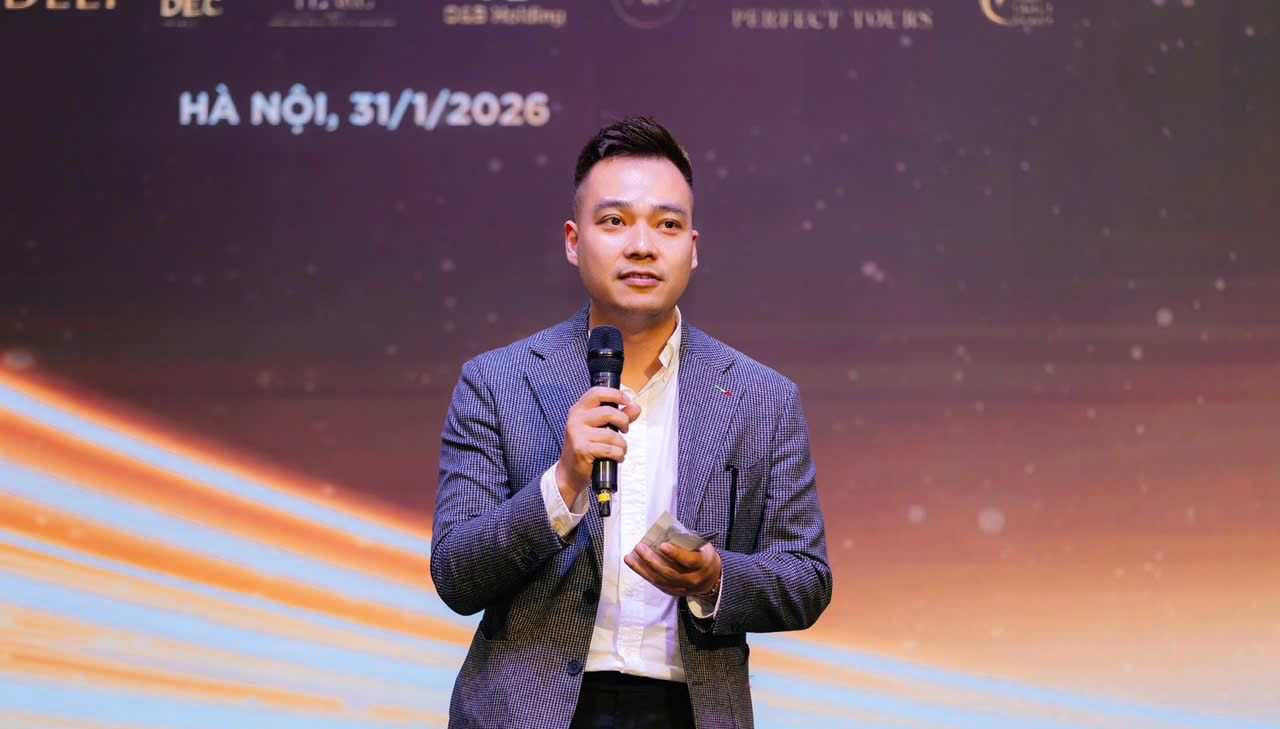
Cong Vu, CEO, Jandec Asia. Photo: Jandec Asia
“For Indian groups, proper Indian and vegetarian cuisine is not an amenity, it is the product.” — Cong Vu, CEO, Jandec Asia
Second, group structure. Indian family groups routinely run 15 to 25 people across three generations. That changes everything: vehicle allocation, room configurations, pacing, meal timing. Agents who quote based on a standard Western FIT template misprice and mis-plan.
Third, the evening economy. Indian travelers are late diners and want evenings programmed: entertainment, night cruises, celebration dinners. Vietnam's tourism product was historically built around early starts and early nights. The DMCs who win this market are the ones who solved the 8 p.m. to midnight window.
Fourth, negotiation culture meets fixed-rate reality. Indian B2B buyers negotiate hard. That is normal and healthy. But Vietnam's premium supply, especially cruises, operates closer to yield management than to bargaining. Agents who understand when a rate is genuinely final build better long-term economics than those who push every quote.
Those are your clients' mistakes. What is Vietnam still getting wrong about Indian travelers?
Cong Vu: Honestly, plenty. Outside the main gateways, Hindi- and English-speaking guides are scarce. Indian restaurant depth in tier-two destinations - Ninh Binh, Quy Nhon, even parts of Nha Trang - is thin. And Vietnam's large-scale banquet infrastructure is still catching up to what the biggest Indian celebrations demand. We are candid with partners about this: Vietnam is a superb product for groups up to a certain size and for certain formats. Pretending otherwise damages trust.
III. THE MICE MATHEMATICS
Corporate incentive travel from India traditionally went to Thailand, Dubai or Bali. Make the business case for Vietnam.
Cong Vu: Three things matter to an Indian corporate planner: total cost per delegate, visa friction, and novelty value. On cost, Vietnam's advantage comes primarily from food-and-beverage and venue economics, the two largest variable lines in any incentive budget, which still price meaningfully below equivalent tiers in more mature destinations. On visas, Vietnam's e-visa is now typically issued within two to three working days for Indian passport holders, a turnaround that no longer kills last-minute corporate bookings.
On novelty: a company that has taken its top performers to Bangkok and Bali three years running needs a new story. A gala dinner inside a 150-million-year-old cave with 3D projection mapping, or a full-charter cruise on Halong Bay, is a story no competitor's incentive trip can match. This is no longer theoretical for us: our largest single program to date was a 500-delegate corporate group in Phu Quoc in February 2025, and our standard MICE movements now run 100 to 300 delegates.
Where does the MICE case break down?
Cong Vu: Above several hundred delegates in a single wave, hotel block availability in one property becomes the constraint outside Hanoi and Ho Chi Minh City. And air lift, while dramatically improved, still lacks the charter flexibility Thailand offers. For programs of 100 to 500 delegates, Vietnam is now genuinely competitive. We have delivered at that scale. For multi-thousand-person conventions, the market is still two to three years away.
IV. THE WEDDING QUESTION
Indian destination weddings are the highest-spend segment in outbound travel. Thailand and the UAE dominate. Can Vietnam compete?
Cong Vu: Selectively, yes, and the selectivity is the strategy. Vietnam has already begun hosting Indian weddings of up to 1,000 guests, which even two years ago would have been considered impossible here. But those remain exceptional events at a handful of properties; the specialist infrastructure to run them routinely is still being built. Where Vietnam can compete with almost anywhere today is the 150-to-300-guest premium wedding built around a signature setting: a ceremony on a chartered cruise in Halong Bay, a sangeet inside Dragon Pearl Cave, a beach reception in Nha Trang or Phu Quoc. The couples driving this market - second-generation wealth, well-traveled, Instagram-native - increasingly want a venue their guests have never seen before, more than they want a ballroom that fits everyone.
What is missing before that segment scales?
Cong Vu: Three things. Wedding-specialist vendors - decor and staging teams, specialist caterers - mostly still fly in from India or Thailand, which adds cost. Hotel policies: many Vietnamese five-star properties have not yet adapted to the sound, timing and catering norms of large Indian celebrations. And awareness: most Indian wedding planners simply have not seen Vietnam's venues yet. That last one is the easiest to fix, and it is fixing itself fast.
V. WHAT COMES NEXT
Long Thanh International Airport held its technical opening in December 2025, and commercial operations are now targeted for the fourth quarter of 2026 under the government's revised timeline. What changes when it opens?
Cong Vu: Capacity stops being the ceiling, and ground operations become the ceiling instead. Long Thanh is designed to take over long-haul international traffic in the south, and routes from India are expected to be among the early movers. More lift into the south will pull Indian traffic beyond the Hanoi-Halong axis toward Ho Chi Minh City, Phu Quoc and the south-central coast. The DMCs and hotels that have already built Indian-market capability in those regions will absorb that growth. Those that have not will spend 2027 catching up.
Last question. If you had one sentence for a travel agency owner in India who is deciding this week whether to add Vietnam to their portfolio — what is it?
“Come inspect before you sell: Vietnam rewards the agents who understand it firsthand, and punishes the ones selling it off a brochure.” — Cong Vu, CEO, Jandec Asia

Cong Vu, CEO, Jandec Asia. Photo: Jandec Asia
JANDEC ASIA AT A GLANCE
Positioning
Destination management company (DMC) for Vietnam and Indochina, with dedicated India-market operations; leadership with 20+ years in Indochina travel.
Ecosystem
Three premium vessels under Ambassador Cruise (121 cabins, 840-passenger total capacity, Halong & Lan Ha Bay); Viet Deli restaurant chain (10+ restaurants across six cities, since 2015); Ambassador Club Nha Trang (1,000-guest capacity, 100+ events); Dragon Pearl Cave, Quang Ninh.
India track record
1,300+ tours operated and 12,000+ guests served from the Indian market; largest single MICE program: 500 delegates, Phu Quoc, February 2025.
India presence
Sales management in Delhi and Mumbai; dedicated Indian operations manager; Indian culinary program across cruises and restaurants.
THE CORRIDOR IN NUMBERS
• 392,000 → 507,000 → ~750,000: Indian arrivals to Vietnam, 2023 → 2024 → 2025 (Vietnam National Authority of Tourism); 2025 growth of 48.9% year-on-year, 4.5 times the 2019 level
• +70%: year-on-year growth in Indian arrivals, January–February 2026 (~158,000 visitors)
• 21.2 million: total international arrivals to Vietnam in 2025, a record year, up 20.4%; the 2026 target is 25 million
• 2–3 working days: typical e-visa turnaround for Indian passport holders
• 4–5 hours: nonstop flight time from Delhi, Mumbai, Bangalore, Chennai and Hyderabad to Hanoi or Ho Chi Minh City
• Q4 2026: current government target for commercial operations at Long Thanh International Airport, following its December 2025 technical opening
RELATED STORIES
Vietnam's Offshore Oil Find Tests Hanoi's Will Against Beijing
Priyanka V. Rao · 5 min
-800x471.jpg?prefix=brief-asia)
Cover the logo. They'll still know who you are.
Simon Ng · 9 min
The pianist who goes looking for forgotten music
Manh Khang · 8 min
Ho Tu Bao Taught Machines to Learn. Now He Teaches Doubt.
Manh Khang · 9 min
Spot something wrong? Email editor@briefasia.com. We log every correction publicly.