Finance · Markets
Vietnam Gold Trades at Four-Week High as Global Prices Surge Past $4,500
Domestic bullion reached its strongest level since late July after international spot prices climbed to a ten-week peak on Treasury yield shifts and dollar weakness

KEY TAKEAWAYS
- ·Gold bars in Vietnam rose 2.66% to VND146.5 million per tael, the highest level since July 22, tracking a global rally past $4,500 per ounce.
- ·International spot prices surged on falling U.S. Treasury yields and dollar weakness, with analysts citing potential stagflation dynamics and Fed accommodation.
- ·Vietnamese gold remains down 4.12% year-to-date due to import controls and currency hedging costs, underperforming the international benchmark by 180 basis points.
Domestic Prices Track International Rally
Gold bars in Vietnam jumped to VND146.5 million per tael on Thursday morning, marking the highest level recorded since July 22. The 2.66% single-session gain, reported by Saigon Jewelry Company, brought the benchmark domestic contract back above the psychological VND146 million threshold that had proven elusive for most of the preceding three weeks. Gold rings rose 0.68% to VND147.5 million per tael, a more modest advance reflecting the premium consumers pay for worked jewelry over investment-grade bullion.
The move in Ho Chi Minh City trading mirrors a broader pattern across Southeast Asian gold markets, where physical premiums over London spot prices have compressed in recent weeks as speculative interest shifted back toward exchange-traded products and futures contracts. One tael, the standard unit in regional jewelry trade, equals 37.5 grams.
Despite Thursday's climb, Vietnamese gold remains down 4.12% year-to-date, underperforming the international benchmark by roughly 180 basis points. That gap reflects a combination of factors: tighter domestic supply controls introduced in the first quarter, elevated import duties that widen the arbitrage window, and persistent currency hedging costs that add friction to cross-border bullion flows. For institutional buyers in Hanoi and Ho Chi Minh City, the discount to international prices has narrowed but not closed, leaving room for selective accumulation by traders with access to bonded warehouse inventory.
International Spot Market Dynamics
Global gold prices retreated 0.75% to $4,488.30 per ounce in early Asian hours on Thursday, pulling back from the prior session's surge that had lifted the metal to its strongest level in more than ten weeks. Wednesday's rally caught many market participants off guard, with intraday volumes on COMEX futures spiking to levels not seen since the Federal Reserve's May policy meeting. The move was driven by a sharp decline in longer-dated U.S. Treasury yields, which fell as investors priced in a higher probability of additional monetary accommodation later in the year.
Robert Gottlieb, formerly head of precious metals at Koch Supply and Trading, described the Wednesday advance as unexpected in its speed and magnitude. The catalyst, he noted, was a combination of falling yields on ten-year and thirty-year Treasuries and a softer dollar index, both of which reduce the opportunity cost of holding non-yielding assets like bullion. When real rates decline, gold becomes more attractive relative to inflation-protected bonds and other fixed-income instruments.
The rally also drew technical buyers who had been waiting for a breakout above the $4,420 resistance level. Once that threshold was breached, algorithmic trading systems and momentum-following funds added length, amplifying the move. By the close of New York trading on Wednesday, open interest in COMEX December gold futures had risen by nearly 8%, a sign that fresh capital was entering the market rather than simply churning existing positions.
Institutional Flows and Macro Backdrop
A research note from TD Securities highlighted the potential for sustained inflows into gold investment vehicles if current macro conditions persist. The firm pointed to three reinforcing dynamics: Treasury liquidity support measures that could keep yields anchored below inflation expectations, a Federal Reserve stance that appears willing to tolerate short-term energy price shocks without immediately tightening policy, and a growing narrative around stagflation risk that historically favors hard assets.
Real rates, the difference between nominal Treasury yields and breakeven inflation expectations, have drifted lower over the past month as inflation data proved stickier than consensus forecasts anticipated. In a stagflation scenario, where growth slows but price pressures remain elevated, traditional equity and bond portfolios face headwinds, while commodities and precious metals tend to outperform. Gold, in particular, benefits from its dual role as an inflation hedge and a safe-haven asset during periods of financial stress.
Exchange-traded fund holdings of physical gold, which had declined steadily through the second quarter, stabilized in late July and began to tick higher in August. North American funds added roughly 22 tonnes in the first two weeks of the month, while European vehicles saw net inflows of approximately 14 tonnes. Asian ETFs, by contrast, recorded small outflows, reflecting regional investors' preference for physical bars and coins over paper instruments.
Regional Context and Policy Implications
Across Asia, central banks have adopted divergent approaches to gold reserves and domestic market regulation. Vietnam's State Bank has maintained strict licensing requirements for bullion imports, a policy designed to limit speculative hoarding and channel household savings toward productive investment. The result has been a persistent gap between domestic and international prices, creating opportunities for grey-market arbitrage but also dampening retail demand during periods of elevated global prices.
In contrast, Thailand's central bank has allowed more flexible import mechanisms, and physical premiums in Bangkok have remained within a narrow band of $1 to $3 per ounce above London spot. Singapore, the region's largest gold trading hub, continues to benefit from zero sales tax on investment-grade bullion, attracting flows from wealthy individuals and family offices across Southeast Asia. Hong Kong's re-export trade has recovered to pre-pandemic levels, with much of the volume destined for mainland China, where jewelry demand remains robust despite a sluggish property sector.
India, the world's second-largest gold consumer, has seen import volumes climb in recent weeks ahead of the festival season. Dealers in Mumbai reported premiums of $4 to $6 per ounce over London spot, up from near-zero levels in June. The uptick in Indian demand typically provides a floor for global prices during the late summer and early autumn months, as jewelers and wholesalers build inventory ahead of Diwali and wedding season.
Outlook and Market Positioning
Traders in Asian markets are now watching two key variables: the trajectory of the U.S. dollar and the tone of the Federal Reserve's next policy statement. A sustained decline in the dollar index below the 102 level could provide additional tailwinds for gold, while any hawkish surprise from the Fed would likely trigger profit-taking. Options market data suggests that near-term volatility expectations have risen, with implied volatility on one-month gold options climbing to 16%, up from 12% at the start of August.
For Vietnamese market participants, the immediate challenge is navigating the gap between domestic and international prices. Importers with access to official channels face a lag of several days between placing orders and receiving physical delivery, during which time prices can move significantly. Smaller dealers, who rely on informal networks, must factor in both the premium and the legal risks associated with unlicensed imports.
Year-to-date performance remains negative in local currency terms, but the recent rally has narrowed the loss and rekindled interest among retail investors who had largely stayed on the sidelines since April. If global prices continue to climb toward the $4,600 level, domestic bars could test the VND150 million per tael mark, a threshold that would bring them within striking distance of the all-time highs recorded in early 2025.
The interplay between macro policy, currency movements, and physical demand will determine whether the current rally has room to run or whether profit-taking and mean reversion will reassert themselves. For now, the momentum remains to the upside, supported by a confluence of technical breakouts, institutional flows, and a macro backdrop that continues to favor hard assets over paper claims.
RELATED STORIES
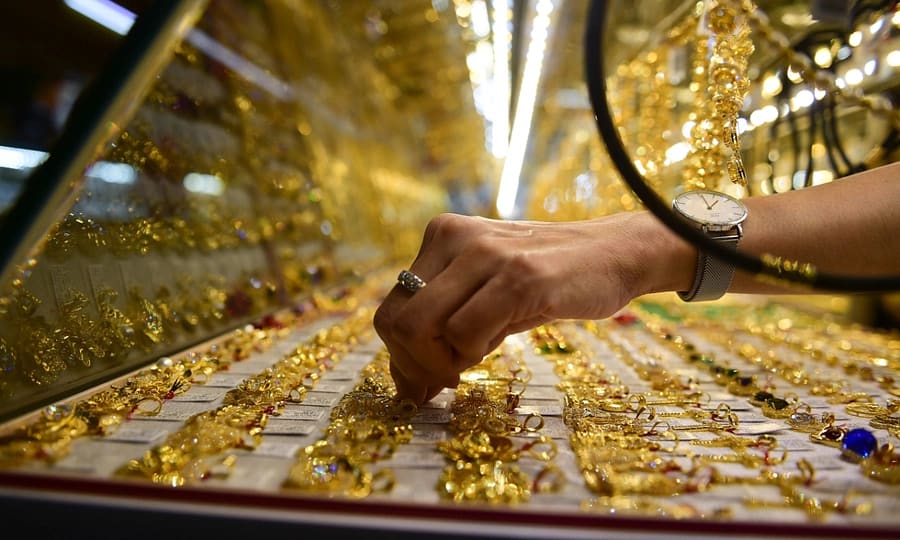
Vietnam Gold Hits Three-Week Peak as Global Prices Rally
Priyanka V. Rao · 2 min
Vietnam Black Market Dollar Climbs as Greenback Hovers Near Three-Month Low
Priyanka V. Rao · 2 min

Vietnam's MoMo Adds QR Payment Access to 100 Million Merchants Across 60 Countries
Priyanka V. Rao · 4 min
Vietnamese Banks Launch Multibillion-Share Capital Campaigns
Priyanka V. Rao · 2 min
Spot something wrong? Email editor@briefasia.com. We log every correction publicly.