Finance · Fintech
Vietnam's MoMo Adds QR Payment Access to 100 Million Merchants Across 60 Countries
The fintech platform now connects Vietnamese travelers to Alipay, WeChat Pay, and regional networks, eliminating foreign transaction fees while blocking $1.5 million in daily fraud attempts.
KEY TAKEAWAYS
- ·MoMo now supports cross-border QR payments in over 60 countries through partnerships with Napas, Alipay, WeChat Pay, PayPay, and PromptPay, covering 100 million merchant locations.
- ·The platform charges no foreign currency transaction fees and uses AI to flag 29,000 suspicious transactions daily, preventing approximately $1.5 million in fraud per day.
- ·Integrated eSIM coverage across 200-plus countries and flight booking for 56 airlines position MoMo as a comprehensive travel app for Vietnamese outbound travelers.
Vietnam Fintech Pushes Regional Payment Integration
MoMo has rolled out cross-border QR payment capabilities across more than 60 countries, linking Vietnamese users to a network of over 100 million merchant acceptance points. The expansion comes through partnerships with Napas, Alipay, WeChat Pay, PayPay, and PromptPay, enabling travelers to scan payment codes at participating retailers in South Korea, China, Thailand, Japan, and Singapore without switching apps or carrying local currency.
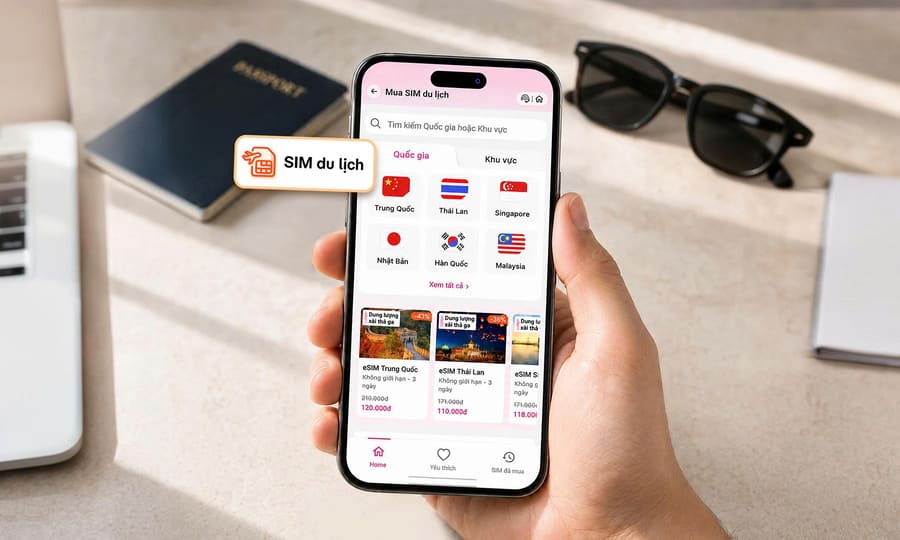
The platform announced the service alongside integrated eSIM connectivity covering 200-plus countries and a flight booking feature connecting to 56 international airlines, including Vietnam Airlines, AirAsia, Scoot, and STARLUX Airlines. The bundled offering positions MoMo as a one-stop travel app for outbound Vietnamese travelers, a segment that has grown as the country's middle class expands and cross-border movement resumes post-pandemic.
How the Payment Rails Work
Users can complete transactions at merchants such as Big C in Thailand, 7-Eleven stores in Japan and South Korea, and Mixue outlets in China. Exchange rates appear on-screen before each transaction, and MoMo does not levy foreign currency conversion fees, according to the company. The absence of forex charges distinguishes the service from traditional credit card networks, which typically apply a 2-3% markup on international purchases.
The QR payment method relies on interoperability agreements between domestic and foreign payment networks. MoMo's tie-ups with Alipay and WeChat Pay grant access to China's dominant mobile payment infrastructure, while partnerships with PayPay and PromptPay open Japan and Thailand respectively. Napas, Vietnam's national payment switch, underpins the domestic leg of the transaction flow.
Cross-border QR payments have gained traction across Southeast Asia as regional central banks and payment operators push for seamless digital settlement. Thailand's PromptPay, Singapore's PayNow, and Malaysia's DuitNow have signed bilateral linkage agreements in recent years, and private-sector players like MoMo are now layering consumer-facing services atop these rails.
eSIM and Flight Booking Round Out Travel Stack
MoMo's eSIM service allows users to purchase and activate data plans before departure, connecting to local mobile networks upon arrival without swapping physical SIM cards. The service covers more than 200 countries, addressing a common pain point for travelers who face high roaming charges or the inconvenience of buying local SIMs at airports.
The flight booking module aggregates inventory from 56 airlines and offers reservation, cancellation, and refund options within the app. By consolidating payments, connectivity, and ticketing, MoMo is effectively building a travel super-app tailored to Vietnamese outbound flows, mirroring strategies employed by Grab, Gojek, and Alipay in their respective home markets.
Fraud Prevention at Scale
MoMo said its systems deploy artificial intelligence to flag approximately 29,000 suspicious transactions daily, preventing an estimated 40 billion Vietnamese dong (roughly $1.5 million) in potential fraud each day. The platform uses multi-layer security protocols, electronic Know Your Customer procedures, and real-time transaction monitoring to detect anomalies and block unauthorized access.
As digital wallets extend beyond domestic borders, fraud risk escalates. Cross-border transactions involve multiple currency conversions, time-zone discrepancies, and varying regulatory frameworks, all of which create opportunities for bad actors. MoMo's emphasis on AI-driven risk detection reflects the operational reality that scale and speed demand automated controls rather than manual review.
Regional Context and Competitive Landscape
Vietnam's fintech sector has grown rapidly over the past five years, driven by high smartphone penetration, a young population, and government initiatives to reduce cash dependence. MoMo competes domestically with ZaloPay, VNPay, and ShopeePay, each vying to capture share of the country's 100-million-strong consumer base.
Extending services internationally is a logical next step for Vietnamese wallets seeking growth beyond saturated domestic urban markets. Outbound tourism from Vietnam has climbed steadily, with travelers heading to Thailand, Singapore, South Korea, and Japan in large numbers. Offering seamless payment and connectivity abroad strengthens user retention and increases transaction volume per account.
Across Southeast Asia, regional payment linkages remain fragmented despite policy-level commitments. While bilateral QR code connections exist between some country pairs, a unified ASEAN payment network has yet to materialize. Fintech platforms like MoMo are filling the gap through direct partnerships with foreign wallet operators and payment processors, effectively building private-sector bridges where official infrastructure lags.
The addition of 100 million merchant acceptance points gives MoMo a meaningful footprint, though the distribution and density of participating outlets will determine real-world utility. Travelers in major cities and tourist zones are more likely to encounter compatible QR codes than those in secondary markets or rural areas.
MoMo's move underscores a broader shift in Asia's payment landscape: the rise of mobile-first, app-based cross-border settlement that bypasses legacy card networks. As QR code standards converge and interoperability improves, digital wallets are positioned to capture a larger share of the region's cross-border consumer spending.
RELATED STORIES
Vietnamese Banks Launch Multibillion-Share Capital Campaigns
Priyanka V. Rao · 2 min

Vietnam's IPO Revival Stumbles as Investor Appetite Fades
Priyanka V. Rao · 2 min

Foreign Banks Step Up Hard-Currency Lending as Vietnam's Credit Push Strains Domestic Lenders
Priyanka V. Rao · 3 min
Vietnam and Japan Launch Technology Co-Creation Platform
Priyanka V. Rao · 3 min
Spot something wrong? Email editor@briefasia.com. We log every correction publicly.