Finance · Banking
Vietnam Faces Capital Crunch as Banks Hit Limits on Infrastructure Lending
Domestic savings fall short of double-digit growth ambitions, pushing Hanoi to court international lenders and overhaul project structures
KEY TAKEAWAYS
- ·Vietcombank estimates Vietnam's domestic savings at 36.5 percent of GDP fall short of the 40 percent investment rate needed to achieve 10 percent annual growth through 2030.
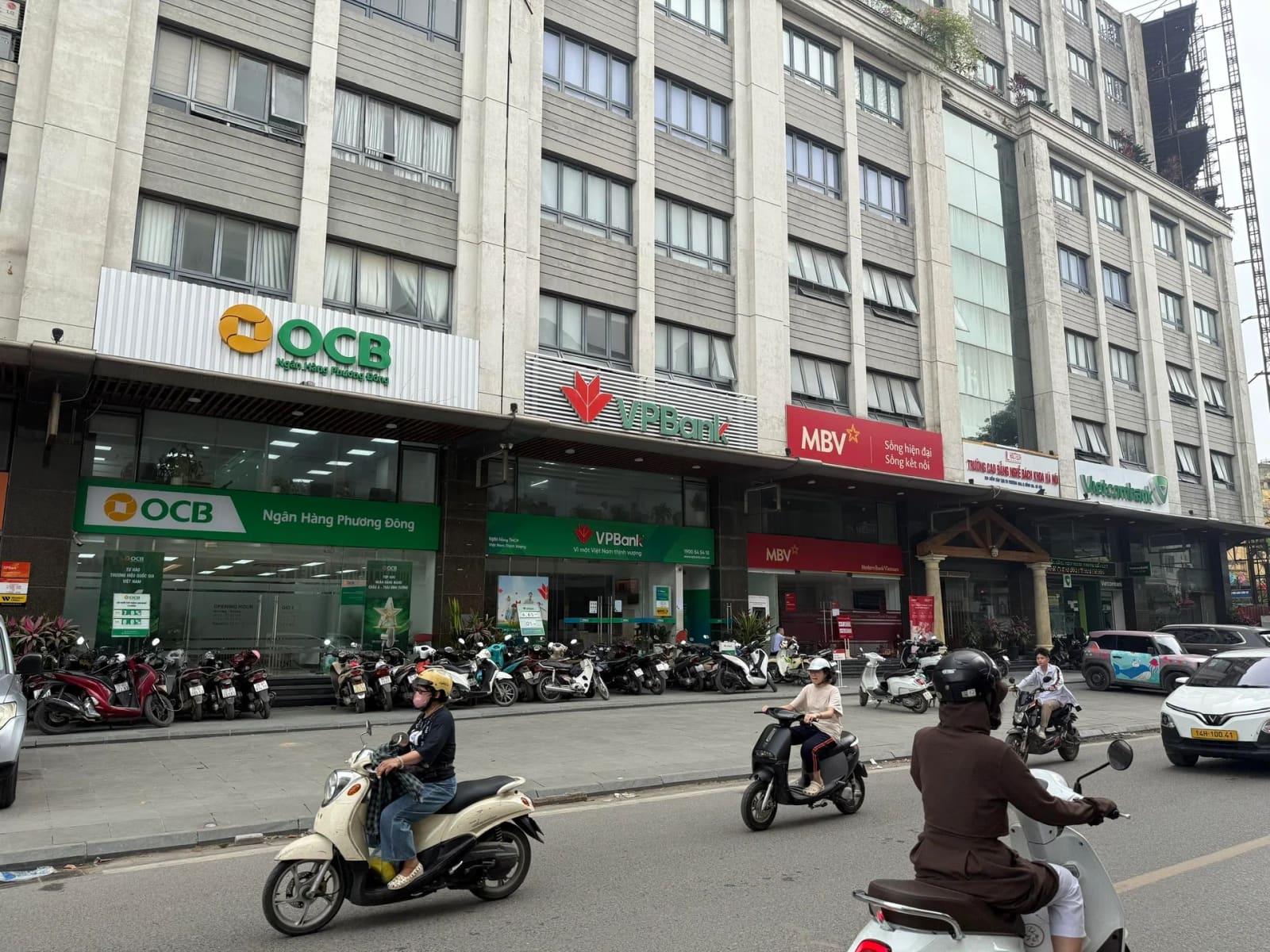
- ·Vietnamese banks extended loans worth 145 percent of GDP in 2025, the highest ratio in ASEAN, while deposit costs have climbed near 7 percent amid intensifying competition for funds.
- ·International Finance Corporation deployed only 20 million dollars to Vietnam in fiscal 2025 despite 9.5 billion in emerging-market infrastructure spending, citing weak project bankability and missing contractual protections.
Savings Gap Threatens Growth Agenda
Vietnam's banking sector is signaling that it cannot shoulder the financing burden of the country's infrastructure expansion alone. Nguyen Thanh Tung, who chairs Vietcombank, told a government forum last weekend that domestic deposits will fall several percentage points short of the investment levels required to hit the administration's economic targets through the end of the decade.
Vietcombank's research unit estimates that hitting 10 percent annual expansion would demand total investment equivalent to 40 percent of GDP. Current domestic savings hover around 36.5 percent, leaving a structural shortfall that traditional bank lending cannot bridge. The gap forces Hanoi to pivot toward foreign capital sources and alternative financing instruments, a shift that carries both opportunity and risk for a credit-dependent economy.
Credit Ratios Already at Regional Extremes
Vietnamese banks extended loans worth 145 percent of GDP in 2025, according to World Bank figures. That ratio outstrips every other Southeast Asian economy and ranks among the highest for lower-middle-income countries worldwide. The headline number reflects decades of reliance on commercial lenders as the primary conduit for investment capital, a model that worked when growth was less ambitious and project scales more modest.
Pham Duc An, governor of the State Bank of Vietnam, acknowledged at the same forum that monetary policy has become harder to calibrate. Demand for credit continues to accelerate while the pool of available funds grows more slowly, creating upward pressure on rates even as the government urges banks to keep borrowing costs low for manufacturers, housing developers, and infrastructure builders.
The central bank has responded with a series of technical adjustments: raising the share of short-term deposits that lenders can funnel into longer-term loans, expanding the volume of State Treasury funds parked at commercial banks, and deploying open-market operations and foreign-exchange swaps to inject liquidity during tight periods. A dedicated financing channel is being established to steer credit toward flagship megaprojects.
Deposit Rates Climb Amid Funding Competition
Quan Trong Thanh, who leads research at Maybank Investment Bank Vietnam, noted that the funding environment has tightened markedly compared to the previous two years. Banks now face deposit costs near 7 percent, with 12-month rates having peaked between 7.5 and 8 percent in the second quarter of this year. Maybank forecasts a gradual decline toward 7 percent by year-end, though lending rates will take longer to adjust.
Corporate borrowing costs need to stay within an 8 to 11 percent band, and mortgage rates around 10 percent, to prevent a surge in non-performing loans and a collapse in credit appetite, according to Thanh. He emphasized that banks require time to accumulate cheaper funding before their blended cost of capital can fall meaningfully.
Vietnamese lenders are not confronting an imminent liquidity crisis, Thanh added, because they tap multiple funding channels beyond customer deposits: certificates of deposit, bond issuance, long-term foreign borrowing, and Treasury placements all contribute to their balance sheets.
Private Banks Turn to Syndicated Loans
Several large private-sector institutions have secured substantial dollar-denominated facilities from international syndicates in recent weeks. VPBank closed a 1.44 billion dollar sustainability-linked loan, while HDBank arranged a 721 million dollar social loan. Both transactions signal a growing appetite among Vietnamese banks to diversify their funding base and extend maturities.
Tung urged the finance ministry to consider issuing international sovereign bonds, arguing that the government could secure more attractive pricing than individual companies and provide a benchmark for private issuers. He also highlighted the underdevelopment of Vietnam's corporate bond market, which sits at roughly 10 percent of GDP, far below the levels seen in Thailand, Malaysia, or China.
The central bank has proposed legislative amendments that would allow commercial banks to offer collateral-management services for corporate bond issuances, a move intended to deepen the capital market and shift some of the medium- and long-term financing load away from bank balance sheets.
Bankability Remains the Binding Constraint
Nguyen Quang Thuan, chairman of Hanoi-based FiinGroup, told an infrastructure symposium earlier this month that bank loans will remain important but insufficient. Financing large projects will require special-purpose vehicles, blended finance structures, project bonds, private equity, and credit-enhancement tools such as guarantees from domestic and multilateral institutions.
Access to offshore capital is only part of the equation. Helen Han, a principal investment officer at the International Finance Corporation, disclosed that the institution deployed 9.5 billion dollars in infrastructure across emerging markets in fiscal 2025, yet allocated only 20 million dollars to Vietnam. The constraint is not appetite but the absence of bankable projects with contractual frameworks that international lenders can underwrite.
Han pointed to missing provisions in Vietnamese project agreements: availability payments that ensure predictable revenue streams, compensation clauses triggered by early termination, protections against changes in law, and robust arbitration mechanisms. Power-sector contracts have proven especially difficult to structure in ways that meet international financing standards.
Rating Upgrade Could Slash Borrowing Costs
Vietnam currently carries a BB+ sovereign rating from Fitch, one notch below investment grade. Malaysia and Thailand both hold BBB+ ratings, and Maybank estimates that Vietnam's debt costs run 3.8 percentage points higher than Malaysia's and 5.7 points above Thailand's. Large institutional investors based in London and New York often face mandates that prohibit or limit exposure to sub-investment-grade credits, narrowing Vietnam's potential investor base.
FiinGroup calculates that an upgrade from BB+ to BBB- could reduce dollar borrowing costs for the central government or its municipalities by 0.5 to 1.5 percentage points, a far more significant impact than the recent stock-market reclassification. Hanoi has set a target of reaching investment grade by 2030.
To support that ambition, the State Bank of Vietnam is developing new prudential rules that would bring the banking system closer to Basel III standards. The central bank has also committed to publishing official data on foreign-exchange purchases and reserves starting in 2027, a transparency measure intended to build credibility with rating agencies and international investors.
Financing Model Under Global Scrutiny
Thuan noted that while double-digit growth would make Vietnam a standout performer globally, international investors are focused on the sustainability of the financing model underpinning that expansion. The challenge is not simply mobilizing capital but ensuring that the inflows support productive investment, maintain fiscal stability, and avoid the credit vulnerabilities that have derailed other fast-growing economies in the region.
The coming quarters will test whether Hanoi can unlock offshore funding at scale, restructure project contracts to meet international standards, and manage the transition from a bank-dominated financing system to one that draws more heavily on capital markets and multilateral institutions. The outcome will determine not only whether Vietnam can sustain its growth trajectory but also how it manages the financial risks that accompany rapid infrastructure expansion.
RELATED STORIES
Vietnam Bets $76 Billion Funding Gap Can Lure Capital Without Copying Rivals
Priyanka V. Rao · 4 min

Malaysia Hospital Group A1Health Prepares US$1.7 Billion IPO for Early 2027
Tran Quoc Bao · 2 min

Vietnam's VN-Index Climbs Toward 1,800 as Market Sentiment Strengthens
Priyanka V. Rao · 3 min
Vietnam's Trade Turnover Hits $770 Billion as Imports Surge Past Exports
Jun-ho Seo · 2 min
Spot something wrong? Email editor@briefasia.com. We log every correction publicly.