Asia · Business
Vietnam's Diamond District Faces Consumer Crisis After Fraud Allegations
Buyers on Ho Chi Minh City's jewelry corridor scramble for answers as concerns mount over gem authenticity and quality standards
KEY TAKEAWAYS
- ·Diamond buyers on Ho Chi Minh City's An Duong Vuong street are demanding verification after fraud allegations emerged affecting multiple retailers in Vietnam's main jewelry corridor.
- ·The scandal exposes gaps in Vietnam's gemstone certification framework, where rapid market growth has outpaced development of regulatory oversight and consumer protection infrastructure.
- ·Authorities face pressure to implement mandatory third-party certification for high-value gem transactions while balancing enforcement against risks of driving the trade underground.
Panic on An Duong Vuong
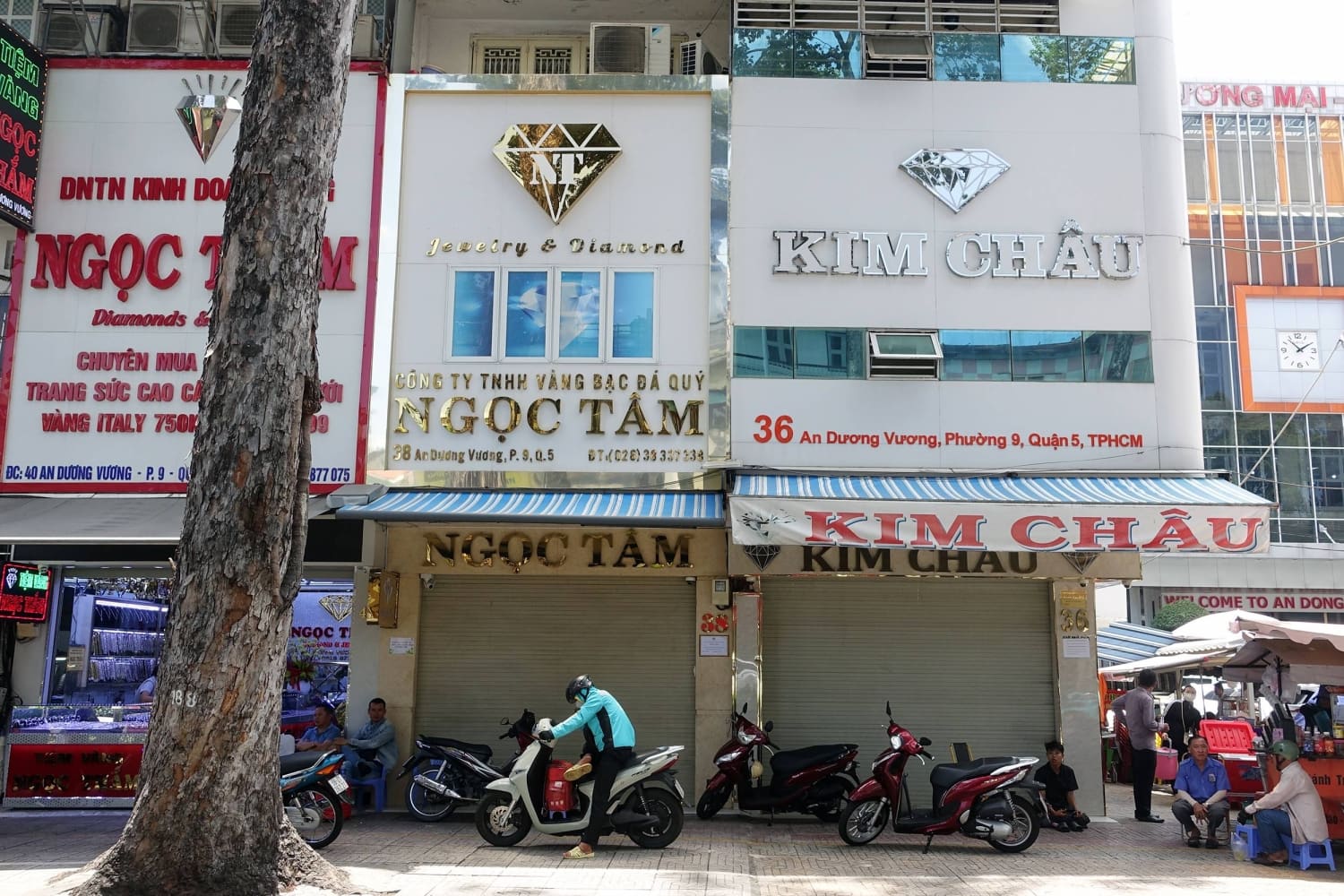
A scandal involving diamond authenticity has triggered a consumer crisis along Ho Chi Minh City's An Duong Vuong street, the city's established jewelry retail corridor. Buyers who recently purchased gemstones from shops in the area are now seeking verification of their purchases, raising questions about quality control and certification standards in Vietnam's growing luxury market.
The street has long served as the primary destination for diamond purchases in the country's commercial capital, attracting both domestic buyers and overseas Vietnamese seeking engagement rings, investment pieces, and luxury gifts. The current turmoil marks a significant disruption to a trade route that has anchored the city's jewelry sector for decades.
A Market Built on Trust
Vietnam's diamond retail sector has expanded rapidly over the past decade as rising household incomes and a growing middle class have fueled demand for luxury goods. An Duong Vuong street emerged as the natural center of this trade, with dozens of storefronts offering everything from certified loose stones to finished jewelry pieces.
The concentration of retailers in a single district created a competitive environment that typically benefits consumers through price transparency and selection. However, that same density also means reputational damage spreads quickly when trust erodes. The current scandal appears to have affected multiple shops rather than a single retailer, amplifying the impact on consumer confidence.
Industry observers note that Vietnam's regulatory framework for gemstone certification has struggled to keep pace with market growth. While international certificates from bodies like the Gemological Institute of America remain the gold standard, enforcement of verification requirements at the retail level varies widely. Many smaller shops operate with minimal oversight, relying on supplier relationships and customer trust rather than systematic third-party validation.
Ripple Effects Across the Sector
The immediate consequence has been a surge in customers returning to shops demanding re-evaluation of their purchases or seeking refunds. Some retailers have reportedly closed temporarily, either to conduct internal audits or to avoid confrontations with angry buyers. The disruption comes during what is typically a strong sales period ahead of the autumn wedding season, when engagement ring purchases peak.
For Vietnam's luxury retail sector more broadly, the incident highlights vulnerabilities in consumer protection infrastructure. The country has positioned itself as an emerging market for high-end goods, with international brands opening flagship stores in Ho Chi Minh City and Hanoi. Scandals that undermine trust in local retail channels risk pushing affluent consumers toward foreign purchases or online platforms with stronger certification guarantees.
The gemstone trade in Southeast Asia has faced periodic credibility challenges, from synthetic stone misrepresentation to inflated quality grading. Vietnam's domestic market, while smaller than regional hubs like Bangkok or Hong Kong, has been growing at a pace that outstrips the development of regulatory capacity. The An Duong Vuong situation may serve as a catalyst for stricter certification requirements, though implementation will depend on political will and industry cooperation.
What Comes Next
Authorities will need to balance immediate consumer protection with longer-term market development. Heavy-handed enforcement could drive smaller retailers out of business and push the trade underground, while insufficient action risks allowing fraudulent practices to continue. The optimal path likely involves mandatory third-party certification for high-value transactions, stronger disclosure requirements, and accessible dispute resolution mechanisms.
For buyers who made recent purchases, the priority is verification through independent gemological laboratories. Even stones sold with certificates should be re-evaluated if doubts exist about the issuing body's credibility. The cost of professional appraisal is modest compared to the value of a genuine diamond, and the current environment makes such diligence essential.
The An Duong Vuong scandal will test whether Vietnam's luxury retail sector can mature into a market where trust is backed by robust institutions rather than personal relationships alone. The outcome will shape not only the diamond trade but the broader trajectory of high-value consumer goods in one of Asia's fastest-growing economies.
RELATED STORIES
Vietnam Draws $7.5 Billion From Singapore in Seven Months
Priyanka V. Rao · 3 min
Vietnam Ships 1.7 Million Tonnes of Coffee as Brazil Delays and EU Rules Reshape Trade
Tran Quoc Bao · 3 min
Vietnam's Trade Turnover Hits $770 Billion as Imports Surge Past Exports
Jun-ho Seo · 2 min

Samsung's Vietnam Operations Post 23% Profit Jump to $2.3 Billion
Tran Quoc Bao · 3 min
Spot something wrong? Email editor@briefasia.com. We log every correction publicly.