Finance · Deals
Unitree IPO and Alibaba's $10.2 Billion Raise Signal China's AI Infrastructure Push
Two major capital events highlight Beijing's accelerating investment in artificial intelligence and robotics capabilities as competition with US technology firms intensifies
KEY TAKEAWAYS
- ·Shanghai-based Unitree advanced IPO plans while Alibaba completed a $10.2 billion convertible bond raise, marking two significant AI-focused capital events in China within one week.
- ·Alibaba's funds will support GPU cluster expansion and large language model development, with institutional demand concentrated among Hong Kong and Singapore investors.
- ·The transactions reflect sustained institutional confidence in Chinese AI buildout despite US semiconductor export controls and ongoing profitability challenges for robotics startups.
Two Capital Raises in One Week
China's artificial intelligence sector drew substantial capital over the past seven days through a pair of high-profile financing events. Unitree, a Shanghai-based humanoid robotics manufacturer, moved forward with plans for an initial public offering, while e-commerce and cloud giant Alibaba completed a $10.2 billion capital raise, according to the companies.
The timing reflects an intensifying focus on AI infrastructure among Chinese technology firms. Both transactions come as mainland companies accelerate spending on computing hardware, model development, and robotics integration to narrow the gap with US competitors in generative AI and autonomous systems.
Unitree's Public Market Debut
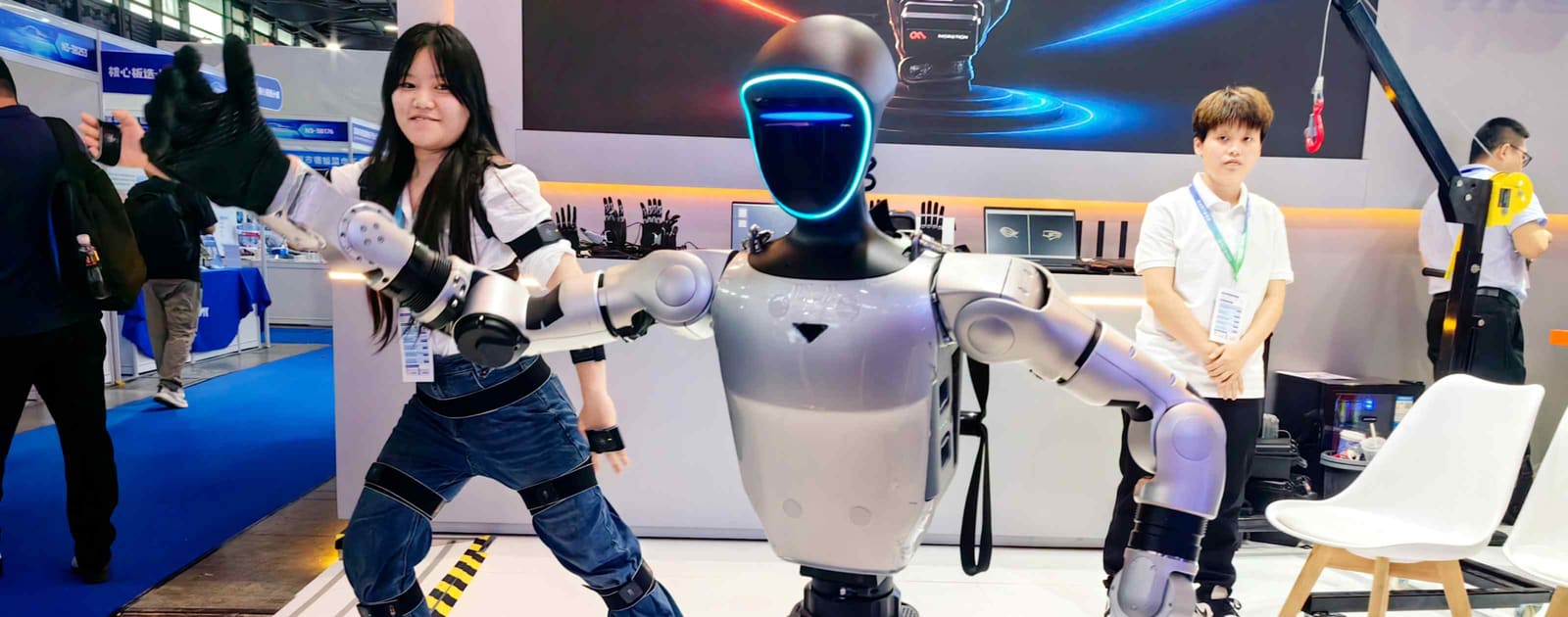
Unitree specializes in quadruped and humanoid robots designed for industrial inspection, logistics, and research applications. The company has positioned itself as a lower-cost alternative to Boston Dynamics and other Western robotics firms, targeting price points accessible to mid-tier manufacturers and universities across Asia.
The IPO prospectus was not publicly disclosed at the time of the announcement, leaving valuation and share allocation details unclear. Industry observers note that Chinese robotics startups have faced volatility in public markets over the past eighteen months, with investor appetite fluctuating alongside broader concerns about profitability timelines and export restrictions on advanced chips.
Unitree's move to list comes amid growing domestic demand for automation. Factory operators in Guangdong and Jiangsu provinces have increased orders for mobile robots as labor costs rise and younger workers show declining interest in repetitive assembly roles. Humanoid models remain largely experimental, but pilot programs in warehousing and hazardous-environment inspection have drawn government subsidies in several municipalities.
Alibaba's $10.2 Billion Infusion
Alibaba's capital raise, completed through a convertible bond issuance, provides the Hangzhou-based company with resources to expand its cloud computing division and fund in-house large language model development. Alibaba Cloud has been investing heavily in GPU clusters and data center capacity to support its Qwen family of AI models, which compete with offerings from Baidu, Tencent, and ByteDance.
The $10.2 billion figure represents one of the largest single fundraising rounds by a Chinese technology company this year. Demand for the bonds came primarily from institutional investors in Hong Kong and Singapore, with allocation details indicating strong participation from sovereign wealth funds and insurance portfolios seeking exposure to China's AI buildout.
Alibaba has publicly committed to training models with parameter counts exceeding one trillion, a threshold that requires sustained capital expenditure on Nvidia H20 chips and domestically produced alternatives from vendors such as Huawei and Cambricon. The company's AI division has also expanded its team of research scientists, recruiting talent from universities in Beijing, Shanghai, and Shenzhen.
Regional Implications
The two fundraising events signal continued confidence among institutional investors in China's ability to build competitive AI capabilities despite ongoing US export controls on cutting-edge semiconductors. While American firms retain advantages in frontier model performance and chip design tools, Chinese companies have made progress in cost efficiency and deployment scale within domestic markets.
For Asia-Pacific technology ecosystems, the capital flows into Chinese AI firms create both partnership opportunities and competitive pressure. Startups in Southeast Asia and India often rely on cloud infrastructure from Alibaba, Tencent, and ByteDance, making the expansion of Chinese AI platforms directly relevant to developers across the region.
Investment banks in Hong Kong and Shanghai report a pipeline of additional AI-related listings and bond issuances scheduled for the remainder of the year, including companies focused on autonomous vehicle software, enterprise AI agents, and semiconductor packaging. The pace of capital deployment suggests that Chinese technology leaders view the current window as critical for establishing market position before regulatory frameworks solidify and competition intensifies further.
Broader Funding Environment
China's venture capital landscape has shown renewed activity in AI-focused deals after a slowdown in 2024 and early 2025. Government-backed funds in Shenzhen, Suzhou, and Chengdu have increased allocations to companies working on AI chips, robotics, and industrial automation, aligning with policy priorities outlined in the country's latest five-year technology plan.
However, profitability remains elusive for many AI startups. Unitree and peers face pressure to demonstrate revenue growth and margin improvement as public market investors grow more selective. Alibaba's established cash flow from e-commerce and cloud services provides a cushion for sustained AI investment, but smaller firms without comparable business model diversification may struggle to maintain funding access if market sentiment shifts.
The capital raised by Unitree and Alibaba will likely flow into talent acquisition, chip procurement, and data center construction over the next twelve to eighteen months. How effectively these resources translate into commercially viable products and services will shape investor appetite for subsequent rounds and influence the trajectory of China's position in the global AI race.
RELATED STORIES
Alibaba Launches $10.2 Billion Share Placement to Fuel AI Push
Cheng Wei-Lun · 3 min
Alibaba Profit Drops 76% as AI Infrastructure Push Drives Capex to $9.3 Billion
Cheng Wei-Lun · 4 min
Alibaba to Raise $10.2 Billion in Placement for AI Build-Out
Cheng Wei-Lun · 2 min
Chinese Humanoid Robots Now Jump Higher and Run Faster Than Olympic Athletes
Cheng Wei-Lun · 4 min
Spot something wrong? Email editor@briefasia.com. We log every correction publicly.