Lifestyle · Culture
Ulaanbaatar Earns "Mongtan" Nickname as Korean Retail Brands Blanket Mongolia's Capital
Half of Mongolia's 3.5 million people now live in a city where convenience stores and food chains mirror Seoul's suburbs
KEY TAKEAWAYS
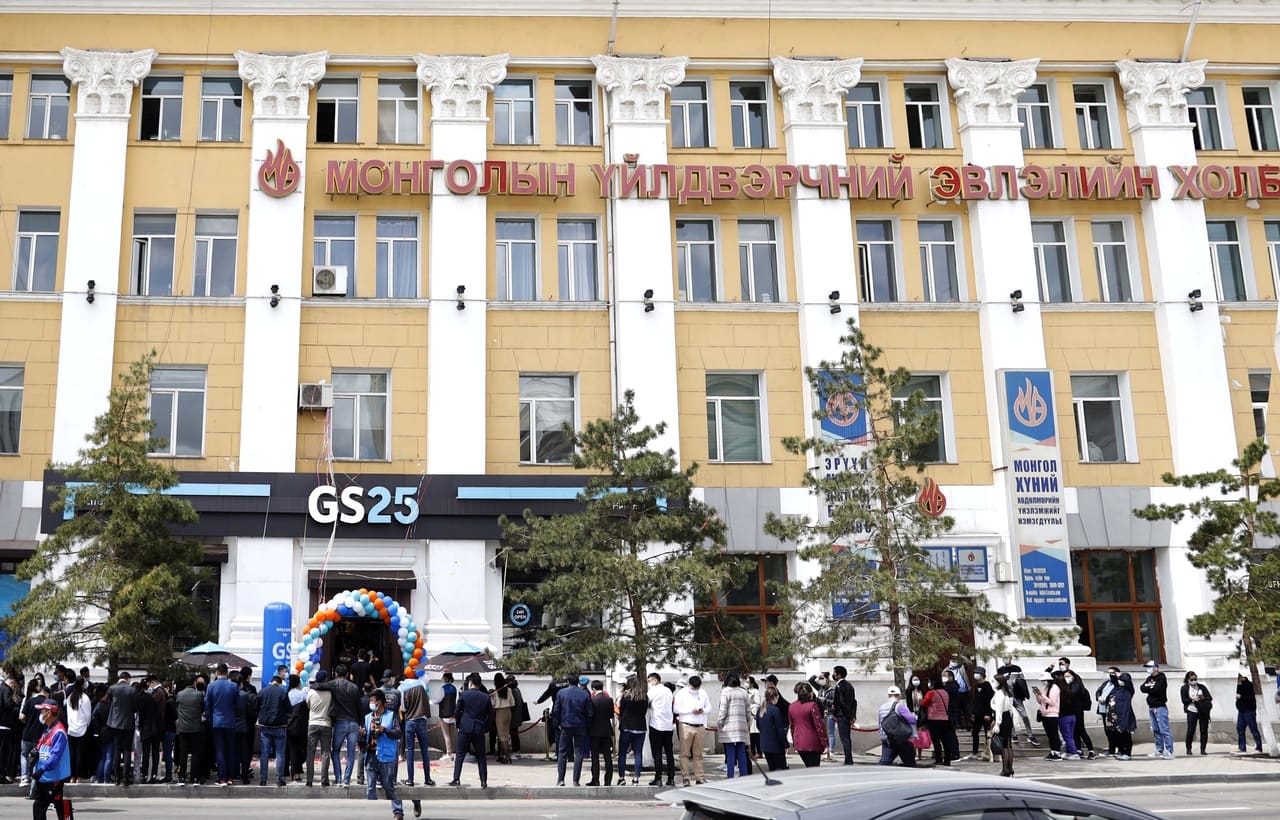
- ·Ulaanbaatar now hosts such a high concentration of Korean convenience stores, bakeries, and fast-food chains that it has earned the nickname 'Mongtan,' a blend of Mongolia and Dongtan, a Seoul suburb.
- ·The capital is home to roughly half of Mongolia's 3.5 million people, creating a dense urban market that Korean franchises have saturated using plug-and-play operational templates proven in Korea.
- ·President Lee Jae Myung referenced the nickname at a Korea-Mongolia business forum, signaling official recognition of the retail footprint and deepening commercial ties beyond traditional mining and infrastructure sectors.
A Seoul Suburb on the Steppe
Ulaanbaatar, the capital of Mongolia, now shelters roughly half the country's 3.5 million residents. Walk its streets and the density of Korean storefronts rivals any satellite city ringing Seoul. Convenience chains anchor opposing corners at major intersections. Bakeries and burger shops crowd the sidewalks. The visual saturation has earned the city a Korean nickname: "Mongtan," a blend of Mongolia and Dongtan, the large planned development south of Seoul.
The comparison is more than cosmetic. Korean retail and food brands have woven themselves into the urban fabric of Ulaanbaatar over the past decade, mirroring the format and pace of franchise expansion seen in second-tier Korean cities. For many residents, the daily rhythm of shopping, snacking, and commuting now runs through Korean-branded touchpoints.
President Lee Jae Myung referenced the nickname at a recent Korea-Mongolia business forum, signaling official recognition of the retail footprint. The remark underscored how commercial ties have deepened beyond mining and infrastructure, the traditional pillars of bilateral economic engagement, into consumer-facing sectors that shape everyday life.
Why Korean Brands Cluster in Mongolia
Several factors have accelerated Korean retail penetration in Ulaanbaatar. Geographic proximity and existing cultural exchange lowered entry barriers. Korean television dramas and pop music have circulated widely in Mongolia for years, creating familiarity with Korean consumer aesthetics and product categories. Franchise operators leveraged this soft-power foundation to introduce convenience store formats, coffee chains, and quick-service restaurants.
Mongolia's concentrated urban population also simplified logistics. With half the nation living in a single city, distribution networks remain short and franchisees can achieve scale without establishing regional hubs. The capital's rapid income growth over the past fifteen years, driven by mining revenues and remittances, expanded the middle-class cohort able to afford branded goods and prepared food.
Korean franchises brought operational templates proven in Seoul and provincial Korean cities: standardized store layouts, centralized supply chains, and training programs that require minimal local adaptation. This plug-and-play model allowed brands to replicate quickly, saturating commercial districts before international competitors could mobilize.
The Retail Landscape Today
Convenience stores occupy the most visible niche. Multiple Korean chains operate outlets within sight of one another on high-traffic streets, competing on location density rather than differentiation. The model mimics Seoul's convenience-store wars, where proximity to subway exits and apartment complexes drives foot traffic and impulse purchases.
Bakeries and coffee shops have also proliferated. Korean-style bakeries, which emphasize soft pastries and cream-filled breads, cater to local tastes shaped by prior exposure to Korean food culture. Coffee chains offer air-conditioned seating and Wi-Fi, positioning themselves as third spaces for students and young professionals in a city where public gathering venues remain limited.
Fast-food brands, including burger and fried-chicken outlets, round out the Korean retail presence. These chains introduced standardized quality and service speed that local operators struggled to match at scale. Menu localization has been minimal; most outlets serve the same items available in Korea, betting that brand recognition and consistent execution will sustain demand.
Economic and Cultural Implications
The retail influx has reshaped Ulaanbaatar's commercial districts. Korean brands now anchor shopping streets, drawing foot traffic and setting rent benchmarks. Local businesses either adapt by adopting similar formats or retreat to secondary locations. The competitive pressure has raised service standards across the board, but it has also narrowed the range of retail concepts visible in prime areas.
For Mongolia, the Korean retail presence represents a double-edged outcome. On one hand, it has modernized consumer infrastructure, introduced employment in organized retail, and diversified the urban economy beyond resource extraction. On the other, it has concentrated market power in foreign franchises, siphoning profits out of the country and limiting opportunities for homegrown retail entrepreneurs to scale.
The phenomenon also reflects broader patterns in Asian cross-border retail. Korean franchises have exported their domestic expansion playbook to markets across Southeast Asia, Central Asia, and increasingly into secondary cities in China and India. Ulaanbaatar's transformation into "Mongtan" fits within this regional strategy, where cultural adjacency and urbanization create openings for rapid brand replication.
What Comes Next
The saturation point for Korean retail in Ulaanbaatar remains unclear. Some commercial corridors already show signs of oversupply, with convenience stores cannibalizing each other's sales and coffee shops competing for a finite pool of customers. Franchise operators may pivot toward second-tier Mongolian cities, though the smaller populations and weaker infrastructure in places like Erdenet and Darkhan pose logistical challenges.
Regulatory response will also shape the trajectory. If Mongolian authorities introduce franchise caps or local-ownership requirements, the pace of new openings could slow. Conversely, if bilateral trade agreements lower tariffs on imported goods used by Korean franchises, the cost advantage over local competitors could widen further.
Consumer preference will ultimately determine how long the Korean retail dominance persists. Younger Mongolians have grown up with Korean brands as the default, but a counter-movement favoring local products and independent businesses could emerge as incomes rise and cultural confidence strengthens. For now, "Mongtan" stands as shorthand for a capital city where Korean commerce has become the ambient backdrop to daily life.
RELATED STORIES

South Korea's Alcohol Production Hits 27-Year Low as Wellness Trends Reshape Drinking Culture
Cheng Wei-Lun · 3 min
SK Hynix May Fast-Track Gwangju Fab Investment Alongside Yongin Expansion
Jun-ho Seo · 3 min
South Korea Breaks Full-Year Export Record in September
Tran Quoc Bao · 3 min

SK Chemicals Targets Europe's Can-Coating Shift After BPA Ban
Cheng Wei-Lun · 2 min
Spot something wrong? Email editor@briefasia.com. We log every correction publicly.