Asia · Politics
Thailand and Indonesia Deepen Ties as Regional Leaders Navigate Security Challenges
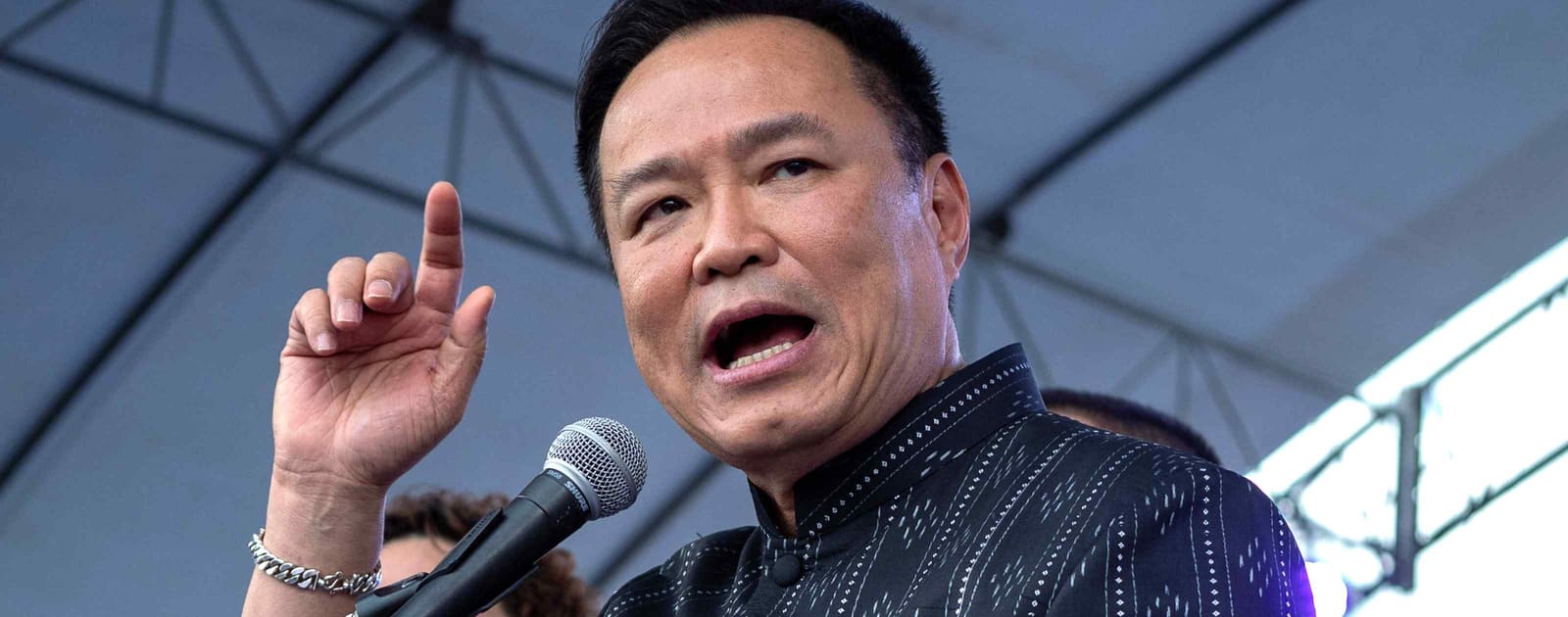
Thai Prime Minister Anutin Charnvirakul's Jakarta visit will formalize a five-year strategic partnership roadmap covering security, trade, and energy cooperation between Southeast Asia's second and fourth-largest economies.
KEY TAKEAWAYS
- ·Thai Prime Minister Anutin Charnvirakul visits Jakarta on August 3 to sign the Roadmap on Strategic Partnership 2026-2030 with Indonesian President Prabowo Subianto, covering security, trade, and energy.
- ·Bilateral trade between Thailand and Indonesia reached approximately $22 billion in 2025, with both governments seeking greater market access and coordination on food and energy security.
- ·Indonesia's Financial System Stability Committee meets Monday for the first time since Bank Indonesia Governor Perry Warjiyo resigned, with markets watching for signals on rupiah stability and policy coordination.
Strategic Partnership Takes Shape
Thai Prime Minister Anutin Charnvirakul arrives in Jakarta on August 3 for a two-day official visit that will cement a new phase of cooperation between Thailand and Indonesia. The centerpiece of the trip is the Roadmap on Strategic Partnership 2026-2030, a framework document that both countries have prepared following their decision to upgrade bilateral relations last year.
The roadmap identifies three priority areas: security coordination, economic integration, and cultural exchange. According to the Thai government, Anutin and Indonesian President Prabowo Subianto will discuss concrete measures on transnational crime, trade and investment flows, food security, energy cooperation, and people-to-people connections.
The timing reflects broader shifts in Southeast Asian diplomacy. Both Bangkok and Jakarta have worked to strengthen ASEAN cohesion amid rising great-power competition in the region. Thailand, which borders Myanmar, faces spillover effects from instability in its western neighbor. Indonesia, as ASEAN's largest economy and most populous nation, has sought to position itself as a regional anchor.
Security and Trade on the Agenda
Security cooperation will anchor the partnership. Thailand and Indonesia share concerns about maritime security, terrorism financing, and cross-border trafficking networks. The two governments have expanded joint patrols in recent years and established intelligence-sharing mechanisms, though gaps remain in operational coordination.
On the economic side, bilateral trade between Thailand and Indonesia reached approximately $22 billion in 2025, according to Thai customs data. Indonesian officials have pressed for greater market access for palm oil and coal exports, while Thai exporters want smoother entry for automotive parts and processed food products. Energy security is another focus, with Thailand importing liquefied natural gas from Indonesia and exploring joint upstream projects.
The roadmap will also address food security, a priority for both governments following the volatility in global grain markets during the Middle East conflict. Thailand is a major rice exporter, while Indonesia is the world's largest palm oil producer. Officials from both sides have discussed establishing buffer stock arrangements and coordinating export policies to stabilize regional supply chains.
Myanmar Complicates Regional Dynamics
Thailand's relationship with Myanmar adds another layer to the regional picture. Myanmar's military leader Min Aung Hlaing is scheduled to visit Bangkok later this week, where he will meet Anutin to discuss pollution in the Kok River, a tributary of the Mekong that flows through Myanmar's Shan State and into northern Thailand. Cross-border trade and regional security are also expected to feature in the talks.
The meeting has drawn criticism from civil society groups, who argue that engagement with Myanmar's junta legitimizes its rule and undermines efforts to restore democracy. Thai officials have defended the dialogue as necessary to manage shared borders and address environmental hazards that affect Thai communities.
Indonesia has taken a different approach to Myanmar, with President Prabowo calling for stronger ASEAN pressure on the junta to implement the Five-Point Consensus agreed in 2021. The divergence in policy reflects broader tensions within ASEAN over how to respond to Myanmar's crisis, which has displaced millions and destabilized border regions.
Financial Stability and Economic Headwinds
Indonesia's Financial System Stability Committee will hold its quarterly meeting on Monday, the first since Bank Indonesia Governor Perry Warjiyo resigned last week. The committee will assess the rupiah's performance, inflation trends, and capital flow dynamics. Markets are watching closely for signals on coordination between fiscal and monetary authorities, particularly as Indonesia's sovereign wealth fund Danantara participates in the stability framework for the first time.
The rupiah has faced pressure from dollar strength and uncertainty around U.S. monetary policy. Indonesian policymakers have used a mix of intervention and rate adjustments to manage volatility, but persistent inflation in food and energy has complicated the central bank's task.
Thailand, meanwhile, has seen slower growth than expected in 2026, with tourism recovery hampered by elevated fuel prices and weakened demand from China. The Bank of Thailand has held rates steady, balancing inflation concerns against the need to support domestic activity. Anutin's government has rolled out fiscal measures targeting rural households and small businesses, though implementation has lagged.
Broader Regional Implications
The Thailand-Indonesia partnership reflects a broader pattern of bilateral and minilateral cooperation within ASEAN. As the regional bloc struggles to act collectively on contentious issues, member states have pursued targeted agreements to advance specific interests. Thailand and Indonesia have both participated in the ASEAN Outlook on the Indo-Pacific, which seeks to position the grouping as a driver of regional architecture rather than a passive player caught between Washington and Beijing.
Energy security is likely to feature prominently in the roadmap's implementation. Both countries have committed to reducing carbon emissions while meeting rising electricity demand. Thailand has set targets for renewable energy capacity, while Indonesia is developing its downstream nickel industry to supply the global battery supply chain. Joint projects in green hydrogen and geothermal energy could emerge as areas of collaboration.
The strategic partnership also carries symbolic weight. Thailand and Indonesia are founding members of ASEAN and have historically played leadership roles in the organization. Closer coordination between Bangkok and Jakarta could strengthen the bloc's ability to respond to regional challenges, from maritime disputes to pandemic preparedness.
Anutin's visit to Jakarta signals that both governments see value in deepening ties at a time of geopolitical flux. Whether the roadmap translates into concrete outcomes will depend on sustained political will and effective implementation mechanisms. For now, the partnership represents a bet that bilateral cooperation can deliver results where multilateral forums have stalled.
RELATED STORIES

Mitsubishi Motors Shifts Strategy to US and Australia Markets
Aiko Nakamura · 3 min

Five ASEAN Members Back Regional Oil Stockpile as Study Nears Completion
Tran Quoc Bao · 3 min

Mitsubishi Motors Brings Back Pajero SUV With Thailand Launch
Cheng Wei-Lun · 3 min

Southeast Asian Firms Overlook Digital Pact Worth USD 2 Trillion
Lim Hui Ying · 4 min
Spot something wrong? Email editor@briefasia.com. We log every correction publicly.