Finance · Markets
Tech Rally Pushes Asian Markets Higher as Brent Crude Tests $92
Semiconductor stocks led gains across the region while Middle East tensions drove oil to its highest intraday level in six weeks
KEY TAKEAWAYS
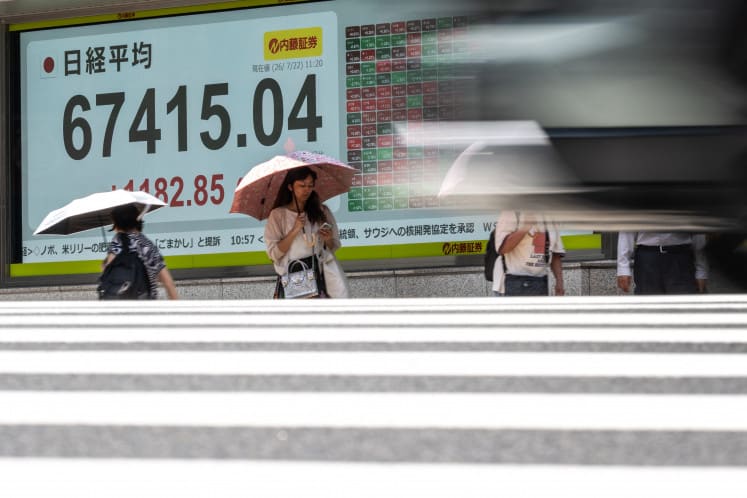
- ·Asian technology stocks rallied for a second day on July 22, with Seoul's semiconductor index surging 5.4 percent and Tokyo climbing nearly 2 percent.
- ·Brent crude rose above $92 per barrel, its highest intraday level since June 11, as US forces completed an 11th night of strikes near the Strait of Hormuz.
- ·The Japanese yen weakened beyond 163 against the dollar, reaching its lowest level since 1986, pressured partly by rising oil prices and policy divergence.
Tech Stocks Rebound Across Asia
Technology shares drove Asian equity markets higher for a second consecutive session on July 22, with semiconductor-heavy indexes leading gains. Seoul's market jumped 5.4 percent, while Tokyo climbed nearly 2 percent, mirroring overnight strength in US technology benchmarks.
The rally came after weeks of volatility in tech stocks, driven by questions over whether artificial intelligence investment returns will justify the spending surge. Companies across the semiconductor supply chain benefited from renewed investor confidence, though analysts cautioned that valuation concerns remain unresolved.
Stephen Innes at SPI Asset Management noted that market dynamics have shifted since the early phase of AI-driven stock gains. During that period, companies saw their valuations rise simply by announcing larger capital expenditure plans. Now, investors are scrutinizing free cash flow projections and funding requirements more closely, questioning how much future growth is already reflected in current prices.
Market participants are awaiting quarterly results from Tesla and Alphabet, due later on July 22, followed by reports from Microsoft, Meta, Apple and Amazon in the coming week. These earnings releases are expected to provide clarity on AI spending patterns and revenue generation from new technologies.
Oil Climbs on Middle East Operations
Brent crude rose approximately 1 percent to trade above $92 per barrel, reaching its highest intraday level since June 11. The move came as US military forces completed an 11th consecutive night of strikes aimed at degrading capabilities that threaten commercial shipping in the Strait of Hormuz.
President Donald Trump indicated the United States was "not finished" with military action against Iran. He also addressed threats from Yemen's Houthi forces, who warned on Monday of potential blockades against Saudi Arabian ports, stating he would "take care of" the situation if those threats materialized.
Jay Hatfield at Infrastructure Capital Management told Bloomberg News that his firm expects oil prices to remain in the $80 to $90 range depending on developments. However, he identified a potential risk scenario: if the Red Sea shipping route faces actual closure, prices could surge past $100 per barrel.
The energy market is navigating a complex set of variables, with Middle East tensions layered on top of existing supply and demand fundamentals. Commercial shipping through the Strait of Hormuz, which handles roughly one-fifth of global oil trade, remains a focal point for market participants assessing risk premiums.
Currency Pressure on the Yen
The Japanese yen weakened beyond 163 against the dollar late on July 21, marking its lowest level since 1986. The currency faced renewed pressure on July 22, with analysts pointing to rising oil prices as one contributing factor.
Japan's dependence on energy imports means that higher crude prices typically weaken the yen through their impact on the country's trade balance. The currency's decline also reflects broader divergence in monetary policy, with the Bank of Japan maintaining accommodative settings while other major central banks have tightened.
The yen's weakness presents a mixed picture for Japanese exporters. While it improves competitiveness for goods sold abroad, it also raises input costs for manufacturers reliant on imported raw materials and energy.
What to Watch
Earnings season will test whether technology valuations can hold at current levels. Investors want concrete evidence that AI investments are translating into revenue growth, not just higher capital spending. The semiconductor sector, which has seen extreme swings in recent months, remains particularly sensitive to any signals about demand patterns or inventory levels.
On the geopolitical front, shipping routes through the Strait of Hormuz and the Red Sea continue to carry elevated risk premiums. Any escalation that disrupts physical oil flows would likely send prices sharply higher, with knock-on effects for inflation expectations and central bank policy calculations across Asia.
Currency markets are also in focus, especially for economies with significant dollar-denominated debt or heavy reliance on imported energy. The yen's slide to multi-decade lows raises questions about potential intervention by Japanese authorities, though no action has been taken yet.
Asian markets are balancing optimism about technology sector fundamentals against a backdrop of geopolitical uncertainty and currency volatility. The next few weeks of earnings reports will determine whether the current rally has staying power or represents a temporary pause in a broader correction.
RELATED STORIES
Ringgit Set to Hold Gains as Malaysia Central Bank Meeting Nears
Priyanka V. Rao · 3 min

PhilWeb Trading Halted After P4.2 Billion JKS Tech Bet
Tran Quoc Bao · 3 min
SoftBank Prices ¥1 Trillion Retail Bond in Largest Offering Since 2020
Aiko Nakamura · 3 min

China's Social Security Fund Doubles Offshore Holdings to $86 Billion
Jun-ho Seo · 3 min
Spot something wrong? Email editor@briefasia.com. We log every correction publicly.