Technology · Policy
Taiwan to Retain Chip Manufacturing Lead Despite US Expansion Push
TSMC's Arizona investments climb to $44 billion, but minister says 16 planned Taiwan fabs secure the island's silicon dominance
KEY TAKEAWAYS
- ·Taiwan's Ministry of Economic Affairs approved a $20 billion TSMC investment in Arizona facilities, bringing total US-approved funding to $44 billion across six approvals.
- ·Minister Kung Ming-hsin stated TSMC's 16 planned Taiwan fabrication and packaging plants will keep the island's production capacity ahead of any US expansion.
- ·Trump claimed Taiwan was doubling Arizona chip plant size and projected the US could reach 50 percent of global chip market share by end of term.
Taiwan's Fabrication Advantage
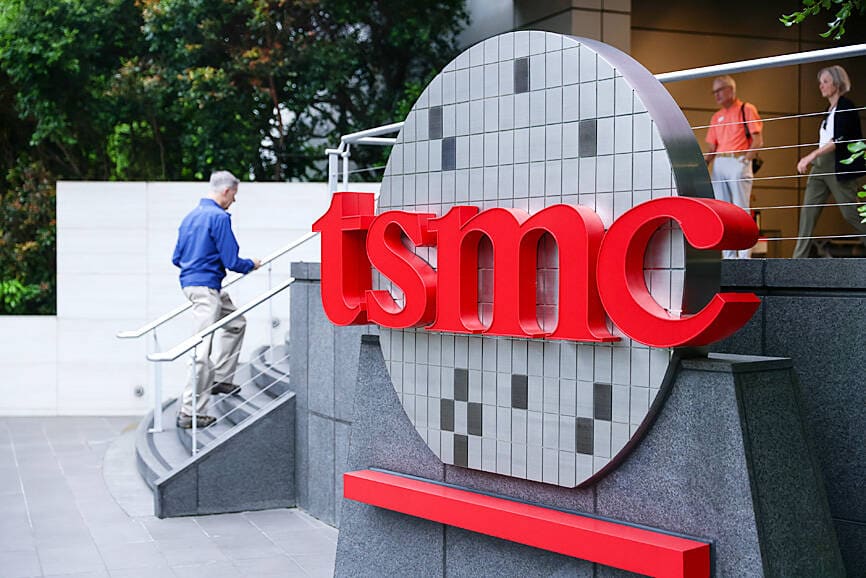
Taiwan will maintain its position as the world's primary semiconductor manufacturing hub despite aggressive US efforts to reshore chip production, according to Minister of Economic Affairs Kung Ming-hsin. Speaking at a ministry meeting, Kung pointed to concrete plans already on the books: TSMC has committed to constructing 16 fabrication plants and advanced chip-on-wafer-on-substrate packaging facilities across Taiwan.
The minister's assessment carries weight in a region where semiconductor capacity translates directly to economic leverage. "No matter how many fabs the US builds in the future, it won't be that many," Kung stated, drawing a clear line between Taiwan's established infrastructure and America's ambitions.
His comments followed remarks from US President Donald Trump, who claimed Taiwan was doubling the size of chip plants under construction in Arizona and suggested the US could capture 50 percent of global chip market share before the end of his term. Trump characterized Taiwanese chipmakers as significantly expanding their American footprint, referencing what he called "the biggest company in the world, actually, the chipmaker."
Arizona Investment Reaches $44 Billion
Taiwan's Ministry of Economic Affairs approved a $20 billion capital injection by TSMC into its wholly owned subsidiary TSMC Arizona Corp. The approval marks the sixth time the ministry's Department of Investment Review has cleared funding for TSMC's US operations, bringing total approved investments to $44 billion.
The latest capital will finance construction of a 12-inch wafer fabrication facility and an advanced packaging plant in Arizona. The Department of Investment Review processed nine major domestic and overseas investment projects at its meeting, with seven outbound investments totaling approximately $23.05 billion. TSMC's Arizona funding accounted for the bulk of that figure.
The scale of these investments reflects both US policy pressure and TSMC's strategic calculus. Washington has deployed a combination of incentives through the CHIPS Act and diplomatic leverage to encourage Taiwanese semiconductor firms to build American capacity. For TSMC, the Arizona expansion represents both compliance with US expectations and diversification of geopolitical risk.
Silicon Shield Calculus
When asked whether TSMC's US expansion could erode Taiwan's so-called "silicon shield," the defensive value derived from the island's semiconductor dominance, Kung dismissed the concern. He cited TSMC's announced plans as evidence that Taiwan will remain central to the company's manufacturing operations.
The minister also expressed confidence in TSMC chairman C.C. Wei's ability to navigate potential pressure from Washington. "I believe chairman Wei is very wise and will be able to handle the matter appropriately," Kung said, addressing questions about whether the US administration might demand more aggressive investment if TSMC's expansion fails to meet Trump's expectations.
Earlier in the day, Kung told reporters that any plans for additional overseas fabrication facilities should be confirmed directly by TSMC rather than inferred from government statements.
Regional Manufacturing Reality
The gap between US aspirations and Taiwan's existing capacity reflects decades of accumulated advantage. TSMC operates the world's most advanced semiconductor manufacturing network, with fabs in Hsinchu, Tainan, and Taichung producing chips at the 3-nanometer node and developing 2-nanometer technology. The company's planned 16 Taiwan facilities include both logic fabs and advanced packaging lines that integrate multiple chiplets into single packages.
Arizona's facilities, by contrast, are scheduled to produce 4-nanometer and 3-nanometer chips when they come online. While cutting-edge by global standards, they lag Taiwan's most advanced production by at least one generation. Volume production in Arizona is not expected to reach significant scale until the latter half of the decade.
The US currently accounts for approximately 12 percent of global semiconductor fabrication capacity, according to industry data. Reaching Trump's stated goal of 50 percent would require not only massive capital investment but also workforce development, supply chain integration, and regulatory frameworks that currently exist only in Asia.
Taiwan's semiconductor ecosystem benefits from concentration effects that are difficult to replicate. Equipment suppliers, chemical manufacturers, and specialized engineering talent cluster around existing fabs, creating network advantages that compound over time. TSMC's 16 planned Taiwan facilities will deepen those networks further, even as the company builds parallel but smaller operations in Arizona, Japan, and potentially Europe.
The minister's remarks signal Taipei's confidence that geography and accumulated expertise will preserve Taiwan's manufacturing edge, even as political pressure and supply chain diversification drive some production offshore. For executive teams across Asia watching the US-China technology competition unfold, the message is clear: Taiwan's silicon shield remains intact for now, backed by fabrication capacity that outpaces American ambitions by a wide margin.
RELATED STORIES
Manila's Chip Industry Still Stalled in Assembly While Taipei Built Fabs
Priyanka V. Rao · 4 min
Taiwan Indicts Nvidia Manager in Chip-Smuggling Investigation
Cheng Wei-Lun · 4 min

Itochu and Taiwan IT Leader Back Taiwanese Chip Firms' Kyushu Push
Cheng Wei-Lun · 3 min
South Korea's Chip Concentration Carries Lower Risk Than Taiwan's, Financial Analysis Shows
Cheng Wei-Lun · 3 min
Spot something wrong? Email editor@briefasia.com. We log every correction publicly.