Technology · Dev
Taiwan's KOYO-1 CubeSat Launch Validates Fiber-Optic Gyroscope Technology for Space
The July 2026 mission demonstrates Taiwan's homegrown navigation sensors, positioning local suppliers for deeper integration into commercial satellite supply chains.
KEY TAKEAWAYS
- ·Taiwan's KOYO-1 CubeSat, launched in July 2026, successfully validated domestically developed fiber-optic gyroscope technology for satellite navigation in orbit.
- ·The mission positions Taiwanese suppliers to compete in the expanding low Earth orbit satellite market, where FOG units represent 5 to 8 percent of CubeSat component costs.
- ·Flight heritage from KOYO-1 provides a reference point for international satellite manufacturers, though scaling production and achieving certification remain critical next steps.
Homegrown Navigation Technology Takes Flight
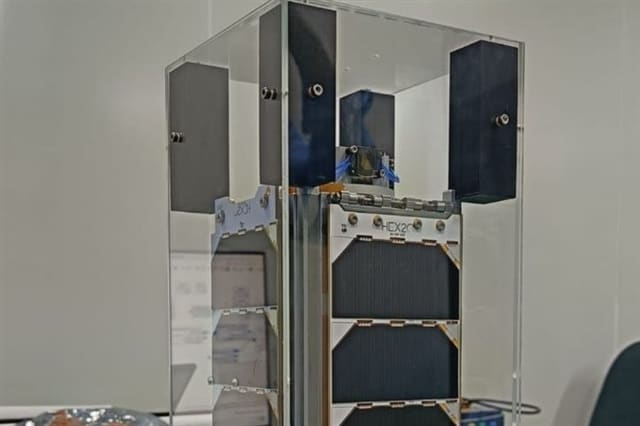
Taiwan's aerospace sector notched a significant achievement in July 2026 when the KOYO-1 CubeSat reached orbit, carrying domestically developed fiber-optic gyroscope (FOG) technology into space. The mission validates critical navigation sensors built on the island, a milestone that positions local manufacturers to compete for contracts in the rapidly expanding commercial satellite industry.
Fiber-optic gyroscopes measure angular velocity using the interference of light in coiled optical fiber, offering higher precision than traditional mechanical gyroscopes while consuming less power. These sensors are essential for satellite attitude control, determining orientation in three-dimensional space without relying on external references. Until now, most small satellite operators have sourced FOG units from established suppliers in the United States and Europe, where heritage space hardware commands premium pricing and long lead times.
KOYO-1's successful deployment demonstrates that Taiwan can produce flight-qualified navigation components at competitive cost points. The CubeSat platform, measuring just 10 centimeters on each side, provided a real-world test environment for the FOG units under launch vibration, thermal cycling, and radiation exposure. Early telemetry confirms the sensors are performing within expected parameters, according to the mission team.
Supply Chain Implications for LEO Constellations
The validation arrives as low Earth orbit (LEO) satellite constellations enter a build-out phase. Operators planning networks of hundreds or thousands of satellites prioritize cost reduction and supply diversification. A single FOG unit can represent 5 to 8 percent of a CubeSat's total component budget, making price-competitive alternatives attractive for fleet operators managing tight margins.
Taiwan's electronics manufacturing base offers advantages beyond cost. The island's precision optics firms, originally serving telecom and consumer electronics markets, possess cleanroom facilities and fiber-handling expertise directly applicable to FOG production. Integrating these suppliers into satellite programs could shorten procurement cycles and reduce dependency on single-source vendors, a concern amplified by recent export control measures affecting space-grade components.
Several Taiwanese firms have quietly expanded aerospace divisions over the past 18 months, hiring engineers with backgrounds in inertial navigation and investing in environmental test chambers that simulate space conditions. Industry observers note that KOYO-1's success may accelerate qualification processes with international satellite primes, who typically require extensive flight heritage before awarding production contracts.
Regional Competition and Technology Transfer
Taiwan is not alone in pursuing space component opportunities. South Korea has channeled resources into satellite propulsion and communication payloads, while Japan maintains established positions in imaging sensors and deployable structures. The FOG validation gives Taiwan a foothold in a subsystem category where regional competitors have limited presence, potentially opening collaboration pathways with satellite integrators in Southeast Asia and India.
The KOYO-1 program also underscores Taiwan's strategy of leveraging dual-use technology development. FOG sensors find applications in autonomous vehicles, drones, and industrial robotics, markets where Taiwanese manufacturers already hold share. Amortizing research and development costs across commercial and space applications improves unit economics, a model that has proven effective in adjacent sectors such as radiation-hardened semiconductors.
Questions remain about scaling production to meet potential demand. Manufacturing space-qualified FOG units requires stricter process controls than commercial variants, including traceability for every optical fiber splice and solder joint. Expanding capacity while maintaining quality standards will test suppliers accustomed to consumer electronics volume but less familiar with aerospace documentation requirements.
Path to International Certification
Flight heritage from KOYO-1 provides a reference point, but penetrating established supply chains demands additional validation. Satellite manufacturers typically require components to survive qualification testing that exceeds mission requirements, along with lot acceptance testing for every production batch. Taiwanese suppliers will need to demonstrate consistent performance across multiple units and invest in long-term reliability data collection.
Partnerships with foreign satellite integrators could accelerate this process. Some Taiwanese firms are exploring joint ventures that pair local manufacturing with international sales channels and certification expertise. Such arrangements have precedent in the island's semiconductor packaging industry, where technology transfer agreements helped domestic firms become preferred suppliers to global chip designers.
The KOYO-1 mission also carries implications for Taiwan's broader space ambitions. The island's space agency has outlined plans for Earth observation and communication satellites, programs that could serve as anchor customers for domestic component suppliers. Government procurement preferences, combined with demonstrated flight performance, may help local firms achieve the production volumes needed to compete internationally on price.
As commercial space activity intensifies, component supply chains are fragmenting away from traditional aerospace giants toward specialized manufacturers. Taiwan's electronics ecosystem, built over decades to serve computing and telecom markets, is now positioning itself to capture a share of this emerging sector. KOYO-1's successful validation of FOG technology represents an early proof point in that transition.
RELATED STORIES

GlobalFoundries Positions Itself as US Chip Sovereignty Cornerstone Amid Subsidy Push
Cheng Wei-Lun · 4 min

Taiwan, China and the US Race to Lock Down Tech Talent as Security Concerns Rise
Cheng Wei-Lun · 3 min
TSMC Brings 3nm Chipmaking and Advanced Packaging to Japan Expansion
Cheng Wei-Lun · 3 min

Lightmatter CEO Details NVLink Integration and Taiwan Manufacturing Strategy
Cheng Wei-Lun · 5 min
Spot something wrong? Email editor@briefasia.com. We log every correction publicly.