Asia · Politics
Taiwan Defense Minister Highlights Pacific Command Coordination Amid Regional Tension
Close operational ties with U.S. Indo-Pacific Command are strengthening Taiwan's defense posture as Beijing escalates military pressure around the island.
KEY TAKEAWAYS
- ·Taiwan's defense minister confirmed that operational coordination with U.S. Indo-Pacific Command is strengthening the island's military readiness amid rising Chinese naval and air activity.
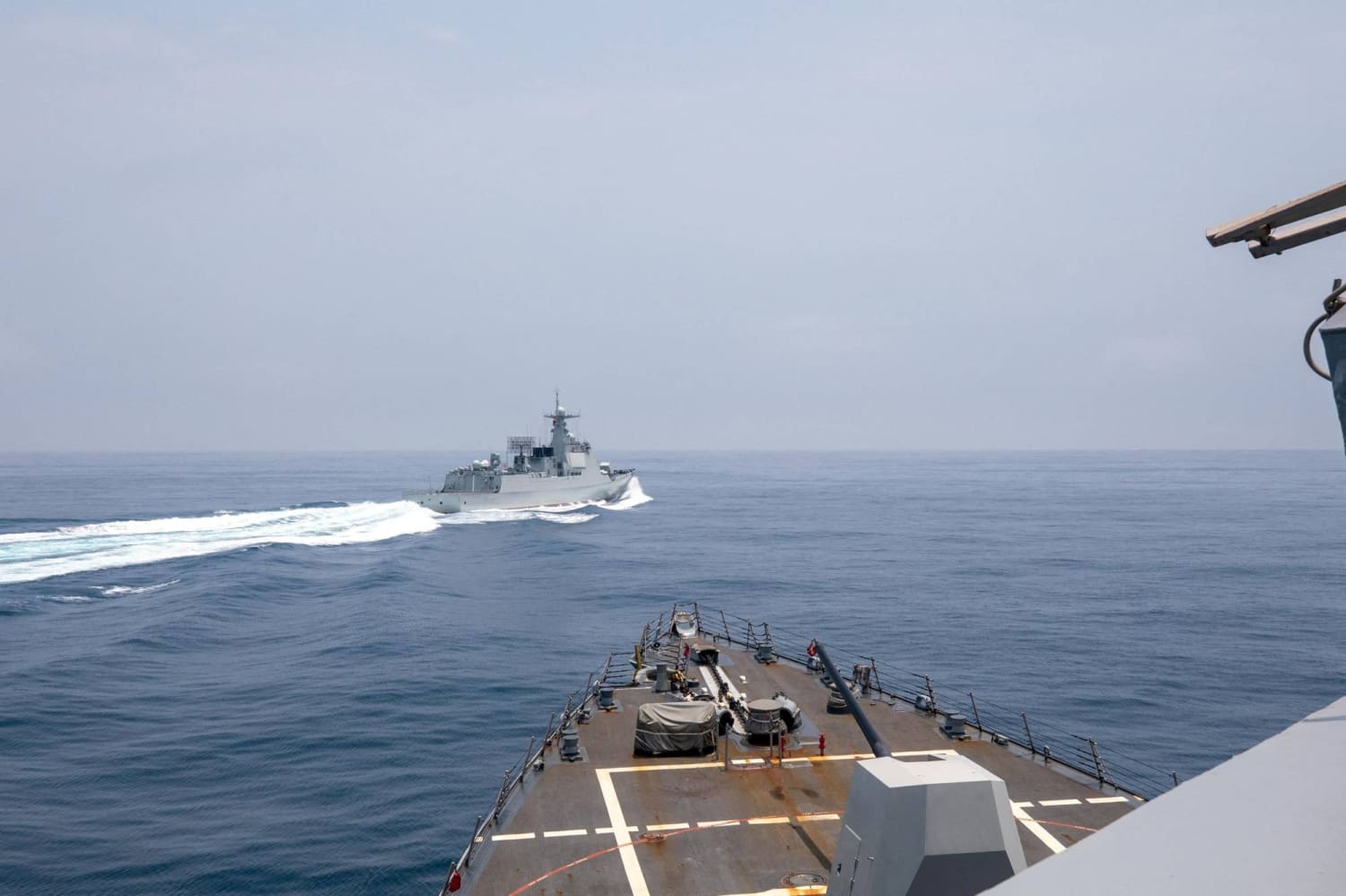
- ·China has escalated its military presence around Taiwan with near-daily incursions and multi-day exercises simulating blockade scenarios over the past three years.
- ·The public acknowledgment of defense ties reflects growing visibility of U.S.-Taiwan military engagement, including intelligence-sharing and routine operational coordination that Beijing opposes as interference.
Operational Links with U.S. Forces
Taiwan's defense minister confirmed that enhanced coordination with U.S. Indo-Pacific Command is improving the island's military readiness, a statement that comes as Beijing continues to increase naval and air operations in waters surrounding Taiwan. The minister emphasized that regular communication channels and information-sharing mechanisms with American military leadership in the Pacific theater are helping Taipei respond more effectively to evolving security challenges.
The acknowledgment marks a rare public discussion of operational-level ties between Taiwan and U.S. military commands, a relationship that has historically remained discreet despite Washington's longstanding commitment to supply defensive arms under the Taiwan Relations Act. Officials in Taipei have grown more willing to discuss security cooperation as Chinese warships and aircraft conduct near-daily incursions into Taiwan's air defense identification zone.
Beijing's Expanding Military Footprint
China has markedly escalated its military presence around Taiwan over the past three years, with People's Liberation Army Navy vessels now routinely operating in the Taiwan Strait and waters east of the island. These operations include multi-day exercises that simulate blockade scenarios and coordinated air-sea drills involving dozens of aircraft and surface combatants.
The uptick in activity follows political developments that Beijing views as moves toward formal independence, including high-profile visits by foreign delegations and Taiwan's efforts to expand its international engagement. Chinese defense officials have framed the increased tempo as necessary measures to safeguard sovereignty, while Taipei characterizes them as coercion designed to undermine public confidence and test defensive responses.
Regional Security Architecture
Taiwan's emphasis on ties with U.S. Pacific Command reflects a broader recalibration of security relationships across East Asia. Japan has expanded its own defense cooperation with both Washington and Taipei, including intelligence exchanges and coordination on contingency planning for scenarios that could affect regional stability. South Korea, the Philippines, and Australia have similarly deepened military partnerships with the United States, creating an increasingly networked security environment.
For Taiwan, access to real-time intelligence on Chinese naval movements and air activity is critical. The island's geographic position makes early warning systems essential for maintaining an effective defense, and U.S. surveillance assets provide coverage that Taiwan's own capabilities cannot fully replicate. Defense analysts note that this intelligence-sharing has become more structured in recent years, moving beyond ad hoc exchanges to routine operational coordination.
Strategic Implications
The public acknowledgment of close defense ties carries diplomatic weight. While the United States does not maintain formal diplomatic relations with Taiwan, military-to-military engagement has grown more visible under successive administrations in Washington. Congress has authorized expanded training programs, arms sales have accelerated, and senior defense officials now visit Taipei with greater frequency.
Beijing has consistently opposed any form of official U.S.-Taiwan military contact, viewing it as interference in internal affairs and a violation of the one-China principle that underpins Washington's diplomatic recognition of the People's Republic. Chinese foreign ministry statements routinely condemn arms sales and military exchanges, warning that such actions undermine regional peace.
Taiwan's defense establishment faces the challenge of deterring aggression while avoiding provocations that could trigger escalation. The island has invested heavily in asymmetric capabilities, including mobile missile systems, naval mines, and coastal defense networks designed to complicate any amphibious operation. American support, both in terms of hardware and operational intelligence, remains central to this strategy.
What Comes Next
The trajectory of cross-strait military dynamics will depend partly on political developments in Taipei, Beijing, and Washington. Taiwan's leadership has signaled no interest in altering the constitutional status quo, while also insisting on the right to manage its own security. China shows no sign of reducing military pressure, and U.S. policy continues to emphasize maintaining the capacity to resist coercion.
Defense cooperation between Taiwan and U.S. Pacific Command is likely to deepen further, driven by the operational logic of deterrence and the political commitment in Washington to support partners facing authoritarian pressure. How Beijing interprets and responds to that cooperation will shape the security environment across the Taiwan Strait and the wider Indo-Pacific in the months ahead.
RELATED STORIES
Eurasian Security Bloc Convenes as Shein Prices Hong Kong IPO
Cheng Wei-Lun · 3 min
Taiwan's National Security Council Expands Role in Defense Strategy
Cheng Wei-Lun · 3 min

Lithuania's Laser Industry Powers Taiwan's Chip Manufacturing Edge
Cheng Wei-Lun · 2 min

Taiwan Indicts Nvidia Manager in Chip-Smuggling Investigation
Cheng Wei-Lun · 4 min
Spot something wrong? Email editor@briefasia.com. We log every correction publicly.