Technology · Dev
Taiwan Chipmaker Winbond Plans Major DRAM Plant as AI Drives Memory Shortage
Kaohsiung facility to add 50,000 wafer capacity by 2030 as memory-chip supercycle extends into next decade
KEY TAKEAWAYS
- ·Winbond will begin construction in January on a Kaohsiung DRAM fab targeting 50,000 twelve-inch wafers monthly by 2030, with EUV lithography in later phases.
- ·The company reported second-quarter net profit of NT$24.32 billion and memory gross margins of 70.3 percent as pricing doubled sequentially amid persistent supply constraints.
- ·Winbond believes industry forecasts of 20 percent global DRAM capacity growth by 2028 are insufficient to meet accelerating artificial intelligence infrastructure demand.
Capacity Push Amid AI Demand Surge
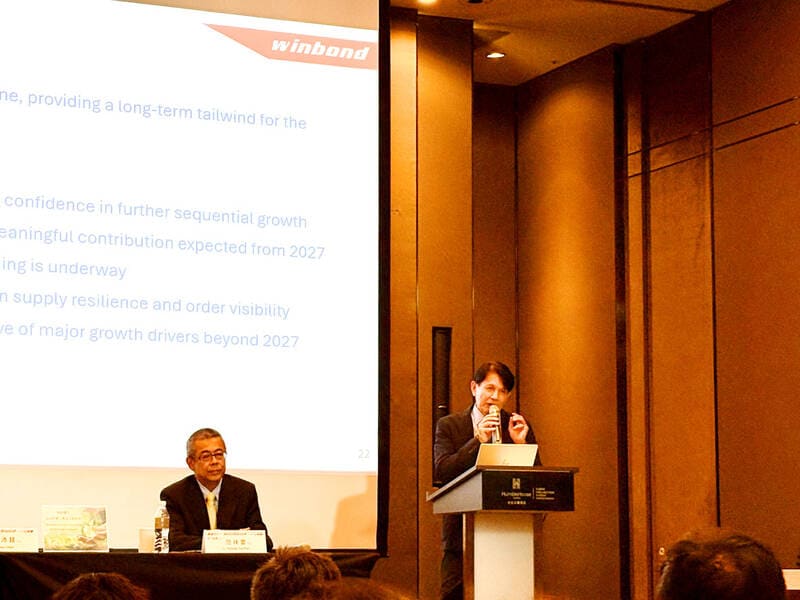
Winbond Electronics, a Taiwanese memory-chip manufacturer, announced plans to construct a new DRAM fabrication facility in Kaohsiung, with groundbreaking scheduled for January and pilot production targeted for late 2029. The Module B plant will initially process 10,000 twelve-inch wafers monthly, scaling to 50,000 wafers over time, the company disclosed during its earnings briefing.
President James Chen told reporters the expansion reflects confidence that the current memory upcycle will persist through the facility's ramp-up period. The company intends to deploy extreme ultraviolet lithography equipment in later construction phases, a reversal from its earlier technology roadmap. Chen acknowledged he had not previously anticipated needing EUV machines for DRAM production.
Winbond did not provide capital expenditure figures or financing details for the project.
Industry Forecasts Fall Short
The decision stems from Winbond's assessment that industry capacity projections are inadequate. While analysts broadly expect global DRAM manufacturing capacity to increase 20 percent by 2028, Chen argued that artificial intelligence development has accelerated beyond those models. The company believes supply will remain constrained as data-center operators and AI infrastructure builders compete for high-bandwidth memory chips.
Memory shortages have persisted for two and a half years, according to Chen. Winbond's existing Module A facility in Kaohsiung is undergoing its own expansion, with monthly capacity set to rise from 15,000 to approximately 24,000 twelve-inch wafers by year-end.
The company also anticipates tightening supply for NOR and NAND flash memory, which it produces at a separate Taichung plant. Customer orders continue to outpace available inventory across product lines.
Financial Performance Reflects Pricing Power
Winbond reported net profit of NT$24.32 billion in the second quarter, up 140.4 percent from NT$10.11 billion in the first quarter. The result reversed a NT$1.31 billion loss in the same period of 2025. Earnings per share climbed to NT$5.4 from NT$2.25 sequentially, compared with a loss of NT$0.29 per share a year earlier.
Quarterly revenue reached NT$59.84 billion, expanding 56.4 percent sequentially and 184.7 percent year-over-year. The memory division's gross margin hit 70.3 percent last quarter, contributing to a consolidated gross margin of 66.2 percent. The logic-chip operations of subsidiary Nuvoton Technology exerted a dilutive effect on overall margins.
Memory pricing surged approximately 100 percent quarter-on-quarter in the second quarter, according to company figures. Winbond expects further price increases in the current quarter, which would push memory gross margins higher still.
Regional Implications
Taiwan's memory sector has historically played a supporting role to South Korean giants Samsung and SK Hynix, which dominate DRAM production. Winbond's expansion signals growing confidence among smaller players that AI-driven demand will support multiple suppliers at profitable utilization rates.
The Kaohsiung facility will join a cluster of semiconductor manufacturing sites in southern Taiwan. The region has attracted investment from both domestic and foreign chipmakers seeking to diversify production away from the island's northern industrial corridor. Infrastructure development and talent availability remain constraints, though local governments have prioritized support for advanced manufacturing.
Chen's reference to EUV lithography is notable. The technology, supplied exclusively by Dutch firm ASML, enables production of chips with smaller transistor geometries. Adoption by a mid-tier DRAM manufacturer suggests the performance requirements for AI memory are pushing the industry toward process nodes previously reserved for leading-edge logic chips.
Winbond's timeline places volume production in 2030, by which time the AI infrastructure buildout may have entered a different phase. Whether memory supply and demand achieve equilibrium before then will depend on how quickly hyperscale cloud providers, enterprise customers, and consumer device makers integrate AI capabilities, and whether competing memory technologies gain traction in specific workloads.
RELATED STORIES
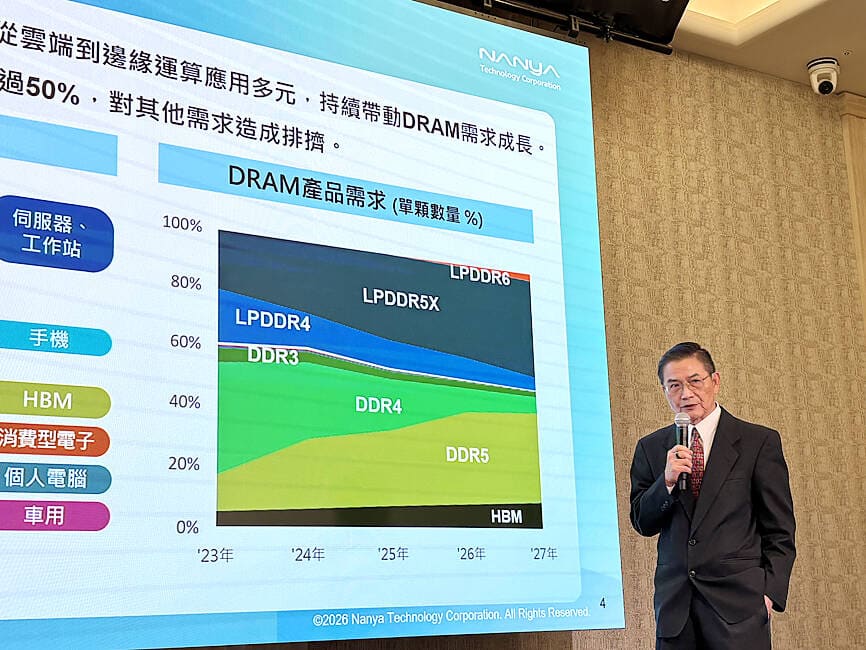
Nanya Technology Lifts 2026 Budget to $2.16 Billion for DRAM Expansion
Cheng Wei-Lun · 3 min
Taiwan Probes 17 Chinese Companies Over Tech Talent Recruitment
Cheng Wei-Lun · 3 min
Taiwan's Chip Exports Hit Record on Memory Price Surge and AI Build-Out
Cheng Wei-Lun · 2 min

Asia's Memory Makers Shift Focus as DRAM Margins Challenge HBM Dominance
Cheng Wei-Lun · 4 min
Spot something wrong? Email editor@briefasia.com. We log every correction publicly.