Real Estate · Offices
Taipei's Grade A Office Market Defies Supply Surge on Tech Demand
Leasing activity climbed 37 percent in the first half as AI and semiconductor firms drive absorption, pushing vacancy rates to a two-year low despite incoming supply
KEY TAKEAWAYS
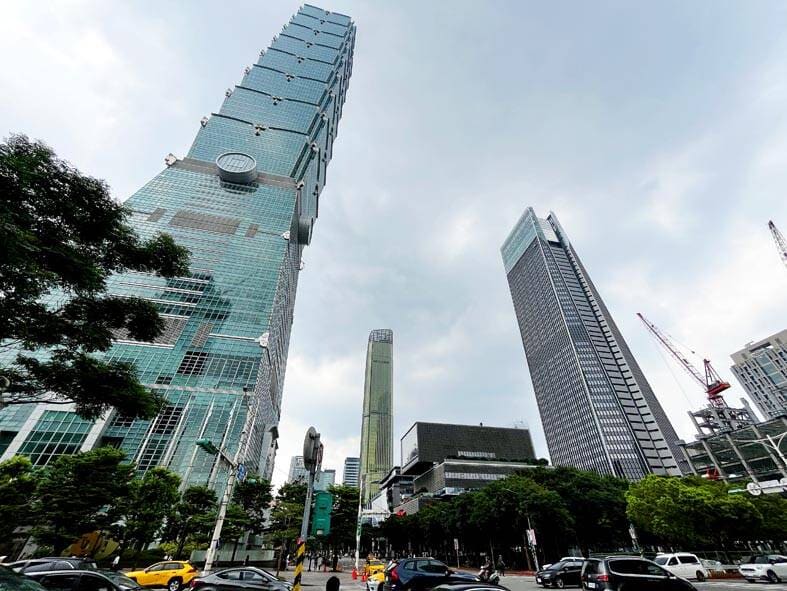
- ·Taipei Grade A office leasing transactions reached 27,833 ping in the first half of 2026, up 37 percent year-on-year, with core districts posting the highest activity in nearly eight years.
- ·Technology companies accounted for 55 percent of second-quarter leasing, driven by AI and semiconductor firm expansion, compressing vacancy rates to 5.1 percent, the lowest in two years.
- ·Approximately 47,000 ping of new office supply is expected in the second half, but demand for upgraded workplaces is anticipated to support absorption and maintain rental stability.
Tech Sector Drives Record Absorption
Taipei's Grade A office market recorded 27,833 ping of leasing transactions in the first six months of 2026, according to Jones Lang LaSalle. The figure represents a 37 percent increase from the same period last year and positions the full-year total to potentially exceed historical records.
Core business districts captured the bulk of activity, with 25,737 ping transacted in Taipei's central commercial areas, the highest level in nearly eight years. Second-quarter activity alone totaled 13,797 ping, with 91 percent concentrated in prime locations.
Western Taipei and the Songjiang-Nanjing corridor led absorption, together accounting for roughly half of total leasing volume. The performance was driven by continued tenant take-up in newly completed projects, where companies upgraded facilities and consolidated operations.
AI and Semiconductor Firms Lead Demand
Technology companies dominated leasing activity in the second quarter, accounting for 55 percent of transactions, up from 38 percent in the previous quarter, according to Jones Lang LaSalle. Expansion among artificial intelligence and semiconductor-related firms drove the surge.
The pattern reflects broader capital allocation trends across Asia's technology hubs, where advanced manufacturing and AI infrastructure have attracted substantial corporate investment. Companies expanding operations sought higher-quality workplaces in core districts, often moving from older buildings or secondary locations.
Vacancy rates fell for the fourth consecutive quarter, reaching 5.1 percent, down 1.3 percentage points from the previous quarter and the lowest level in two years. The tightening supply pushed average rents in core business districts to NT$3,283 per ping per month, a 0.37 percent increase from the prior quarter.
Rental Growth Enters Consolidation Phase
The pace of rental increases slowed as the market entered a consolidation phase following recent gains, according to Jones Lang LaSalle. The moderation suggests landlords are balancing pricing power against the need to maintain occupancy ahead of new supply entering the market.
Approximately 47,000 ping of new office space, including owner-occupied projects, is expected to be completed in Taipei's core business districts in the second half of 2026. The influx could place upward pressure on vacancy rates, particularly if absorption fails to keep pace with deliveries.
However, Jones Lang LaSalle expects demand for upgraded office environments to support leasing activity in the second half. Technology firms and companies pursuing workplace transformation are anticipated to sustain absorption levels and help maintain rental stability.
Regional Office Market Context
Taipei's office dynamics mirror broader trends across Asia's tier-one cities, where premium workspace commands pricing power amid supply constraints. Singapore, Tokyo, and Seoul have similarly seen technology tenants absorb new inventory quickly, compressing vacancies in central business districts.
The resilience of Taipei's market reflects the city's position as a hub for semiconductor and AI-related industries, which continue to expand despite global economic uncertainty. Companies in these sectors prioritize proximity to talent pools and infrastructure, supporting demand for Grade A space even as construction pipelines expand.
The second-half outlook hinges on whether technology sector expansion can absorb the incoming supply without triggering a meaningful uptick in vacancies. With tenant demand concentrated in core districts, landlords in secondary locations may face more pronounced pressure as companies continue to prioritize quality over cost.
RELATED STORIES
Tokyo Summit Pushes Trilateral Tech Alliance Among Taiwan, Japan, and US
Cheng Wei-Lun · 3 min
Integrated Systems Will Drive Next Wave of AI Growth, Says TSMC
Cheng Wei-Lun · 4 min
Eurasian Security Bloc Convenes as Shein Prices Hong Kong IPO
Cheng Wei-Lun · 3 min
Manila's Chip Industry Still Stalled in Assembly While Taipei Built Fabs
Priyanka V. Rao · 4 min
Spot something wrong? Email editor@briefasia.com. We log every correction publicly.