Real Estate · Land
Sunway Consortium Pays $1.6 Billion for Singapore Waterfront Plot in Bayshore
Joint ventures led by Malaysian billionaire Jeffrey Cheah's property group secured the mixed-use site from Singapore's Urban Redevelopment Authority under a 99-year lease

KEY TAKEAWAYS
- ·A Sunway-led consortium acquired a Bayshore Drive waterfront site in Singapore for SGD 2.13 billion under a 99-year lease, holding a 30 percent stake through joint venture entities.
- ·The mixed-use parcel is the only such plot in the Bayshore precinct, which will accommodate around 10,000 new homes as part of Singapore's eastern corridor development.
- ·Sunway expects the project to contribute to earnings from 2029 onward, with risks including raw material costs and interest rate movements mitigated by consortium experience.
Major Land Acquisition in Upscale Precinct
A consortium led by Sunway Group, the property conglomerate controlled by Malaysian billionaire Jeffrey Cheah, has acquired a waterfront land parcel at Bayshore Drive in Singapore for SGD 2.13 billion (US$1.6 billion). The site was sold by the Urban Redevelopment Authority of Singapore, the city-state's planning agency.
Sunway disclosed the transaction in a filing with Bursa Malaysia, noting that two joint venture entities, Gemini Residential Pte Ltd and Gemini Trustee Pte Ltd, completed the purchase. Sunway holds a 30 percent stake in these vehicles, according to the filing.
The land carries a 99-year leasehold tenure and is zoned for mixed-use residential and commercial development. It represents the second government land sales site in the Bayshore precinct, an emerging waterfront neighborhood slated to accommodate around 10,000 new homes. Under the Urban Redevelopment Authority's Master Plan 2025, the parcel is the only mixed-use plot in the precinct.
Strategic Positioning in Growth Corridor
Bayshore is part of Singapore's broader effort to develop its eastern corridor, an area that has historically lagged behind the central business district and western regions in terms of high-end residential supply. The precinct's waterfront location and proximity to transport links make it attractive to developers targeting affluent buyers and tenants.
The acquisition reflects continued appetite for Singapore real estate among regional developers, even as interest rate volatility and construction cost inflation have tempered activity in other markets. Singapore's stable regulatory environment and limited land supply have historically supported property values, particularly in prime locations.
Sunway's 30 percent stake suggests the consortium includes other institutional or strategic partners, a common structure for large-scale Singapore land bids that allow developers to share capital requirements and execution risk.
Revenue Timeline and Risk Factors
Sunway expects the project to contribute to earnings from the financial year ending December 31, 2029, onward. That timeline implies a development cycle of roughly three to four years, accounting for design, approval, construction, and phased unit sales.
The company acknowledged standard development risks in its filing, including fluctuations in raw material prices, interest rate movements, and property cycle volatility. However, it pointed to the track record and experience of Sunway and its joint venture partners as mitigating factors.
Sunway's diversified portfolio spans property, construction, hospitality, retail, leisure, education, building materials, and real estate investment trusts. The group has executed projects across Malaysia, Singapore, and other regional markets, giving it operational scale and supply chain relationships that can buffer cost shocks.
Billionaire Builder's Regional Footprint
Jeffrey Cheah, founder and chairman of Sunway Group, ranks as Malaysia's fifth-richest individual with a net worth of $5 billion, according to Forbes. He built Sunway from a tin mining and quarrying business in the 1970s into a conglomerate with interests across multiple sectors.
Cheah has long emphasized integrated township development, a model that combines residential, commercial, education, and leisure components. Sunway City in Kuala Lumpur, the group's flagship project, includes shopping malls, hotels, a university, and a theme park.
The Bayshore acquisition aligns with that playbook, offering scope for a mixed-use scheme that could blend apartments, retail, and community amenities. Singapore's planning framework encourages such integration, particularly in new precincts where the government seeks to create live-work-play environments.
Singapore Land Sales Momentum
The Bayshore site was part of Singapore's government land sales program, a mechanism the Urban Redevelopment Authority uses to manage the pace of private housing supply. The program releases sites on a confirmed list, which developers bid for, or a reserve list, which requires a minimum price to be triggered.
Land sales activity in Singapore has picked up in recent quarters as developers replenish land banks depleted during the pandemic. The government has calibrated supply to balance market stability with demand from a growing population and foreign buyers.
Waterfront and well-connected sites typically draw competitive bidding, particularly from consortia that combine local knowledge with regional capital. The Bayshore parcel's mixed-use zoning adds flexibility, allowing developers to adjust the commercial-residential mix based on market conditions during the approval and construction phases.
Outlook for Eastern Corridor Development
The Bayshore precinct is expected to anchor further development along Singapore's eastern coast, an area that has seen increased infrastructure investment in recent years. New transport links, including expanded rail connections and road upgrades, are improving accessibility to the central business district and Changi Airport.
For Sunway, the project represents a significant Singapore exposure that will test the group's ability to execute in a high-cost, high-regulation environment. Success in Bayshore could open doors for additional acquisitions in the city-state, while underperformance would weigh on the group's regional expansion ambitions.
The consortium structure, with Sunway holding a minority stake, allows the Malaysian developer to participate in a marquee project without overextending its balance sheet. That approach is likely to remain attractive as land prices in Singapore's prime districts stay elevated.
RELATED STORIES
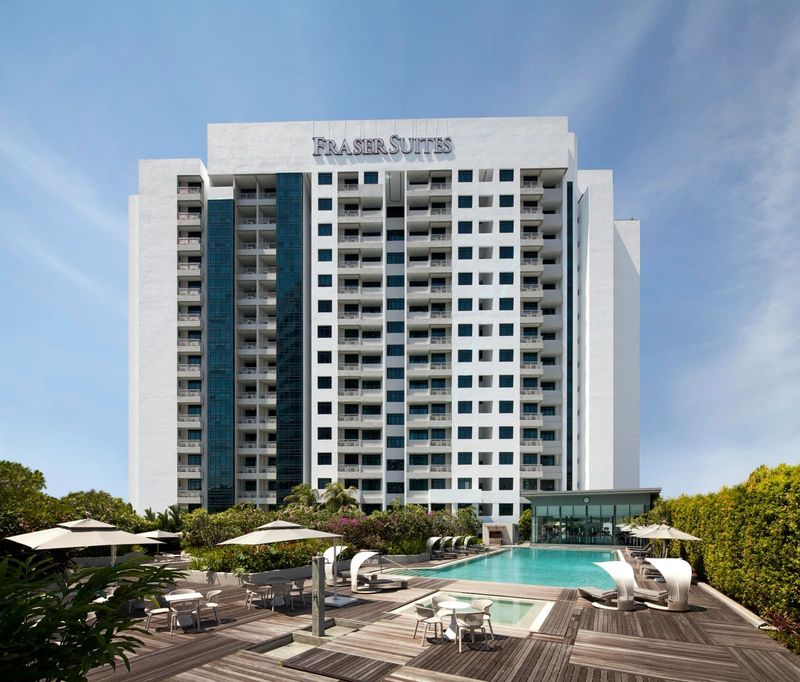
Frasers Property Wins Shareholder Backing for S$2.1 Billion Hospitality Reshuffle
Lim Hui Ying · 3 min
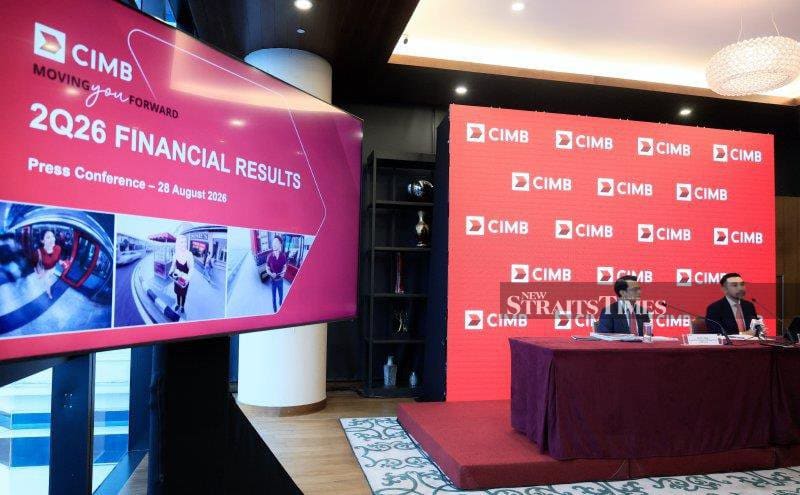
CIMB Commits to 55% Dividend Floor as Regional Portfolio Offsets Indonesia Pressure
Priyanka V. Rao · 4 min

Singapore Targets High-Value Data Centre Workloads as Neighbors Scale Up Capacity
Cheng Wei-Lun · 3 min

Southeast Asian Firms Race to Raise Green Debt as Region Falls Behind on Renewables
Priyanka V. Rao · 3 min
Spot something wrong? Email editor@briefasia.com. We log every correction publicly.