Finance · Markets
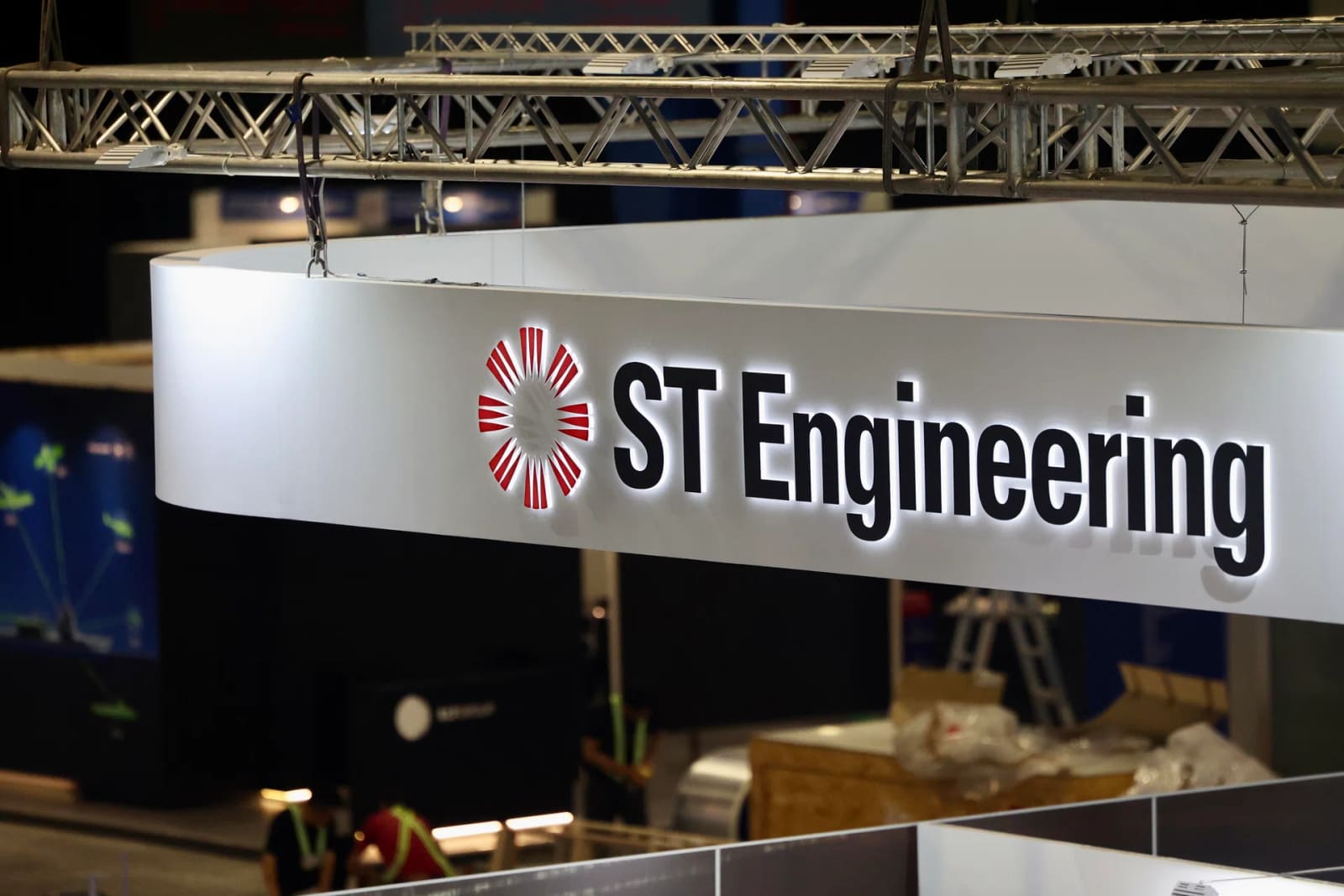
ST Engineering Stock Drops 4.7% on Weaker Order Intake
Singapore defence and engineering conglomerate secured S$2.9 billion in Q2 contracts, down 38% year-on-year, sending shares to S$9.83 in early trading
KEY TAKEAWAYS
- ·ST Engineering secured S$2.9 billion in Q2 2026 contracts, a 38.3% decline from S$4.7 billion in the same quarter of 2025, triggering a 4.7% intraday share drop.
- ·All three divisions posted lower order intake, with urban solutions and satellite communications falling most steeply from S$1.7 billion to S$500 million year-on-year.
- ·Analysts attribute the softer quarter to contract timing rather than weakening demand, noting management's view that underlying negotiations and pipeline remain healthy.
Sharp Selloff on Order Miss
ST Engineering saw its shares slide as much as 4.7% in Tuesday morning trading after disclosing a sharp drop in second-quarter contract wins. The Singapore-listed defence and engineering group fell to S$9.83 within the first fifteen minutes, shedding S$0.49 as roughly 2.6 million shares changed hands. By mid-morning the stock had recovered partially to S$10.06, still down 2.5%.
The selloff followed Friday's announcement that ST Engineering secured S$2.9 billion in new orders during the three months ended June 2026. That represents a 38.3% contraction from the S$4.7 billion booked in the same quarter of 2025, a decline steep enough to rattle investors in one of Singapore's largest industrial conglomerates.
Segment Breakdown Shows Broad Pullback
All three operating divisions posted lower order intake. Commercial aerospace brought in S$1.2 billion, down from S$1.5 billion a year earlier. The defence and public security segment also recorded S$1.2 billion, retreating from S$1.5 billion. Urban solutions and satellite communications contributed S$500 million, the steepest percentage fall from the prior year's S$1.7 billion.
The breadth of the slowdown suggests timing factors rather than structural weakness in any single market. ST Engineering's management indicated that underlying customer demand and ongoing contract negotiations remain healthy, pointing to the lumpy nature of large defence and aerospace awards.
Analysts Point to Contract Timing
Citi analyst Luis Hilado noted Friday that the timing of contract completions likely played a role in the softer quarter. He emphasized that the pipeline of potential wins remains robust, and that economies of scale from a healthy contract base could help offset near-term headwinds including labour shortages, cost inflation, and integration risks tied to recent acquisitions.
Hilado maintained a target price of S$10.65, arguing that ST Engineering's steady growth profile should command a premium to historical mean valuations, especially in an uncertain macro environment where predictability carries added weight.
Legal Win on Trademark Case
Separately, Singapore's High Court on Friday rejected an attempt to add ST Engineering Aerospace Systems to a trademark infringement lawsuit. The case involves allegedly counterfeit components supplied for use in Republic of Singapore Air Force aircraft. The court's decision removes a potential liability overhang for the subsidiary, though details of the underlying dispute remain subject to ongoing proceedings.
Order Book Remains Key Metric
For ST Engineering, quarterly order intake serves as a leading indicator of future revenue and margin trajectory. The group typically converts a significant portion of its order book within twelve to eighteen months, making sequential comparisons closely watched by the investment community.
The Q2 2026 result brings the company's year-to-date order tally below the run rate needed to match 2025's full-year performance. Investors will be looking to the second half for evidence that the pipeline converts into signed contracts, particularly in the defence segment where budget cycles and procurement timelines can introduce meaningful quarter-to-quarter volatility.
ST Engineering's diversified model spanning commercial MRO, military systems, smart-city infrastructure, and satellite services has historically smoothed earnings, but the latest quarter underscores that order lumps can still drive sharp share-price reactions. With the stock trading near book value and yielding above 4%, the market is pricing in modest growth expectations that hinge on execution through the remainder of the year.
RELATED STORIES

Two European Banks Lock Radiant World Accounts as Iron Ore Trader Faces Widening Freeze
Cheng Wei-Lun · 3 min

Chocolate Finance Hits 150,000 Users as Singaporeans Shift Away From Low-Yield Savings
Priyanka V. Rao · 3 min
Nio Delivers Over 35,000 Vehicles in July as China EV Race Intensifies
Cheng Wei-Lun · 3 min
Singapore's Big Three Banks Post Solid First-Half Gains as Wealth Offsets Margin Pressure
Priyanka V. Rao · 3 min
Spot something wrong? Email editor@briefasia.com. We log every correction publicly.