Technology · Products
South Korea's Display Giants Target Humanoid Robotics Market
Samsung Display and LG Display debut OLED panels designed specifically for robotic facial interfaces at Seoul trade show, betting on emerging application beyond smartphones and automotive
KEY TAKEAWAYS
- ·Samsung Display and LG Display introduced OLED panels designed for humanoid robot faces at K-Display 2026 in Seoul, targeting a new application segment beyond consumer electronics.
- ·The 6.9-inch curved Samsung panel includes eye-tracking functionality, reflecting technical requirements distinct from smartphone or automotive displays.
- ·Humanoid robotics adoption across Japan, South Korea, and China creates potential demand, though commercial production timelines remain uncertain pending market validation.
New Frontier for Panel Makers
South Korea's two display powerhouses have set their sights on humanoid robotics. At K-Display 2026 in Seoul this week, both Samsung Display and LG Display introduced OLED panels engineered for robotic facial interfaces, a move that reflects the industry's search for growth beyond saturated smartphone and television markets.
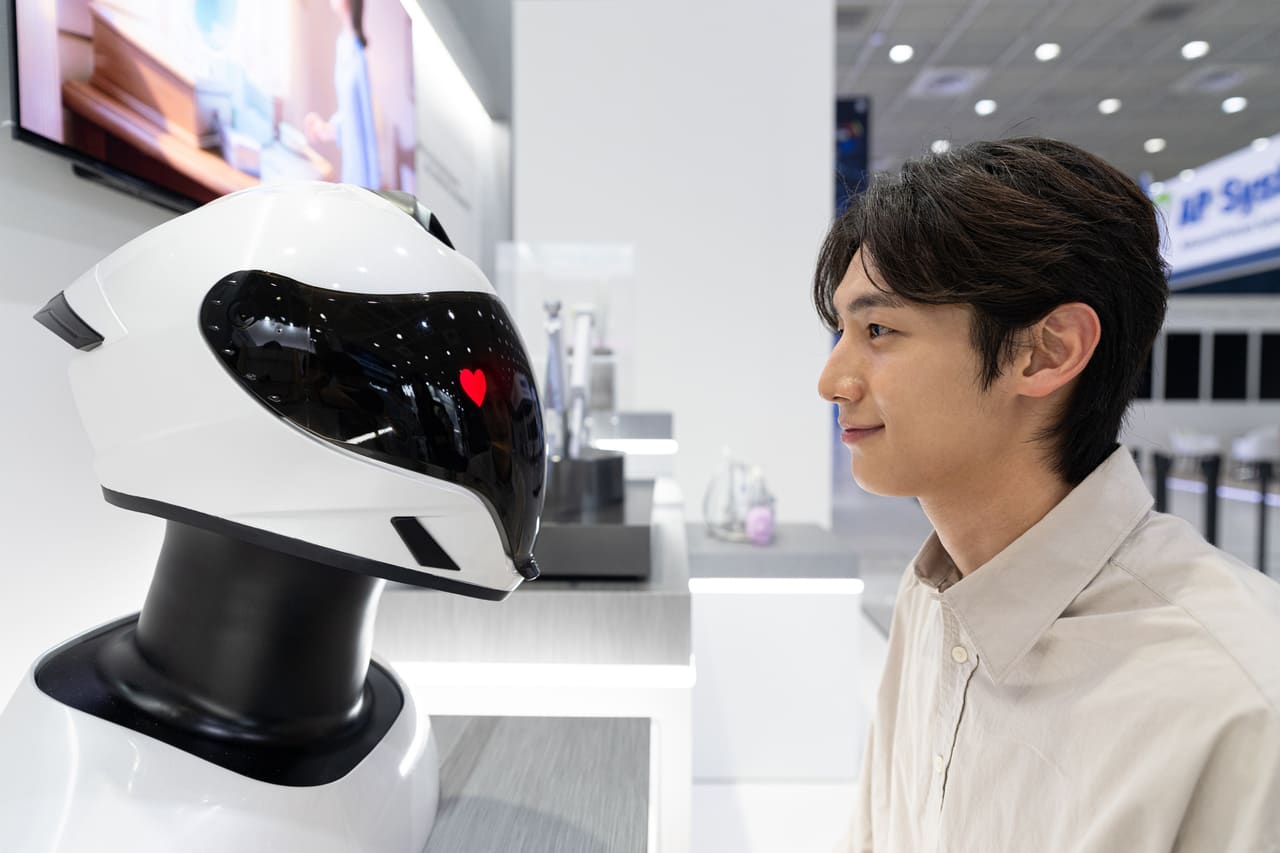
Samsung Display positioned a demonstration humanoid head at its booth entrance, equipped with a 6.9-inch curved OLED capable of rendering facial expressions and status indicators. The panel integrates eye-tracking functionality that follows visitor movement, a technical feature designed to enhance human-robot interaction. The company also exhibited a compact 1.3-inch circular OLED embedded in a companion device, illustrating the range of form factors under consideration for robotic applications.
LG Display presented its own robotic face prototype, though technical specifications were not disclosed at the event. The parallel launches suggest coordinated timing as both companies evaluate commercial viability in a nascent sector.
Asia's Robotics Push Creates Demand
The display industry's interest in humanoid robotics aligns with broader industrial trends across Northeast Asia. Japan, South Korea, and China have accelerated investment in robotics development, driven by demographic pressures and labor shortages in manufacturing and service sectors. Tokyo-based manufacturers including Mitsubishi and Kawasaki have expanded humanoid production capacity over the past 18 months, while Shenzhen and Seoul have announced municipal robotics initiatives targeting logistics and elder care.
For panel makers, humanoid robots represent a potential high-margin segment. Unlike commodity smartphone screens, robotic displays require custom engineering for curvature, durability, and real-time responsiveness. The technical barriers create differentiation opportunities that have eroded in consumer electronics, where Chinese competitors have compressed pricing.
Samsung Display's eye-tracking implementation signals an attempt to bundle software and sensor integration with hardware sales, a strategy the company has pursued in automotive OLED. The approach aims to capture more value per unit than traditional panel supply contracts allow.
Technical Requirements Differ from Consumer Screens
Humanoid facial displays impose distinct engineering challenges. Panels must conform to compound curves that mimic human skull geometry, requiring flexible substrates and precision bonding techniques. Brightness and contrast must perform under variable ambient lighting, from factory floors to outdoor service environments. Power consumption becomes critical in battery-operated platforms, where every milliwatt affects operational duration.
Durability standards also diverge from consumer electronics. Robotic systems in industrial or healthcare settings face continuous operation cycles, mechanical vibration, and exposure to cleaning agents. OLED materials must withstand thermal stress and UV exposure without the protective cases typical of smartphones.
Samsung Display's demonstration suggests the company has addressed curvature and tracking latency, though commercial readiness remains unclear. The 6.9-inch diagonal represents a mid-size option; full-scale humanoid heads may require panels exceeding 8 inches, complicating yield and cost structures.
Market Sizing and Revenue Potential
Display industry analysts have begun modeling robotics as a vertical segment, though volume forecasts remain speculative. Current humanoid production runs in the thousands of units annually, concentrated in industrial automation and research applications. Mass adoption in consumer or service roles hinges on cost reductions and regulatory frameworks that do not yet exist in most markets.
For context, the global automotive display market reached approximately $12 billion in 2025, a scale achieved over a decade of development. Humanoid robotics may follow a similar trajectory, with enterprise and government procurement preceding consumer availability.
South Korean panel makers face competitive pressure from Chinese manufacturers, who have captured share in LCD and increasingly in OLED. Robotics offers a chance to establish technical leadership in an undefined category, leveraging Seoul's strengths in flexible OLED and process integration.
Strategic Implications for Component Ecosystem
The Seoul exhibition reveals coordination between display makers and robotics integrators, though specific partnerships were not announced. Successful commercialization will require collaboration with actuator suppliers, battery manufacturers, and AI software developers. South Korea's industrial structure, with concentrated conglomerates controlling multiple supply chain tiers, may accelerate this integration compared to fragmented ecosystems elsewhere.
Japan's robotics incumbents possess deep expertise in mechanical systems but have historically sourced displays from Korean and Taiwanese suppliers. If Samsung and LG can bundle panels with tracking sensors and control logic, they position themselves as system-level partners rather than component vendors.
China's robotics sector, backed by state investment and municipal procurement mandates, represents both opportunity and threat. Beijing has prioritized humanoid development under its robotics five-year plan, creating domestic demand that could absorb panel production at scale. However, Chinese display makers including BOE and TCL are developing competing technologies, potentially limiting Korean exports.
Investment and Production Timelines
Neither Samsung Display nor LG Display disclosed capital expenditure plans or production timelines for robotic panels. The K-Display demonstrations likely represent pre-commercial prototypes, with volume manufacturing dependent on customer commitments and market validation.
Historical patterns suggest a two- to three-year cycle from trade show debut to commercial availability, assuming technical and commercial hurdles are cleared. Automotive OLED followed this cadence, with initial concepts in 2017-2018 reaching production vehicles by 2020-2021.
Panel makers will watch robotics adoption curves closely, calibrating investment to avoid overcapacity. The industry has suffered cyclical downturns when supply expansion outpaced demand growth, most recently in LCD television panels.
What Comes Next
The Seoul unveilings position South Korea's display sector at the edge of a potential platform shift. Humanoid robotics remains unproven at commercial scale, but the technical convergence of flexible OLED, sensor integration, and AI-driven interaction creates conditions for new applications.
Whether this translates to meaningful revenue depends on factors beyond display technology: battery cost curves, actuator performance, regulatory acceptance, and ultimately whether humanoid form factors prove necessary for robotic tasks. For now, Samsung and LG have signaled their intent to lead if the market materializes, hedging against maturity in their core businesses.
RELATED STORIES
Samsung Display Restarts Asan OLED Campus as Foldable Phones Stage Recovery
Cheng Wei-Lun · 4 min

South Korea Taps Three Telecom Giants to Deliver Free AI Services Nationwide
Cheng Wei-Lun · 3 min
Memory Makers Gain Leverage as AI Server Costs Climb
Cheng Wei-Lun · 3 min

Samsung's Device Division Reports First Quarterly Loss as Chip Costs Surge
Cheng Wei-Lun · 3 min
Spot something wrong? Email editor@briefasia.com. We log every correction publicly.