Technology · Startups
Singapore VCs Shift Focus to Deep Tech as AI Commoditizes Software
Venture investors are pursuing startups with stronger technological moats as government support accelerates and conventional software loses its edge
KEY TAKEAWAYS
- ·Singapore venture capital firms are expanding into deep tech sectors such as quantum computing, frontier AI, and advanced materials as AI tools commoditize traditional software development.
- ·Government-backed infrastructure through entities like SGInnovate is accelerating investment by providing co-funding, lab access, and longer timelines suited to science-driven startups.
- ·Investors now prioritize startups with strong technological barriers to entry, seeking companies where years of R&D and proprietary data create defensible competitive advantages.
The Barrier Race
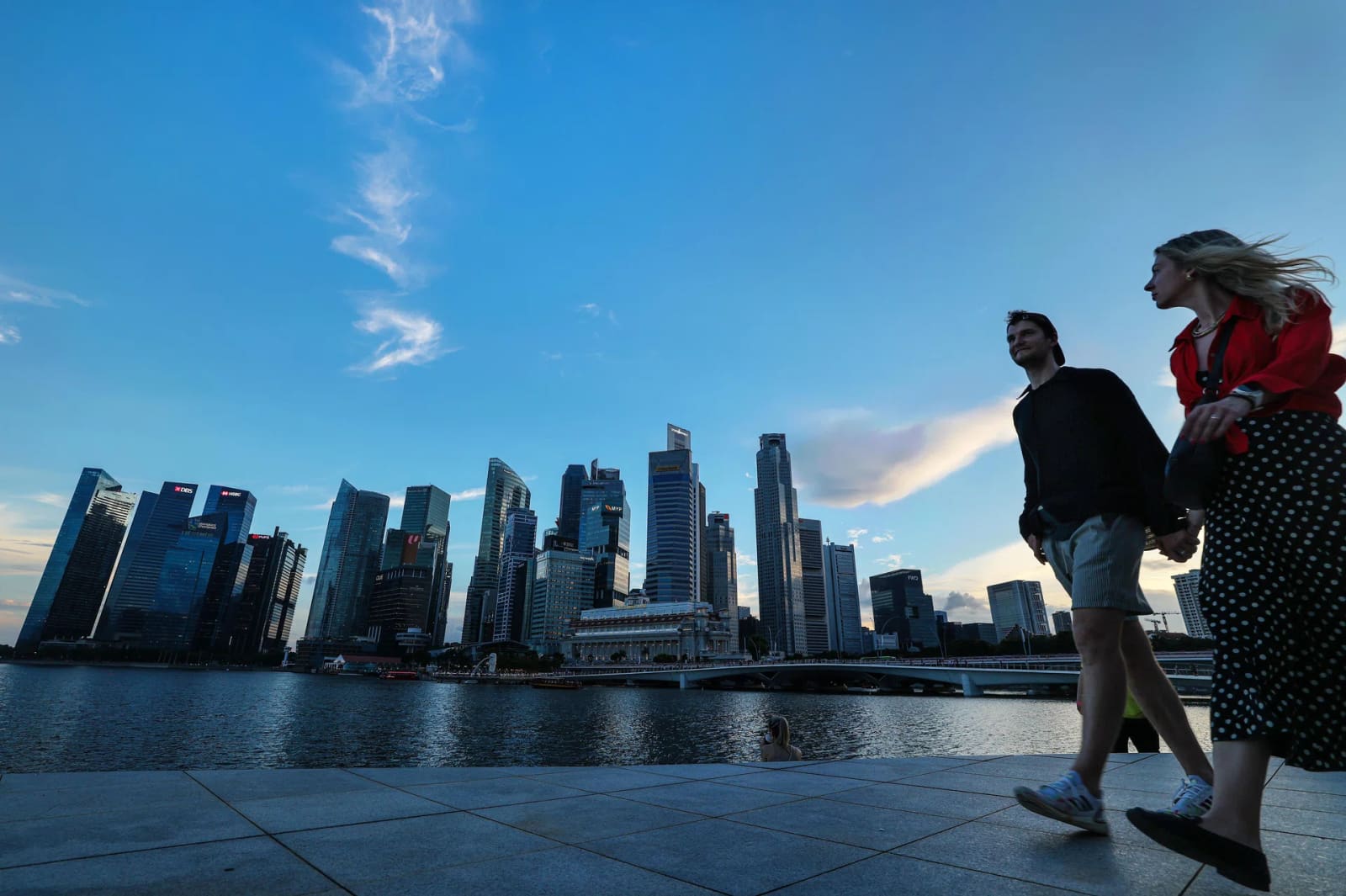
Venture capital in Singapore is undergoing a quiet realignment. Firms that once competed for consumer apps and SaaS plays are now hunting for startups built on quantum computing, advanced materials, and frontier artificial intelligence. The driver is blunt: if AI can write software in minutes, the old moats have crumbled.
"You need to have great barriers to entry," one investor noted, capturing the new orthodoxy. In practical terms, that means technologies rooted in years of lab work, patents that hold up under scrutiny, and problems software alone cannot solve.
The shift tracks closely with policy momentum. Singapore has expanded funding and infrastructure for deep tech ventures, betting that scientific and engineering breakthroughs will anchor the next generation of high-value companies. For VCs, the message is clear: capital is flowing where complexity creates defensibility.
What Counts as Deep Tech
The term itself resists neat boundaries, but investors are converging on a working definition. Deep tech startups derive competitive advantage from scientific or engineering innovation rather than business model novelty or distribution hacks. Quantum sensors, drug discovery platforms, and large-scale AI models trained on proprietary datasets all qualify. Mobile commerce apps do not.
This is not a rejection of software. It is a recognition that software, in isolation, has become easier to replicate. Generative AI tools have compressed development cycles and lowered the skill floor. Startups that depend solely on code now face faster copycats and thinner margins. The antidote, investors argue, is to embed that code in systems that require deep expertise, regulatory clearance, or years of iteration.
The categories drawing attention include quantum technology, where Singapore already hosts research centers and government-backed labs, and frontier AI, referring to models that push the boundaries of scale, safety, or specialization. Advanced robotics, synthetic biology, and next-generation semiconductors also feature in deal pipelines.
Capital Follows Infrastructure
Venture interest in deep tech is not happening in a vacuum. Singapore has been building the scaffolding for years. SGInnovate, the government-backed entity focused on deep tech entrepreneurship, has incubated dozens of startups and co-invested with private funds. National research institutes collaborate with commercial ventures, shortening the path from lab bench to pilot customer.
This infrastructure matters because deep tech startups have different needs. They burn capital on equipment, not just headcount. They face longer timelines before reaching product-market fit. They need partners who understand that a 12-month delay in a materials science startup is normal, not a red flag.
For VCs, the calculation has shifted. A portfolio that once tilted heavily toward B2B software and fintech is now making room for companies that may not generate revenue for three years but could command a billion-dollar valuation if the science works. The risk profile is different, but so is the upside in a world where every second software startup looks interchangeable.
The Commoditization Problem
Artificial intelligence is both the reason for this shift and a category within it. As AI tools automate coding, design, and even customer research, the competitive advantage of simply being able to build software has eroded. A startup that once needed a team of engineers can now prototype with a handful of people and a generative model.
That democratization is welcome for founders, but it compresses margins and shortens the window before competitors appear. Investors are responding by seeking startups where the technology itself is hard to replicate. A frontier AI model trained on years of proprietary medical imaging data, for instance, cannot be cloned by a competitor with access to ChatGPT and a credit card.
The same logic applies to hardware-adjacent ventures. A semiconductor design optimized for a specific workload, or a sensor that exploits quantum effects, requires expertise and capital that cannot be shortcuts. These are the barriers investors now prize.
Challenges Remain
Enthusiasm for deep tech does not erase the structural challenges. The talent pool in Singapore, while growing, is still smaller than in the US or China. Deep tech founders often come from academic backgrounds and may lack the commercial instincts that software entrepreneurs develop early. Exit paths are less clear: strategic acquisitions by large corporates are common, but IPOs remain rare for companies still in the R&D phase.
There is also the question of patience. Venture funds operate on fixed timelines, typically returning capital within 10 years. Deep tech startups can take five years to reach meaningful scale, leaving little room for error. Some investors are experimenting with longer fund structures or hybrid models that blend grants, venture debt, and equity.
Another friction point is valuation. Software startups have well-established benchmarks: revenue multiples, user growth, retention curves. Deep tech is murkier. How do you price a quantum sensing company with no revenue but a working prototype and three pilot customers? Investors and founders are still learning that language together.
The Asia Angle
Singapore's push into deep tech is part of a broader regional pattern. Seoul has poured resources into semiconductor and battery technology. Tokyo is backing quantum and robotics. Shenzhen continues to dominate hardware manufacturing and supply chains. For investors, this creates both opportunity and competition.
Singapore's advantage lies in its role as a hub: a place where capital, talent, and regulatory support intersect. It may not have the manufacturing scale of China or the research depth of the US, but it can move faster on policy and attract founders who want access to Southeast Asian markets.
For VCs, the Asia angle also means different customer bases. A robotics startup targeting warehouse automation in Jakarta faces different constraints than one serving Amazon in Ohio. A materials science company selling to Samsung or TSMC navigates different procurement cycles than one pitching to Intel. Local knowledge and networks matter more in deep tech than in software, where distribution can be global from day one.
The question for the next few years is whether the ecosystem can scale. Can Singapore produce enough deep tech exits to prove the model? Can VCs develop the expertise to evaluate quantum algorithms or synthetic biology platforms? The capital is moving. The infrastructure is in place. Now comes the hard part: making sure the science turns into companies that last.
RELATED STORIES
Waymo to Bring Autonomous Ride-Hailing to Singapore in 2028
Mariel D. Santos · 3 min

Southeast Asia's Data Centre Rush Faces Power Grid Reality
Mariel D. Santos · 4 min
Singapore Electronics Shipments Jump 132% as AI Chip Demand Drives Record Trade Growth
Rajesh K. Iyer · 4 min

Southeast Asian Firms Overlook Digital Pact Worth USD 2 Trillion
Lim Hui Ying · 4 min
Spot something wrong? Email editor@briefasia.com. We log every correction publicly.