Asia · Trending
Singapore University Graduates Face Tighter Job Market as One in Five Remain Unemployed
3,600 of 18,000 fresh graduates from autonomous universities still seeking work as of June 2026, with entry-level PMET roles growing by just 300 positions
KEY TAKEAWAYS
- ·3,600 of 18,000 fresh graduates from Singapore's autonomous universities remain unemployed as of June 2026, representing roughly one in five of the latest cohort.
- ·Entry-level professional roles increased by only 300 positions from December 2025 to March 2026, reaching 32,800 jobs amid growing graduate supply.
- ·Government is expanding work-based learning programs including TechSkills Accelerator and MAS finance schemes to help graduates gain experience in AI-driven sectors.
Fresh Graduate Employment Lags Behind Growth in Qualified Candidates
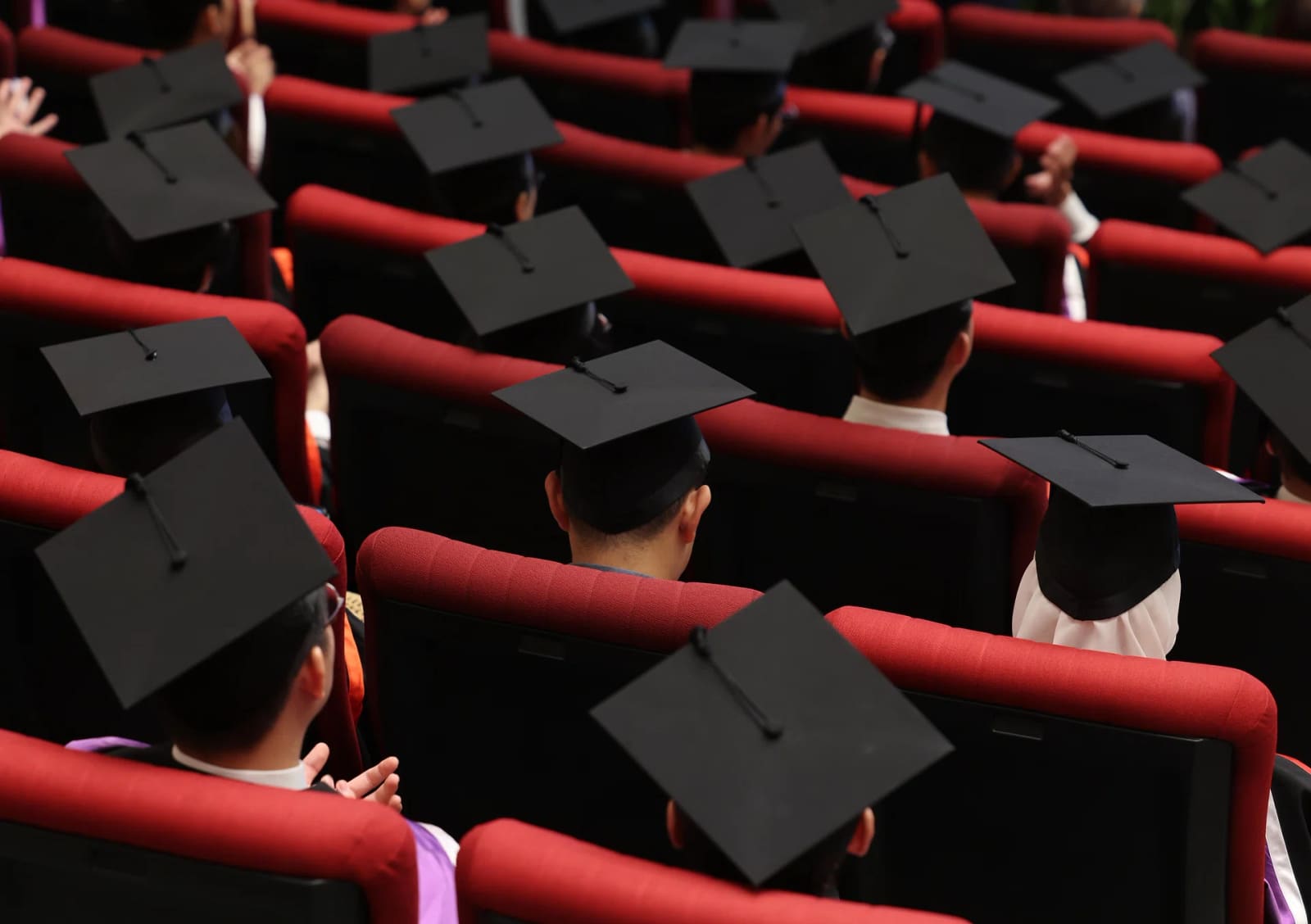
Singapore's latest cohort of university graduates is encountering a constrained job market, with 3,600 out of 18,000 fresh degree holders still searching for work as of June 2026. The figure represents roughly one in five graduates from the city-state's six autonomous universities, according to Acting Minister for Manpower Jasmin Lau.
The employment gap comes as the supply of entry-level professional, managerial, executive and technical roles grew modestly, from 32,500 positions in December 2025 to 32,800 in March 2026. That net increase of 300 jobs stands in sharp contrast to the thousands of new graduates entering the labor market each quarter.
Of the 18,000-strong cohort, 9,100 graduates had secured employment by mid-year, while 5,400 opted out of the labor force for voluntary reasons, primarily to pursue further education or take a break before starting their careers. The figures were disclosed in a parliamentary response to Bukit Panjang MP Liang Eng Hwa, who had requested data on entry-level job availability for fresh graduates.
Government Points to Longer-Term Resilience
Despite the current snapshot showing elevated unemployment, Lau emphasized that nine in ten university graduates from the 2025 cohort found employment within 12 months of graduation, a rate comparable to earlier cohorts. The ministry characterized fresh graduate employment as "generally resilient" over the longer arc, even as the immediate post-graduation period shows strain.
Singapore's six autonomous universities encompass the National University of Singapore, Nanyang Technological University, Singapore Management University, Singapore University of Technology and Design, Singapore Institute of Technology, and Singapore University of Social Sciences. Together, they produce a steady pipeline of degree holders competing for a finite pool of professional entry-level positions.
The modest uptick in PMET vacancies suggests that employers remain cautious in their hiring, even as the economy continues to integrate artificial intelligence and other advanced technologies that theoretically demand skilled talent.
Apprenticeships and Traineeships Expand to Bridge Skills Gap
The Ministry of Manpower is working with institutes of higher learning and industry partners to expand work-based learning programs designed to give students and recent graduates practical experience in knowledge-intensive sectors undergoing rapid AI adoption.
Initiatives include the Infocomm Media Development Authority's TechSkills Accelerator and AI Apprenticeship Programme, which targets the information and communications technology sector. In financial services, the Monetary Authority of Singapore runs the Polytechnic Talent for Finance Scheme and recently launched the Young Talent Programme for AI in Finance, equipping students with applied AI and finance skills that financial institutions are actively seeking.
The Graduate Industry Traineeships Programme and its public-sector variant, GRIT@Gov, aim to provide industry-relevant skills and on-the-job experience through structured traineeships. As of end-June 2026, more than 550 trainees from the 2025 cohort had been recruited for the 800 available places under GRIT, according to Lau.
Both programs have been extended to the 2026 cohort, and the ministry indicated readiness to make further enhancements if necessary. Lau said the government will continue to review its suite of support measures to help fresh graduates gain meaningful work experience and improve their employability.
Labor Market Dynamics and Regional Context
The employment challenge facing Singapore's fresh graduates reflects broader dynamics across Asia's advanced economies, where the pace of job creation in professional roles has not kept up with the expansion of tertiary education. South Korea and Japan have grappled with similar mismatches, as rising university enrollment rates outstrip the growth of graduate-level positions.
Singapore's tight labor market for entry-level professionals also underscores the structural shift toward experience-weighted hiring. Employers in finance, technology, and consulting increasingly favor candidates with internships, project portfolios, or prior work exposure, raising the bar for graduates who lack such credentials.
The government's emphasis on apprenticeships and traineeships represents an attempt to address this dynamic by embedding work experience into the transition from campus to career. Whether these programs can absorb a meaningful share of the 3,600 unemployed graduates, and how quickly, will be a key test of policy effectiveness in the months ahead.
For now, one in five of Singapore's newest degree holders remains on the sidelines, navigating a job market where credentials alone no longer guarantee a swift transition into the professional workforce.
RELATED STORIES
Singapore Electronics Shipments Jump 132% as AI Chip Demand Drives Record Trade Growth
Rajesh K. Iyer · 4 min
Southeast Asian Firms Overlook Digital Pact Worth USD 2 Trillion
Lim Hui Ying · 4 min
Singapore Export Growth Hits 46% in August on AI-Driven Electronics Demand
Rajesh K. Iyer · 3 min

Bayan Resources Halts Coal Deliveries After Indonesia Quota Dispute
Lim Hui Ying · 3 min
Spot something wrong? Email editor@briefasia.com. We log every correction publicly.