Real Estate · Offices
Singapore Prime Office Rents Edge Higher on Core CBD Demand
Central region rental index climbed 0.8% in Q2 2026 as Grade A buildings in Downtown Core tighten, while islandwide vacancy ticked up on new supply lag
KEY TAKEAWAYS
- ·Singapore's central region office rental index rose 0.8% quarter-on-quarter in Q2 2026, reversing a 0.2% decline in Q1, with Grade A CBD buildings driving the gain.
- ·Islandwide vacancy climbed to 11% from 10.8% as the newly completed 435,000-square-foot Shaw Tower awaits tenant fit-outs and physical move-ins.
- ·The Downtown Core submarket absorbed 484,376 square feet over four quarters through Q2, far outpacing other zones, while the development pipeline through 2028 remains thin.
Core CBD Leads Rental Recovery
Singapore's office rental market firmed in the second quarter of 2026, with the Urban Redevelopment Authority reporting a 0.8 per cent quarter-on-quarter increase in its central region rental index. The gain reverses a 0.2 per cent dip in the first quarter and marks a 0.9 per cent year-on-year advance.
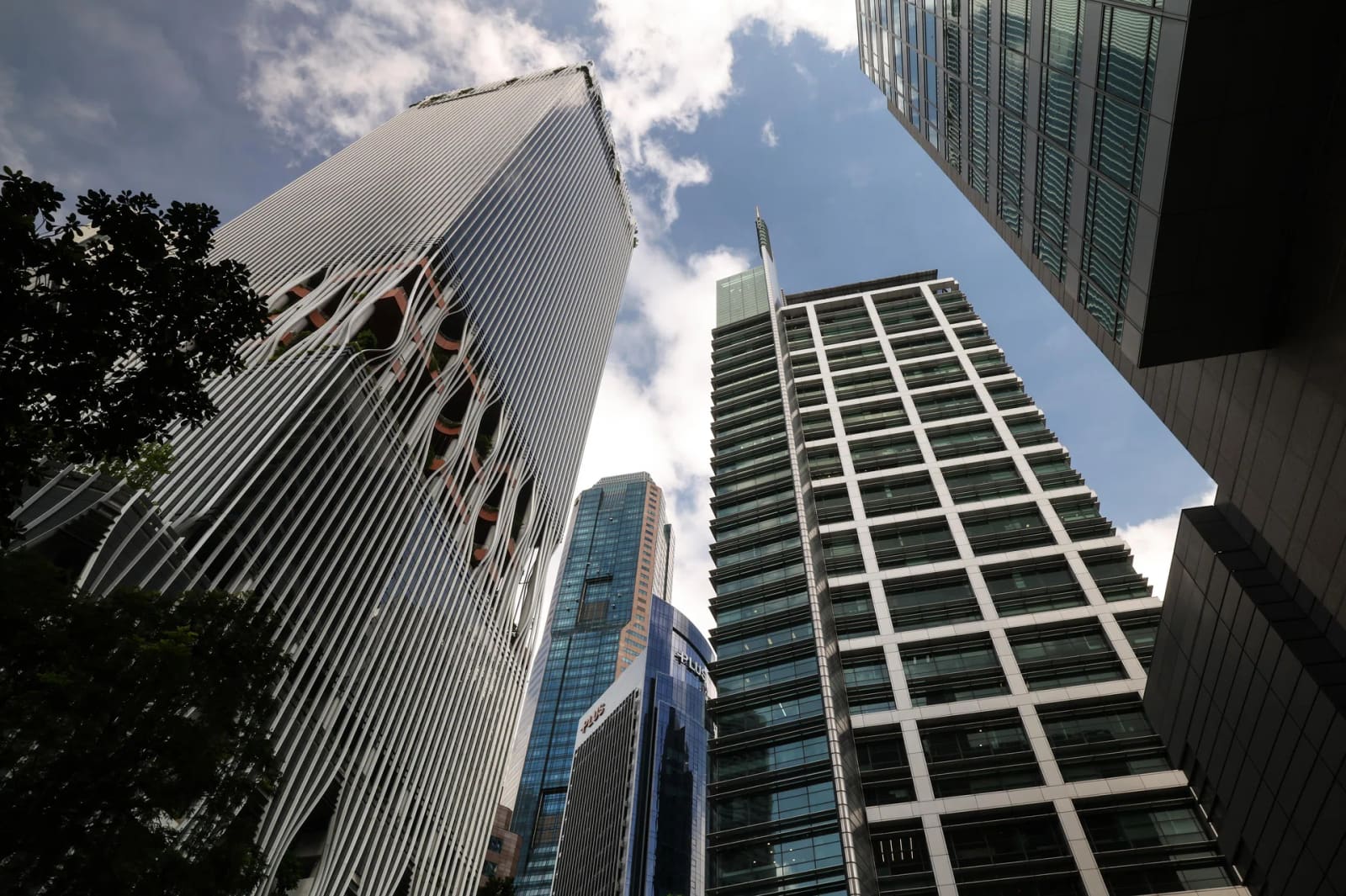
Premium Grade A buildings in the Core Central Business District drove the upturn. IOI Central Boulevard Towers, Marina One, and Marina Bay Financial Centre recorded sustained leasing activity, with tenants seeking high-specification space in established precincts. Median rents for office units above 5,382 square feet and up to 10,764 square feet rose 12.4 per cent year on year, the sharpest gain among surveyed size bands.
Occupied office space across the island expanded by 86,111 square feet of net lettable area in the quarter, down from 279,861 square feet in Q1 2026. The Downtown Core submarket absorbed 484,376 square feet over the four quarters through Q2, outpacing every other zone and underscoring the pull of accessibility, corporate profile, and talent density.
Vacancy Inches Up as New Tower Awaits Fit-Out
The islandwide vacancy rate edged to 11 per cent at the end of June from 10.8 per cent three months earlier. Much of the uptick stems from the mid-June handover of Shaw Tower on Beach Road, which added 435,000 square feet to inventory. Allianz, Adyen, Sanofi-Aventis Singapore, and flexible workspace operator The Great Room have secured space in the building, but physical move-ins lag as tenants complete interior fit-outs.
Analysts expect vacancy to ease in the second half as those tenants take occupation and as the pipeline through 2028 remains thin. Total supply under construction stood at 9.1 million square feet of gross floor area at the end of Q2, down from 9.3 million square feet in the prior quarter.
AI Occupiers Shift from Flex to Dedicated Space
A cohort of artificial intelligence companies is moving from coworking arrangements into self-managed offices within prime towers. Government initiatives positioning Singapore as a regional AI hub have attracted both global platforms and early-stage ventures, many of which now require discrete floor plates and direct lease control.
Regional headquarters mandates continue to underpin premium demand. Rather than trading down to fringe or suburban stock, multinationals are right-sizing within Grade A buildings, preserving location quality and employee access to transport nodes and amenities.
Price Index Rises Modestly
The URA price index for central region office space gained 0.4 per cent quarter on quarter in Q2, following a 0.2 per cent rise in Q1. Transaction volumes remained concentrated in better-quality assets, with median prices for larger units reflecting landlord confidence in a supply-constrained environment.
Islandwide stock increased by 204,514 square feet of net lettable area during the quarter, up from 86,111 square feet in Q1. The bulk of new inventory came from Shaw Tower and smaller suburban completions.
Supply Constraint Persists Through 2028
The near-term development calendar offers limited relief to tenants. Only a handful of Premium or Grade A projects are scheduled for completion before the end of 2028, leaving landlords with pricing power in the Core CBD. Flight-to-quality momentum has kept rents resilient even as fringe and suburban markets see softer take-up.
Some market participants caution that corporate adoption of AI-driven automation may temper net demand growth over the medium term, potentially creating oversupply risk after 2027 if new projects begin delivery in volume. For now, however, the balance between incoming supply and occupier appetite remains tight, particularly in the city's most sought-after addresses.
RELATED STORIES
Frasers Property Wins Shareholder Backing for S$2.1 Billion Hospitality Reshuffle
Lim Hui Ying · 3 min
Vietnam Draws $7.5 Billion From Singapore in Seven Months
Priyanka V. Rao · 3 min
Singapore Brokerages Raise STI Targets on Earnings Strength
Jun-ho Seo · 3 min

Addvalue Technologies Lands $5 Million in Space and Radio Contracts
Tran Quoc Bao · 3 min
Spot something wrong? Email editor@briefasia.com. We log every correction publicly.