Sustainability · Climate
Singapore Eyes Green Finance Leadership as Global Climate Policy Fractures
The city-state faces pressure to convert policy frameworks into regional execution while major economies retreat from sustainability commitments
KEY TAKEAWAYS
- ·The US has reversed climate commitments and the EU has paused sustainability regulations, fragmenting the global green finance landscape.
- ·Singapore's transition finance success depends on converting policy frameworks into operational systems and deal execution, not additional announcements.
- ·Asian green bonds saw 22 percent higher international subscriptions in early 2025 as capital seeks stable regulatory environments outside the West.
Diverging Climate Agendas
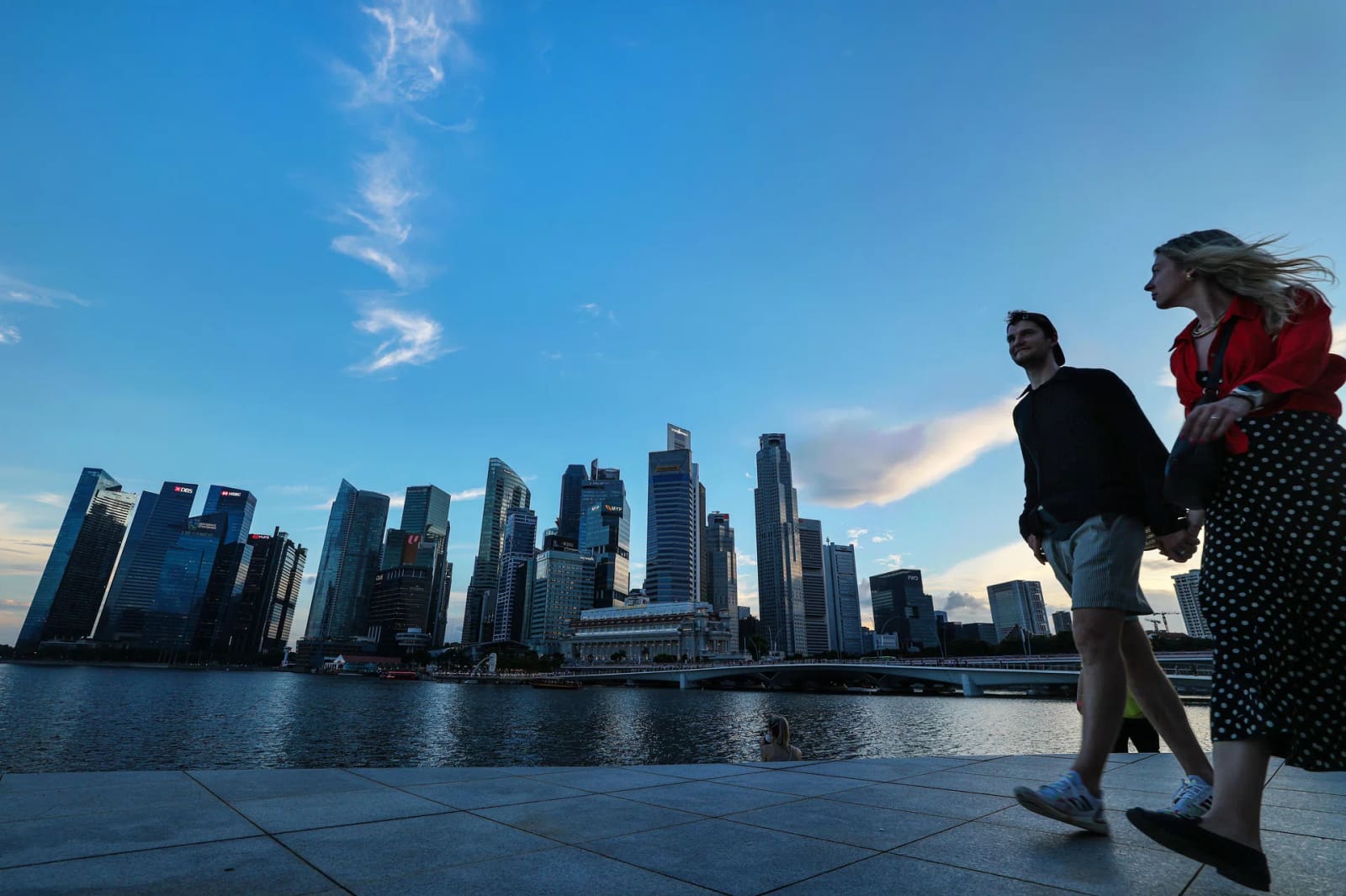
Singapore's push to establish itself as a regional green finance hub is colliding with a rapidly fragmenting global policy environment. The United States has abandoned prior climate commitments under President Donald Trump, who has characterized climate change as fraudulent and doubled down on fossil fuel extraction. Across the Atlantic, the European Union has introduced a "stop the clock" mechanism to slow the pace of sustainability regulations and reduce compliance pressure on businesses.
The divergence creates both risk and opportunity for financial centers in Asia. While Western economies pull back, capital flows seeking stable regulatory environments may shift eastward. Singapore's challenge lies in whether it can translate policy ambition into tangible infrastructure and market mechanisms that attract that capital.
The Execution Test
Lawrence Loh, writing in The Business Times, notes that the success of Singapore's transition finance agenda will depend heavily on participants and business leaders building operational systems rather than drafting additional frameworks. The city-state has announced multiple green finance initiatives over the past three years, including taxonomy guidelines, green bond grant schemes, and partnerships with ASEAN neighbors. Yet the volume of transition finance deals executed through Singapore remains modest compared to traditional lending and investment flows.
Transition finance, distinct from pure green finance, funds the shift of high-emission industries toward lower-carbon operations. It requires longer time horizons, tolerance for interim emissions, and sector-specific technical expertise. Banks in Singapore have been cautious, citing reputational risk and the difficulty of measuring genuine progress versus greenwashing.
Regional Fragmentation
Asia itself is not unified on climate policy. China continues to build coal capacity even as it leads global solar panel manufacturing. India has resisted binding emissions caps while expanding renewable energy at scale. Indonesia and Vietnam are negotiating Just Energy Transition Partnerships with mixed results, and capital deployment has lagged announcements.
This patchwork makes regional coordination difficult. Singapore's role as a financial intermediary depends on its ability to bridge these differences, offering standardized products that meet diverse national priorities. The Monetary Authority of Singapore has pushed for interoperability between green taxonomies, but adoption across ASEAN remains uneven.
Capital Flight from the West
The policy reversals in Washington and Brussels may paradoxically benefit Singapore. European asset managers facing regulatory fatigue and US investors seeking alternatives to politicized ESG debates are exploring Asian markets. Green bonds issued by Southeast Asian corporates and sovereigns saw a 22 percent increase in international subscriptions in the first half of 2025, according to data from the Asian Development Bank.
Singapore's legal system, political stability, and deep capital markets position it to capture this flow. The question is whether local institutions can scale quickly enough. The city-state's three major banks have committed to financing the energy transition, but their loan books remain dominated by traditional sectors. Insurance companies and pension funds, which hold longer-term liabilities better suited to transition finance, have been slower to allocate capital.
Building the Infrastructure
Execution will require more than policy. Singapore needs trained credit analysts who understand decarbonization pathways in cement, steel, and shipping. It needs data platforms that track emissions across supply chains. It needs legal frameworks for blended finance structures that combine concessional and commercial capital. And it needs secondary markets where transition bonds can be traded with sufficient liquidity.
The government has launched training programs and co-investment vehicles, but the private sector must lead. International banks with sustainability teams in Singapore are hiring, yet competition for talent is fierce. The risk is that Singapore becomes a booking center for deals structured elsewhere, rather than a hub where transactions are originated and managed.
The Window Narrows
Global fragmentation will not wait for Singapore to finish building. If the city-state cannot demonstrate deal flow and impact within the next 18 months, capital and talent may consolidate in Hong Kong, Tokyo, or Seoul. Each has its own advantages: Hong Kong's access to mainland China, Tokyo's deep institutional capital, Seoul's industrial base.
Singapore's edge lies in its regulatory credibility and its relationships across ASEAN. But credibility requires results. The transition from policy announcement to market execution is where leadership is proven.
RELATED STORIES
Laos Hydropower Faces Solar and Wind Competition as Regional Grid Expands
Tran Quoc Bao · 4 min
Singapore Electronics Shipments Jump 132% as AI Chip Demand Drives Record Trade Growth
Rajesh K. Iyer · 4 min

Waymo to Bring Autonomous Ride-Hailing to Singapore in 2028
Mariel D. Santos · 3 min
Singapore Export Growth Hits 46% in August on AI-Driven Electronics Demand
Rajesh K. Iyer · 3 min
Spot something wrong? Email editor@briefasia.com. We log every correction publicly.